
"Pretty, Witty Nelly" - The Illiterate Royal Mistress Like No Other
The Story of a poor girl who captivated the King and the people's hearts alike

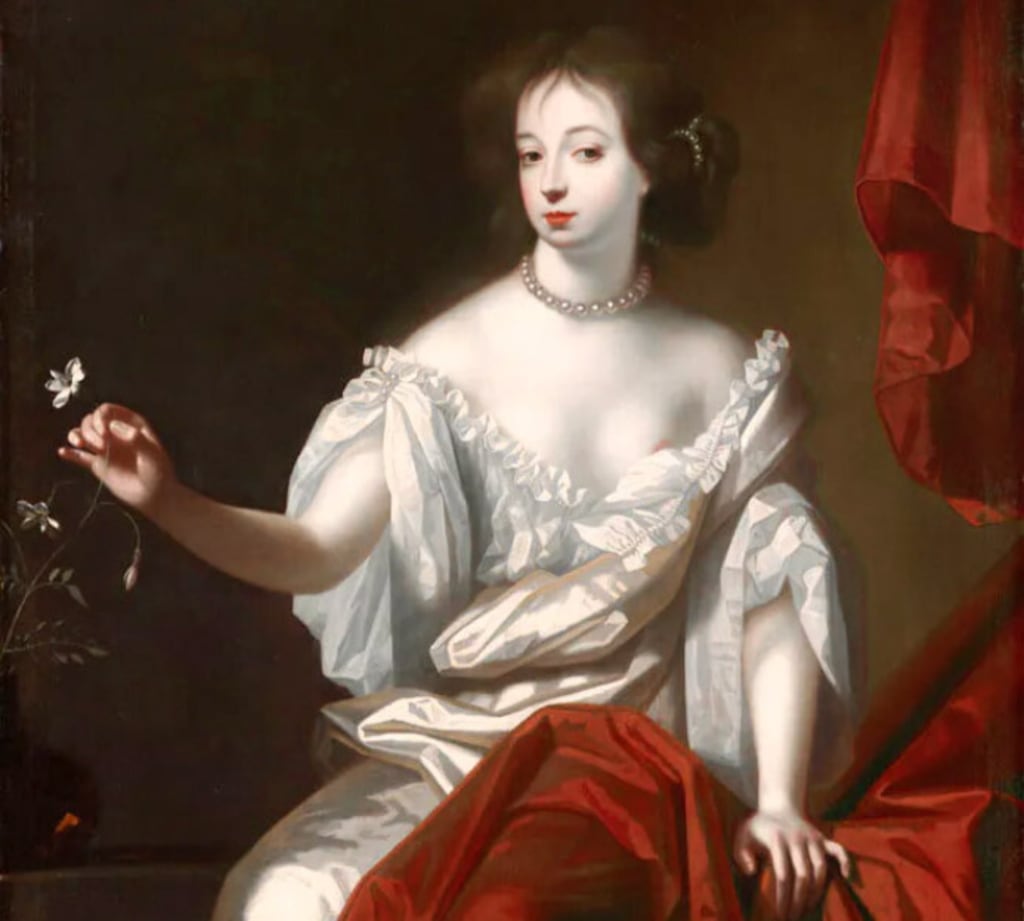
From pouring "strong water" for her mother's clients to becoming one of the first female theater actors, Nell Gwyn not only enchanted King Charles II but also the entire country with her cheerful personality and blunt honesty.
King Charles II had at least 13 known mistresses, but only one of them did he mention on his deathbed - the commoner who never abused the power her royal mistress status gave her.
From Bawdyhouse to the Theater
Nell's birth and childhood are shrouded in rumors. Even her birth date is not entirely known. Officially, Nell was born in 1650, but there are claims and various details that hint to her being born as much as eight years prior.
Eight years does make a difference in this story, as it completely changes the timeline of the events in Nell’s life. But let's start from the beginning.
It is said that Nell's father died in debtor's prison when she was only an infant, leaving her and her sister with the mother who was widely known, and not for her best behavior.
"Madam Gwyn", notorious for her excessive drinking habits, owned a so-called "bawdyhouse", and that is what nowadays we would call a brothel.
Little Nell also worked there - filling or refilling the guests' glasses with "strong water", aka brandy. Some conspire to believe Nell, later in life, may have become one of the "working girls", but that is something we will never know.
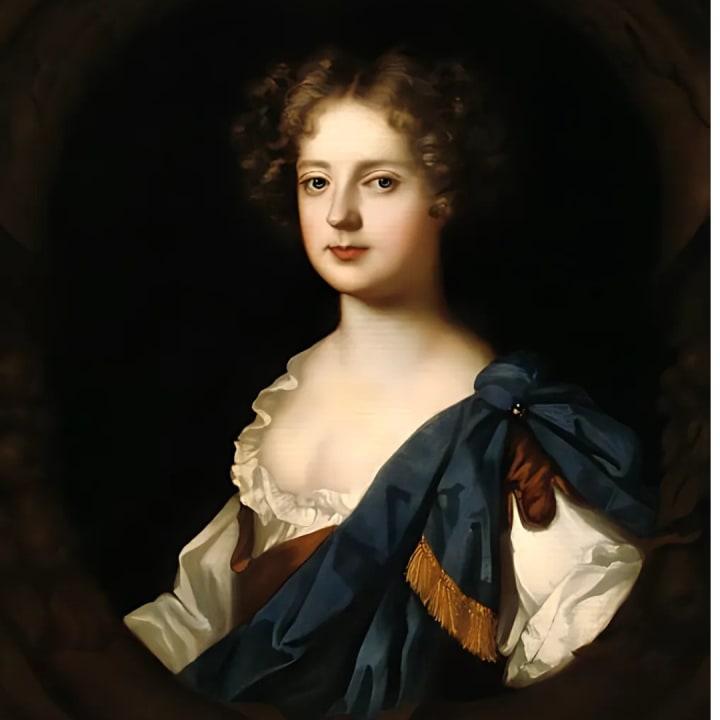
However, we do know that Nell and her older sister were offered jobs as "orange girls" at one of the royal theaters in London when they were teens. And the fact that it was Nell's mother's friend who employed the girls, leads us to believe Madam Gwyn did not want to see her daughters end up like her.
"Orange girls" were usually young teens who would sell oranges during the performance breaks to the spectators who again flooded theaters after 18 years of bolted doors and windows.
After nearly two decades of the Puritan commonwealth regime, when Charles II reclaimed the throne, one of the first things he did was to lift the ban on various forms of entertainment, including theater performances. He also reinstated two royal theaters in London and officially allowed female actors onto the stage.
The Drury Lane Theater, which today is the oldest still operating theater in London, was one of those two, and king’s favorite, it appears. And it was the place where Nell got a job.
Selling fruits was simple and decent work, and Nell clearly enjoyed being surrounded by art and artists. So much so, that soon she expressed interest in acting too. Everybody seemed to notice the carefree and cheerful girl's talent, who, if her official birthday is correct, would have been only 14 years old at the time.
Enter the First Charles
One of the actors, Charles Hart, her "first Charles", took a special interest in the illiterate girl with much acting potential.
However, his fascination went deeper than Nell's talent. Hart not only took it upon himself to share his knowledge of acting, but he also decided to share his bed with her.
The next year, in 1665, Nell appeared in her first official role in a heroic drama "Indian Emperor", becoming one of the first female actors of her time.
Nell played Aztec king Montezuma's daughter and the love interest of the conquistador Cortez, played by none other than Charles Hart.
But Nell, already known for her fun persona, was not interested in deeply dramatic roles. She wanted to make people laugh. And soon enough she became widely known and appreciated for her roles in comedies. In most of them, Hart still played her love interest. But in real life, he was already replaced.
The Failed Control of the Second Charles
During one of her performances, Nell caught the eye of Charles Sackville, titled Lord Buckhurst at the time. Romance bloomed, and Nell was ready to start a new life.
In 1667, rumors spread that she was leaving the theater and would not be coming back to acting. Nell was now officially the mistress of Lord Buckhurst, but this new role was not meant for her.
The very same year penniless Nell returned to the theater, thus hinting at the unfortunate and bitter end of the affair.
Hart, her first Charles, was less than happy with Nell's reappearance and now hated his former protégé and lover. Nell may have been one of the first female actors to appear on stage, but she was not the only one, and her competition was getting bigger.
Maybe her acting career would have ended there had the King not come into play.
Buckingham's Failed Spy
The same year, when Nell returned to the theater, she caught the eye of George Villiers, the Duke of Buckingham.
As the man who successfully inserted various women as royal mistresses both in English and French courts so that he could stay on top of current affairs, Villiers thought Nell would make another great spy in the king's bed.
But Nell was not only pretty, she was also witty, so she asked for a monthly 500-pound payment for her services. Villiers thought the costs were way too high, so he turned to Nell's theater competition Molly Davis.
However, the situation with Buckingham pointed Nell in the royal direction. She didn't need a middleman to seduce the king, and the opportunities were plenty.
Not only did Charles II reinstate the theater as an entertainment form, he also enjoyed attending it frequently. Although he must have seen Nell on stage before, she did not catch his attention there. Maybe because Charles never lacked mistresses to keep him busy.
But, once Nell decided the king would become her third Charles, she made sure to get noticed off-stage. One night, Nell was enjoying a performance in a box that happened to be right next to the king's, accidentally or not, and the pretty and witty young woman did not go unnoticed.
Charles spent the entire performance flirting with Nell rather than following the play, and invited her to dinner later, which Nell ended up paying for, as neither the king nor his friends had any money on them.
Nell called them “one of the poorest companies” she’s ever dined with, and this was the beginning of her ultimate role as a royal mistress.
The People's Favorite Loyal Mistress
The new affair took London by storm. Not because the king had a flawless reputation. On the contrary, he was famous for changing mistresses like socks. But this one was different - Nell was one of the "people".
Sure, there was Molly Davis before her, but she preferred to stay quiet and discreet, where Nell clearly enjoyed the attention and her new status.
An illiterate commoner who seduced the king fascinated the nation, and funny enough, resurrected her acting career. People would flood the theater to see a royal mistress perform for them, and they loved Nell as much as the king who didn't mind her continuing to work.
But despite all the love and curiosity Nell was receiving, nobody, given the king’s reputation, really believed the affair would last. However, two years later, Nell gave birth to their first son Charles Beauclerck who was the king's seventh child (all fathered with his mistresses).
Now, unlike other women, Nell didn't ask for any favors or titles, but when it came to ensuring her child's future, she was not going to back down. There are actually two different stories of how she got Charles II to grant their son a title, but both of them speak of Nell's wit and hands-on approach.
One of the stories states that Nell held her son out the window while shouting at the king she was going to drop the child unless Charles gave him a title. Another, the most popular story, is that of calling her son a “bastard” in front of his father, and when Charles complained, she blatantly told him she had nothing else to call her son by. And this is how Charles Beauclerk became the Earl of Burford, and later the Duke of St Albans.
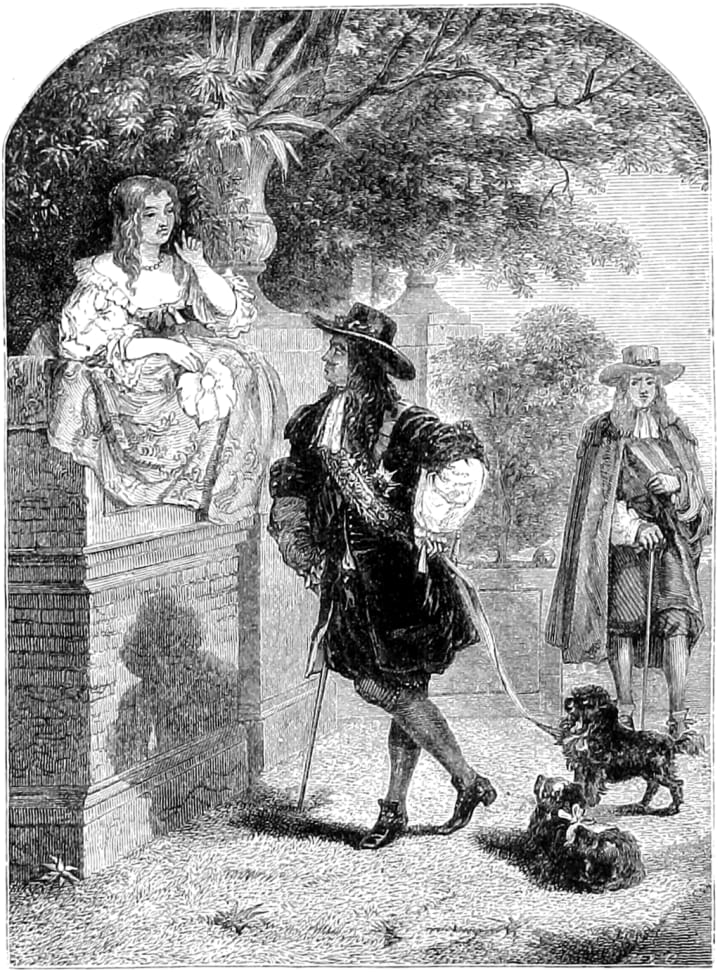
Nell and the king had another son together a year later, about the same time she decided to leave her acting career behind. Unfortunately, little James died at the age of 9 in Paris where he attended school.
French Competition
Despite this tragedy, all seemed to be going well for Nell, until a competition arrived from France. Louise de Kerouaille came to England to serve as the maid of honor to Queen Catherine, although it is widely believed that becoming the new mistress was in the plans from the start.
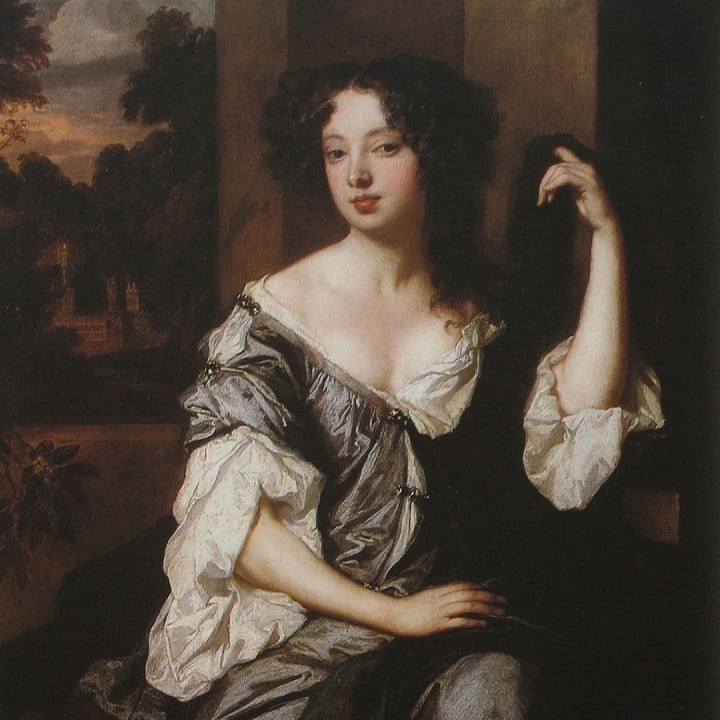
Sophisticated, reserved, and of noble blood - Louise was the opposite of the straight-forward prankster Nell, and both never failed to show their disapproval of each other or call each other names.
At one occasion, when an angry group ambushed the carriage Nell was in, thinking Louise was the one inside, Nell stuck out her head, and calmly declared: “Good people, you are mistaken, I am the Protestant whore”, thus indirectly calling Louise the catholic whore.
But funny enough, the old and the new mistresses would also spend time together drinking tea and playing cards. So, it seems that even the “Weeping Willow” and “Squintabella” Louise could not resist the “Swearing Orange-Wench” Nell’s charms.
“Let Not Poor Nelly Starve”
Unlike other bed companions of Charles II, Nell was never granted a title, nor did she ever ask for one. All she wanted was a house to own, and she got that wish granted. In fact, the king offered her various different properties around England, the most notable of which would be a house in Pall Mall street in London, which as of 1960 was still the only house not owned by the British Crown.
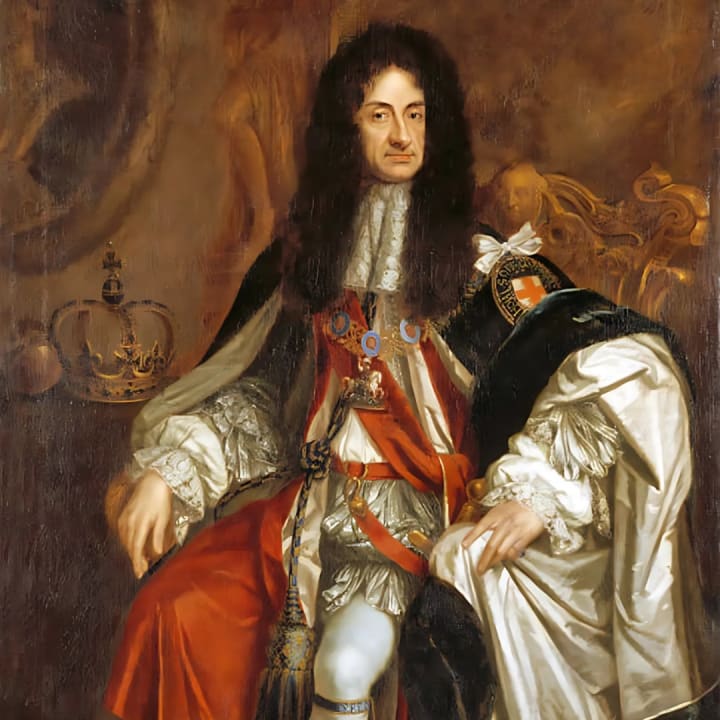
Maybe the king was planning to eventually grant her the status of a duchess but he failed to do so, and on his deathbed in 1685 all he asked of his younger brother and the future king James was to “let not poor Nelly starve”.
James did fulfil his brother’s wish. He paid off Nell’s debts, paid-off the loans on her properties, and granted Nell an annual pension of 1500 pounds. But he still refused to give her any titles, probably using that to pressure her and her son to convert to Catholicism, which Nell refused.
Death and Legacy
Two years after the passing of Charles II, in early spring of 1687, Nell suffered a stroke, which left her paralyzed on one side of the body. When the second stroke hit her only a few months later, Nell became bed-ridden.
Nell must have felt she was running out of time as that same summer she made a will which she updated in October, less than a month before her death.
Nell Gwyn died in her home in Pall Mall on the 14th of November 1687. If her official birthday is correct, Nell would have been only 37 years old.
Her cause of death is not exactly clear, as it is noted as an apoplexy, which referred to various causes at the time (from heart attack to ruptured organs). The only common factor all apoplexy cases had was a sudden death right after losing consciousness. And some sources say that Nell’s apoplexy was the result of a variety of syphilis.
Whatever the cause, when Nell died, she left behind a small fortune, which came as a surprise as she always seemed rather poor and had debts. Her son, Charles, inherited most of his mother’s estate, but Nell also dedicated a part of her money to be distributed to the poor in London, and to pay for the release of debtors (like her father once was) from prison on Christmas.
Nell was buried in the church of Saint-Martin-In-The-Fields, one of the London’s parishes she gave money to.
Today Nell still lives in numerous novels and plays, as well as movies and a mini-series.
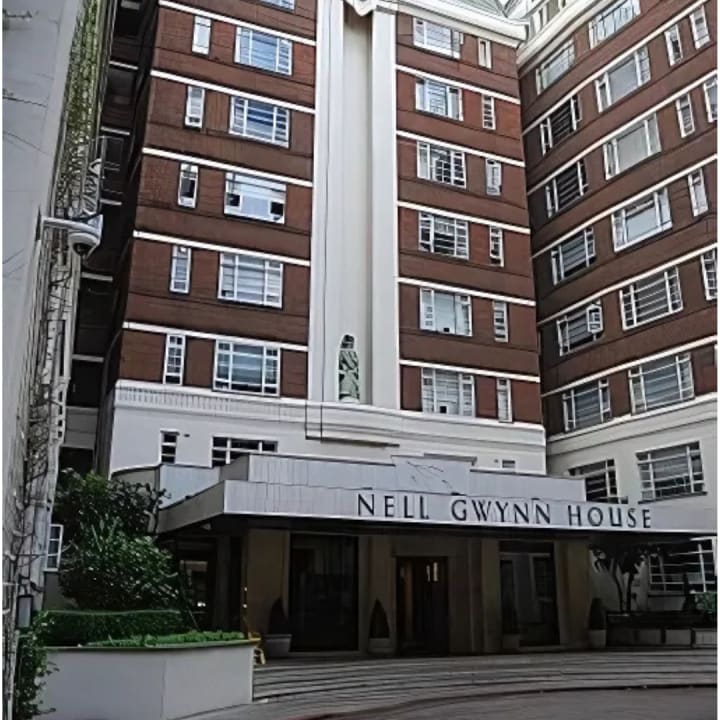
There is also a block-of-flats building in London’s Chelsea area, built in 1937, which is named after her - Nell Gwyn’s House. It also holds the only known statue of the royal mistress, which is standing above the main entrance, with a Cavalier King Charles dog at her feet.
About the Creator
GD Madsen
A historian by education, a former journalist by profession, now living in the French countryside writing books and articles.
Israel’s Cave Yields Historical Documents
Here’s a detailed article in English based on youIn a remarkable archaeological breakthrough, researchers in Israel have uncovered a cache of ancient documents hidden in a remote cave. The discovery, which experts describe as “extraordinary,” promises to offer fresh insights into the cultural, religious, and social practices of early civilizations in the region.
By Irshad Abbasi a day ago in History



Comments
There are no comments for this story
Be the first to respond and start the conversation.