
Prehistoric Human Cultures
Prehistoric human cultures refer to the societies and way of life of humans before recorded history, which spans millions of years, covering the early stages of human evolution through the development of modern Homo sapiens. Here's an overview of major periods and some lesser-known cultures.

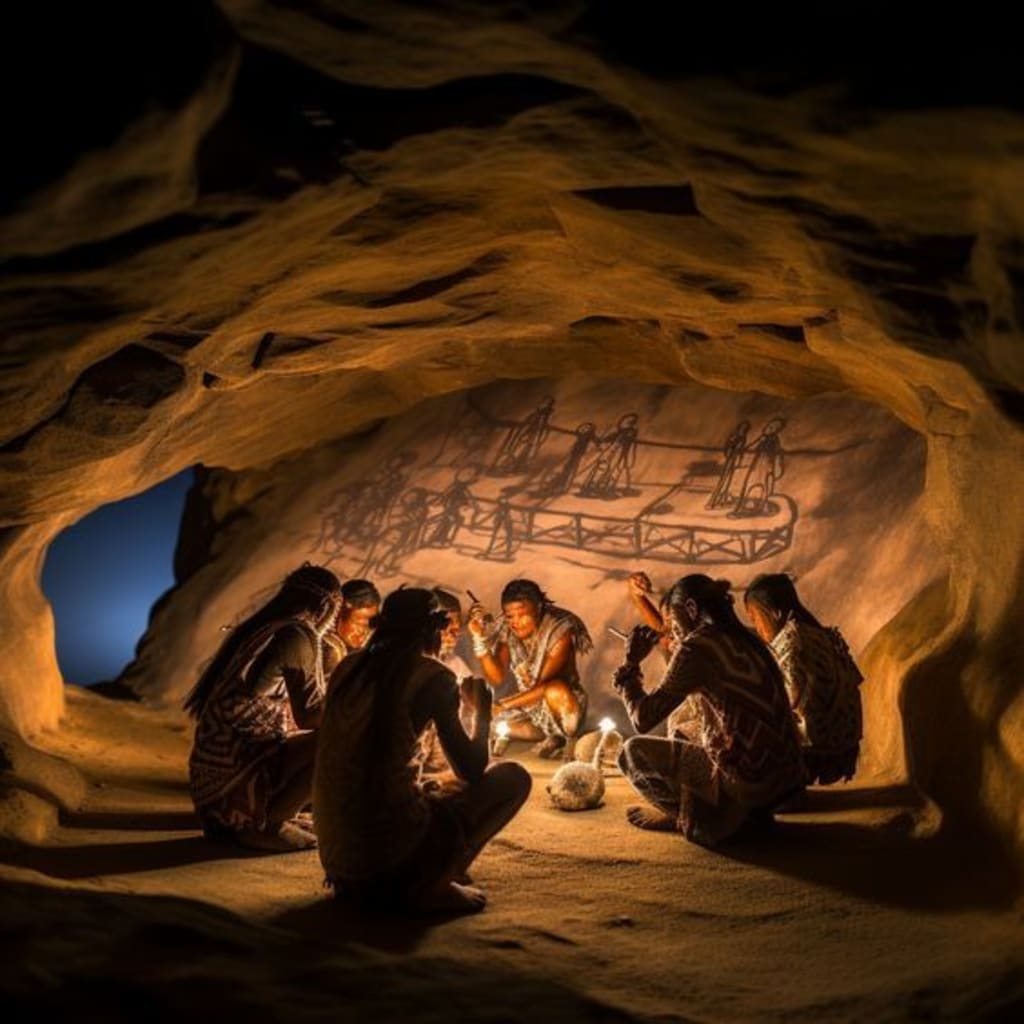
Prehistoric human cultures refer to the societies and way of life of humans before recorded history, which spans millions of years, covering the early stages of human evolution through the development of modern Homo sapiens. Here's an overview of major periods and some lesser-known cultures:
1. Paleolithic Period (Old Stone Age)
- Timeframe: Approximately 2.5 million years ago – 10,000 BCE.
- Key Human Species: Homo habilis, Homo erectus, Neanderthals, Denisovans, Homo sapiens.
Cultures:
- Oldowan Culture (2.5 million – 1.7 million years ago):
- One of the earliest known stone tool industries, used by Homo habilis.
- Simple tools like flakes and choppers, found in Africa.
- Acheulean Culture (1.76 million – 100,000 years ago):
- Associated with Homo erectus, known for hand axes and more refined stone tools.
- Found across Africa, Europe, and Asia.
- Mousterian Culture (160,000 – 40,000 years ago):
- Primarily associated with Neanderthals, with more specialized tools.
- Includes scrapers, points, and bone tools for hunting and processing animal hides.
Lesser-known Aspects:
- Denisovans:
- A mysterious hominin species discovered in Siberia's Denisova Cave.
- Very little is known about their culture, but they interbred with Homo sapiens and Neanderthals.
- Tools and ornaments found in Denisova Cave suggest that they had a complex culture.
2. Mesolithic Period (Middle Stone Age)
- Timeframe: Approximately 10,000 BCE – 5,000 BCE (varies by region).
- Key Human Species: Homo sapiens.
Cultures:
- Natufian Culture (12,500 – 9,500 BCE):
- One of the first cultures to transition to a sedentary lifestyle.
- Inhabitants of the Levant region (modern-day Israel, Lebanon, and Syria), where they began to gather and store wild grains, laying the groundwork for agriculture.
- Maglemosian Culture (9,000 – 6,000 BCE):
- Located in northern Europe (Scandinavia, Britain, and Northern Germany).
- They relied heavily on forest resources, such as wood and bone tools, and lived in semi-permanent huts.
Lesser-known Aspects:
- Kuk Swamp Culture (New Guinea, around 7,000 BCE):
- One of the earliest agricultural sites, where taro and bananas were cultivated.
- Evidence of early farming techniques like mounds and irrigation.
3. Neolithic Period (New Stone Age)
- Timeframe: Approximately 10,000 BCE – 3,000 BCE.
- Key Development: The advent of farming, domestication of animals, and settled communities.
Cultures:
- Çatalhöyük (7,500 – 5,700 BCE):
- One of the first known urban centers, located in modern-day Turkey.
- Complex, densely-packed houses, with evidence of ritualistic burials and artwork.
- Jomon Culture (14,500 – 300 BCE):
- Prehistoric culture of Japan, known for its early pottery (some of the world’s oldest).
- Semi-sedentary lifestyle with fishing, hunting, and gathering as their primary subsistence.
- Banna Culture (China, around 6,000 BCE):
- Early rice cultivators in the Yunnan region of China.
- Relatively unknown outside of specialized archaeological circles, this culture helped lay the foundation for Chinese agriculture.
Lesser-known Aspects:
- Göbekli Tepe (9,500 BCE):
- One of the oldest known temples, located in present-day Turkey.
- Massive, intricately carved stone pillars arranged in circles, indicating early religious or ritual practices.
- Tashtyk Culture (1st century BCE – 5th century CE):
- Based in Siberia, the Tashtyk people are known for their elaborate burial masks and cremation rites.
- Despite their material culture, they remain enigmatic, and little is known about their daily life.
4. Bronze Age
- Timeframe: Around 3,300 BCE – 1,200 BCE (varies by region).
- Key Human Species: Homo sapiens.
Cultures:
- Harappan Civilization (Indus Valley, 3,300 – 1,300 BCE):
- Advanced urban culture with large cities like Mohenjo-Daro and Harappa.
- Known for sophisticated urban planning, drainage systems, and trade.
- Bell-Beaker Culture (2,800 – 1,800 BCE):
- Spread across western Europe, known for its distinctive bell-shaped pottery.
- Associated with the introduction of metalworking and complex trade networks.
Lesser-known Aspects:
- Nok Culture (1000 BCE – 300 CE):
- One of Africa's earliest known cultures to create terracotta sculptures.
- Little is known about their society beyond their artistic contributions, which were discovered in modern-day Nigeria.
- Oxus Civilization (Bactria–Margiana Archaeological Complex, 2,300 – 1,700 BCE):
- Located in modern-day Turkmenistan, Afghanistan, and Uzbekistan.
- Known for their fortresses and metalworking, but the civilization's written record is virtually non-existent.
5. Chalcolithic Period (Copper Age)
- Timeframe: Approximately 4,500 BCE – 3,300 BCE.
- This transitional period between the Neolithic and Bronze Age saw the use of copper tools and the rise of early trade and social complexity.
Cultures:
- Varna Culture (5,000 – 4,500 BCE):
- Located around the Black Sea in present-day Bulgaria, known for the earliest evidence of gold metallurgy.
- Rich burial sites containing jewelry and other artifacts suggest the existence of a social hierarchy.
- Botai Culture (3,700 – 3,100 BCE):
- Inhabited the Central Asian steppes of Kazakhstan and is credited with the earliest known domestication of horses.
Lesser-known Aspects:
- Kura-Araxes Culture (3,500 – 2,000 BCE):
- Spanned parts of the Caucasus, Iran, and eastern Turkey.
- Known for their distinctive red-black pottery and early metallurgical techniques.
- Much of their social and political structure remains unknown.
Characteristics of Prehistoric Human Culture:
- Art: Common forms of artistic expression during this time were sculptures, pottery, and paintings found in caves such as those at Lascaux, France.
- Tools: Advancement from simple stone tools to more intricate and specialized equipment, representing modifications to lifestyle, hunting, and food habits.
- Burial Rituals: Many prehistoric civilizations practiced interment in a way that implied a belief in a hereafter, frequently burying personal belongings, tools, and food with the dead.
- Social Structures: Human civilizations evolved from tiny, migratory hunter-gatherer groups to bigger, permanent farming communities with clear social hierarchies as a result of time.
Conclusion:
Prehistoric human societies reveal how humans evolved physiologically, culturally, and technologically over millions of years. There is still plenty to learn and explore about certain well-known prehistoric cultures, such as the Neanderthals and the ancient Egyptians, while others, like the Denisovans or the Nok people, are still shrouded in mystery.
About the Creator
snowycloud
Hi!!
Keep reading
More stories from snowycloud and writers in History and other communities.
Kyrsten Sinema
Kyrsten Sinema has become one of the most recognizable and debated figures in modern American politics. Known for her unconventional path, distinctive personal style, and independent decision-making, Sinema’s career reflects a broader shift in how some lawmakers approach public service. Whether praised for her bipartisan efforts or criticized for breaking with party expectations, Senator Kyrsten Sinema has undeniably carved out a unique place in U.S. political history. Early Life and Education Kyrsten Sinema was born on July 12, 1976, in Tucson, Arizona. Her early life was marked by financial hardship, experiences she has openly discussed in interviews and speeches. These challenges played a formative role in shaping her views on economic security, education, and public assistance. Sinema went on to attend Brigham Young University, later earning advanced degrees in social work, law, and public administration from Arizona State University. Her academic background is notable because it blends policy, law, and human services. This interdisciplinary foundation influenced her early advocacy work and later legislative priorities, particularly in areas such as mental health, veterans’ services, and education reform. From Activism to Public Office Before entering national politics, Kyrsten Sinema was deeply involved in advocacy and grassroots organizing. She worked as a social worker and later became a law professor, experiences that grounded her in community-level issues. Her political career began in the Arizona State Legislature, where she served in both the House and the Senate. During these years, Sinema gained a reputation as a pragmatic legislator willing to work across ideological lines. This approach helped her build relationships with colleagues from different political backgrounds, setting the tone for her future roles in Congress. Rise to the U.S. Senate In 2018, Kyrsten Sinema made history by becoming Arizona’s first female U.S. senator. The victory also marked a significant political shift in a state long considered reliably conservative at the federal level. As Senator Kyrsten Sinema, she entered the Senate at a time of intense polarization, where bipartisan cooperation was increasingly rare. Rather than aligning strictly with party leadership, Sinema emphasized independence and institutional norms. Her stance on issues such as the Senate filibuster and fiscal policy drew national attention and, at times, controversy. Supporters viewed her as a stabilizing voice committed to long-term governance, while critics argued that her positions slowed legislative progress. Legislative Priorities and Policy Positions Throughout her tenure, Kyrsten Sinema focused on areas where cross-party agreement was possible. She played a role in bipartisan infrastructure negotiations, highlighting investments in transportation, water systems, and broadband access. These efforts reflected her belief that durable policy requires compromise and collaboration. Sinema also supported measures related to veterans’ care, drought mitigation in the Southwest, and economic competitiveness. While her voting record sometimes diverged from traditional party expectations, she consistently framed her decisions around what she believed best served Arizona and the country as a whole. Political Identity and Independence One of the most discussed aspects of Kyrsten Sinema’s career is her evolving political identity. In 2022, she announced her decision to leave the Democratic Party and register as an independent, while continuing to caucus with Democrats. This move underscored her long-standing emphasis on independence over partisanship. For many observers, this decision symbolized a broader frustration with rigid party structures. Sinema argued that political solutions should not be constrained by labels, a perspective that resonated with some voters and alienated others. Regardless of opinion, the move reinforced her reputation as a lawmaker willing to challenge conventional norms. Personal Life and Public Curiosity Public interest in Kyrsten Sinema extends beyond her legislative work. Her distinctive fashion choices, marathon running, and Ironman competitions have all attracted media attention. Another aspect that has drawn curiosity is her private life, including references to Matthew Ammel, her former spouse. Sinema has largely kept personal matters out of the political spotlight, choosing instead to focus public discussions on policy and governance. Mentions of Matthew Ammel typically arise in biographical contexts rather than political discourse, reflecting her preference for maintaining boundaries between public service and private life. Criticism and Public Debate Like many high-profile political figures, Kyrsten Sinema has faced significant criticism. Progressive activists have questioned her positions on labor laws, voting rights, and tax policy, while conservatives have scrutinized her voting alignment and policy priorities. Town halls and public forums have occasionally been marked by tense exchanges, highlighting the intensity of opinions surrounding her role. Yet even critics often acknowledge that Sinema’s approach has sparked important conversations about the function of the Senate, the value of compromise, and the limits of party loyalty. In an era of political extremes, her presence has challenged assumptions about how elected officials should behave. Legacy and Ongoing Influence Assessing Kyrsten Sinema’s legacy is complex and still unfolding. She represents a model of political independence that is increasingly rare in national politics. Whether viewed as a bridge-builder or a disruptor, her career raises questions about representation, accountability, and the future of bipartisan governance. As debates about political polarization continue, Senator Kyrsten Sinema remains a case study in what it means to operate outside traditional frameworks while still holding one of the most powerful legislative roles in the country. Conclusion Kyrsten Sinema’s journey from grassroots activism to the U.S. Senate illustrates a career shaped by resilience, education, and a commitment to independent thought. Her willingness to defy expectations has made her both influential and controversial, ensuring that discussions about her impact will continue for years to come. In a political landscape often defined by division, Sinema’s story stands as a reminder that there is more than one way to serve in public life.
By Saboor Brohi 5 days ago in History
The Evolution of Aircraft Design Through Failure and Innovation
Aircraft design did not emerge fully formed or flawlessly engineered. Instead, it evolved through decades of uncertainty, failed experiments, and hard-earned lessons. Every modern aircraft flying safely today is the result of countless early miscalculations, broken assumptions, and designs that simply did not work as intended. Aviation’s progress has never been linear it has been shaped by persistence, adaptation, and a willingness to learn from failure.
By Beckett Dowhanabout 16 hours ago in History


Comments (1)
nice post