
Petite Terre Island
History and Culture of Petite Terre Island
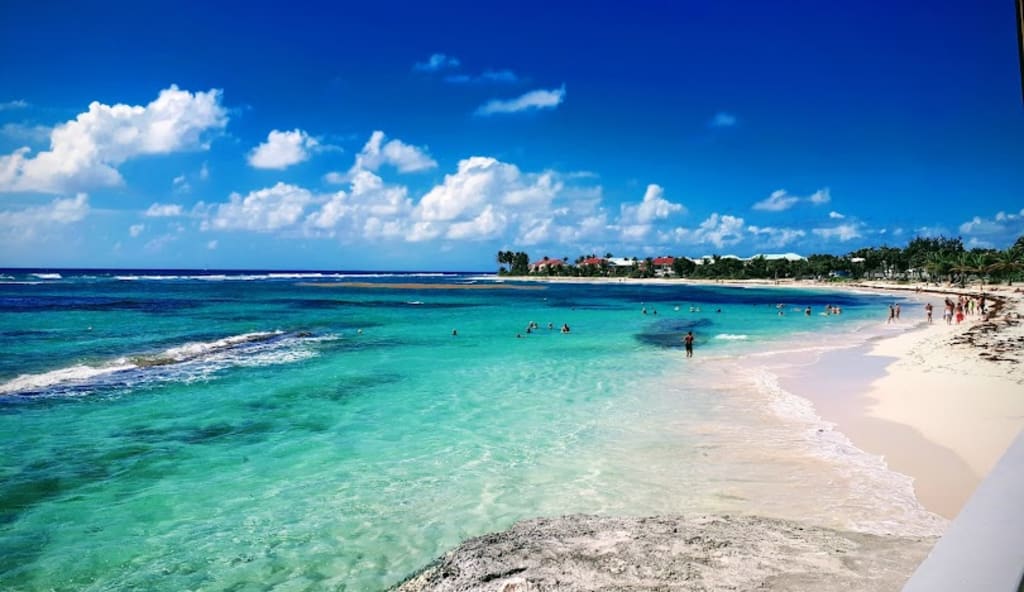
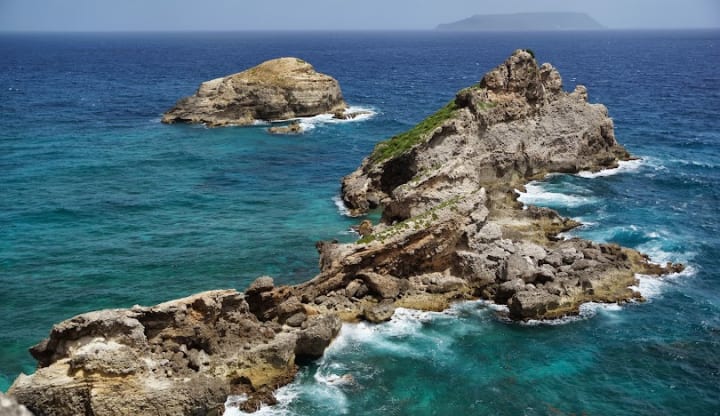
Nestled in the crystal-clear waters of the Caribbean Sea, southeast of Grande-Terre in Guadeloupe, lies the small but ecologically rich archipelago known as Petite Terre. Comprising two islands—Terre de Bas and Terre de Haut—this uninhabited sanctuary is not only a marvel of natural beauty, but also a quiet witness to centuries of maritime activity, colonialism, and ecological transformation. Though often overshadowed by larger neighboring islands, Petite Terre has a fascinating historical and cultural footprint.
Early History and Indigenous Presence
Long before European colonization, the Petite Terre islands were likely visited by the Arawak and Carib peoples, the indigenous inhabitants of the Caribbean. While there is no conclusive archaeological evidence of permanent settlement, the proximity to La Désirade and Grande-Terre suggests that the islands may have served as temporary fishing camps or spiritual sites. The Caribs, in particular, were known for their seafaring skills and often traveled between islands in dugout canoes.
The islands' lack of fresh water and their relatively small size made permanent settlement difficult. However, their location in the Caribbean archipelago made them a notable part of regional navigation routes and possibly a stopover for indigenous peoples during inter-island travel.
European Colonization and Use
With the arrival of European colonists in the 17th century, the Caribbean underwent profound changes. France established Guadeloupe as a colony in 1635, and while Petite Terre remained largely uninhabited, it did not escape the gaze of the French. By the 18th century, Petite Terre was used as a stopover point for ships, especially smaller fishing vessels, and was occasionally used for agricultural purposes such as goat grazing.
In 1840, the French constructed a lighthouse on Terre de Bas to assist in navigation. This lighthouse—still standing today, though not operational—was crucial for maritime safety in a region with many coral reefs and shallow waters. It is one of the few human-made structures on the island and stands as a reminder of the islands' historical role in seafaring and commerce.
Decline of Human Activity and Conservation Shift
Throughout the 19th and early 20th centuries, human activity on Petite Terre declined. The islands were gradually abandoned as maritime navigation improved and it became clear that they were unsuitable for extensive development. By the mid-20th century, the islands were completely uninhabited.
However, during this time, the islands became ecologically degraded due to overfishing, introduction of invasive species (like goats), and unchecked human visitation. Recognizing their unique biodiversity, environmentalists and scientists began advocating for protection.
In 1998, Petite Terre was officially designated a National Nature Reserve (Réserve Naturelle Nationale de Petite-Terre). This marked a turning point in the islands’ history—from neglected outposts to highly protected ecological sanctuaries.
Cultural Significance Today
Although Petite Terre no longer has a traditional resident population or active cultural life, its cultural significance is preserved in Guadeloupean practices and collective memory. Spiritual and Symbolic Value:
Local communities, particularly in Saint-François and La Désirade, often speak of Petite Terre with a sense of reverence. Some view the islands as symbols of unspoiled nature and ancestral heritage, tied spiritually to the larger Caribbean identity.
Eco-Tourism and Cultural Education:
Though uninhabited, the islands play an important cultural role through eco-tourism. Guided boat tours educate visitors on marine conservation, the importance of biodiversity, and the need to respect traditional ecological knowledge. These tours often include stories about early navigation, indigenous use, and the island’s transformation into a nature reserve.
Scientific and Environmental Legacy:
The conservation of Petite Terre has become a model for ecological stewardship in the French Caribbean. The islands are often referenced in environmental education in Guadeloupe’s schools and by NGOs working on sustainable development. This contributes to a broader cultural appreciation for natural heritage among the younger generation.
Natural Heritage as Cultural Identity
In a region where history is often marked by colonial struggle, forced migration, and cultural resilience, Petite Terre offers a contrasting narrative—one of healing and restoration. The successful rewilding of the islands and the return of native species, such as the endangered Lesser Antillean iguana, offer powerful metaphors for cultural regeneration.
Petite Terre’s story reinforces the idea that natural heritage is an essential part of cultural identity. The rhythms of the sea, the flight of seabirds, and the nesting of turtles are all part of a living cultural memory that ties Guadeloupeans to their land and sea.
Conclusion
Though small in size and devoid of permanent human habitation, Petite Terre Island holds a rich and multifaceted history. From its possible role in indigenous navigation to its colonial-era lighthouse, and now as a symbol of conservation and cultural pride, the islands demonstrate that even the quietest places can tell the most powerful stories. Today, Petite Terre stands as a testament not only to the beauty of nature but also to the enduring relationship between people and their environment.
About the Creator
Aristotle: The Mind That Shaped Human Knowledge
Aristotle was born in 384 BCE in the small Greek town of Stagira, in northern Macedonia. His life unfolded during a time of political change, intellectual awakening, and cultural expansion across the Greek world. Though more than two thousand years have passed since his death, Aristotle’s ideas continue to influence philosophy, science, politics, ethics, education, and even everyday thinking. His story is not a legend built on myths, but the true journey of a curious mind that sought to understand everything—from the smallest living creature to the highest purpose of human life. Aristotle’s father, Nicomachus, was a physician to King Amyntas III of Macedon. Because of this, Aristotle grew up in an environment where observation, biology, and the study of nature were part of daily life. From an early age, he was exposed to the idea that the natural world could be studied systematically, not just explained through myths or religious stories. This early influence played a major role in shaping his later approach to knowledge. At around the age of seventeen, Aristotle traveled to Athens, the intellectual center of the Greek world, to study at Plato’s Academy. Plato was already famous as the student of Socrates and one of the greatest philosophers of his time. Aristotle remained at the Academy for nearly twenty years. Although he deeply respected Plato, he did not agree with all of his ideas. Plato believed that true reality existed in a world of perfect, unchanging “Forms,” while the physical world was only an imperfect reflection. Aristotle, however, believed that knowledge begins with observing the physical world itself. This difference would later define Aristotle’s unique philosophy. Despite their disagreements, Aristotle and Plato shared a strong teacher-student bond. Aristotle learned logic, ethics, metaphysics, and political theory at the Academy. Over time, however, his independent thinking became more noticeable. After Plato’s death in 347 BCE, Aristotle left Athens. Some historians believe this was partly because the Academy was now led by Plato’s nephew and partly because anti-Macedonian feelings were growing in Athens, which made life difficult for someone connected to Macedonia. Aristotle then spent several years traveling and studying. He lived in Asia Minor and later on the island of Lesbos, where he conducted detailed research on marine life. During this period, he carefully observed animals, plants, and natural processes. Unlike many thinkers before him, Aristotle did not rely only on abstract reasoning. He dissected animals, recorded their structures, and classified them based on shared characteristics. This work laid the foundation for biology and zoology as scientific disciplines. In 343 BCE, Aristotle’s life took a dramatic turn when he was invited by King Philip II of Macedon to tutor his young son, Alexander. This boy would later become Alexander the Great. Aristotle taught Alexander philosophy, ethics, politics, literature, and science. He introduced him to the works of Homer and emphasized the importance of reason and self-control. While Alexander would go on to become a military conqueror, Aristotle hoped his student would also rule with wisdom and justice. Though historians debate how much influence Aristotle truly had on Alexander’s actions, there is no doubt that their relationship connected philosophy with world-changing power. After Alexander became king, Aristotle returned to Athens around 335 BCE and founded his own school, the Lyceum. Unlike Plato’s Academy, the Lyceum focused heavily on empirical research and systematic study. Aristotle and his students walked while discussing ideas, which is why his followers were called the “Peripatetics,” meaning “those who walk about.” At the Lyceum, Aristotle organized research across many fields, creating one of the earliest models of a research institution. Aristotle wrote extensively, though most of his popular writings have been lost. What remains are mainly lecture notes and technical works. These texts cover an astonishing range of subjects: logic, physics, metaphysics, ethics, politics, rhetoric, poetry, biology, astronomy, and psychology. In logic, Aristotle developed the system of syllogisms, a method of reasoning that dominated logical thought for centuries. In ethics, his work Nicomachean Ethics explored the idea of virtue as a balance between extremes and argued that the goal of human life is eudaimonia, often translated as “flourishing” or “well-being.” In politics, Aristotle studied different forms of government, analyzing monarchies, aristocracies, and democracies. He believed that the best political system depended on the character and needs of the people, not on a single perfect model. He famously described humans as “political animals,” meaning that living in a community is essential to human nature. Despite his achievements, Aristotle’s later years were marked by difficulty. After Alexander the Great died in 323 BCE, anti-Macedonian sentiment rose sharply in Athens. Aristotle was accused of impiety, a charge similar to the one that had led to Socrates’ execution. Refusing to face trial, Aristotle left Athens, saying he would not allow the city to “sin twice against philosophy.” He retreated to Chalcis, where he died in 322 BCE at the age of sixty-two. Aristotle’s death did not end his influence. In fact, his ideas grew stronger over time. His works were preserved by scholars in the Islamic world during the Middle Ages and later reintroduced to Europe. Thinkers such as Avicenna, Averroes, and Thomas Aquinas studied and expanded upon Aristotle’s philosophy. For centuries, Aristotle was known simply as “The Philosopher,” a title that reflected his unmatched authority in many fields. The true story of Aristotle is not just about a man who lived long ago. It is the story of a thinker who believed that the world could be understood through careful observation, logical reasoning, and thoughtful reflection. He taught humanity to ask not only what things are, but why they are. In doing so, Aristotle shaped the foundations of Western thought and left a legacy that continues to guide minds across the world.
By The best writer 3 days ago in History
Between Rich Dad and Real Life
I was twenty-two when the book found me, or when I found it—depending on how destiny prefers to be credited. It was wedged between used exam guides at a railway bookstall, its purple cover creased like it had already survived disappointment. Rich Dad Poor Dad. I bought it with my last spare cash before rent was due, convinced that if a book could change my thinking, it could change my life.
By Maavia tahir2 days ago in History
The CEO of Everything
They say "jack of all trades, master of none," but they forgot to mention the part where the jack of all trades is also the camera woman, the makeup artist, and the person currently yelling at a tangled Wii microphone cable in a her own bathroom while recording herself singing and trying to make it look realistic and professional. (As professional as you can make it with nothing but a cell phone camera and a mic that doesn't work)
By Sara Wilson6 days ago in Humans



Comments
There are no comments for this story
Be the first to respond and start the conversation.