
Aristotle: The Mind That Shaped Human Knowledge
The True Story of a Philosopher Who Taught the World How to Think


Aristotle was born in 384 BCE in the small Greek town of Stagira, in northern Macedonia. His life unfolded during a time of political change, intellectual awakening, and cultural expansion across the Greek world. Though more than two thousand years have passed since his death, Aristotle’s ideas continue to influence philosophy, science, politics, ethics, education, and even everyday thinking. His story is not a legend built on myths, but the true journey of a curious mind that sought to understand everything—from the smallest living creature to the highest purpose of human life.
Aristotle’s father, Nicomachus, was a physician to King Amyntas III of Macedon. Because of this, Aristotle grew up in an environment where observation, biology, and the study of nature were part of daily life. From an early age, he was exposed to the idea that the natural world could be studied systematically, not just explained through myths or religious stories. This early influence played a major role in shaping his later approach to knowledge.
At around the age of seventeen, Aristotle traveled to Athens, the intellectual center of the Greek world, to study at Plato’s Academy. Plato was already famous as the student of Socrates and one of the greatest philosophers of his time. Aristotle remained at the Academy for nearly twenty years. Although he deeply respected Plato, he did not agree with all of his ideas. Plato believed that true reality existed in a world of perfect, unchanging “Forms,” while the physical world was only an imperfect reflection. Aristotle, however, believed that knowledge begins with observing the physical world itself. This difference would later define Aristotle’s unique philosophy.
Despite their disagreements, Aristotle and Plato shared a strong teacher-student bond. Aristotle learned logic, ethics, metaphysics, and political theory at the Academy. Over time, however, his independent thinking became more noticeable. After Plato’s death in 347 BCE, Aristotle left Athens. Some historians believe this was partly because the Academy was now led by Plato’s nephew and partly because anti-Macedonian feelings were growing in Athens, which made life difficult for someone connected to Macedonia.
Aristotle then spent several years traveling and studying. He lived in Asia Minor and later on the island of Lesbos, where he conducted detailed research on marine life. During this period, he carefully observed animals, plants, and natural processes. Unlike many thinkers before him, Aristotle did not rely only on abstract reasoning. He dissected animals, recorded their structures, and classified them based on shared characteristics. This work laid the foundation for biology and zoology as scientific disciplines.
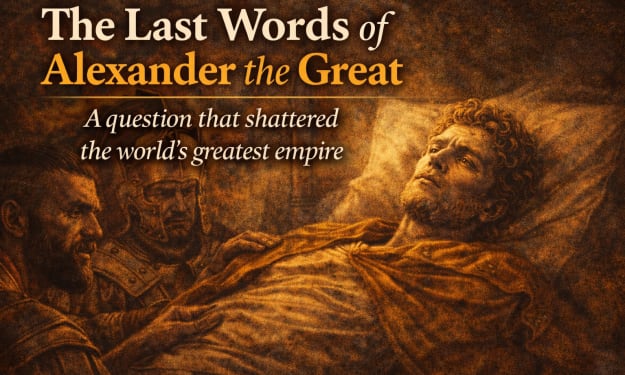
In 343 BCE, Aristotle’s life took a dramatic turn when he was invited by King Philip II of Macedon to tutor his young son, Alexander. This boy would later become Alexander the Great. Aristotle taught Alexander philosophy, ethics, politics, literature, and science. He introduced him to the works of Homer and emphasized the importance of reason and self-control. While Alexander would go on to become a military conqueror, Aristotle hoped his student would also rule with wisdom and justice. Though historians debate how much influence Aristotle truly had on Alexander’s actions, there is no doubt that their relationship connected philosophy with world-changing power.
After Alexander became king, Aristotle returned to Athens around 335 BCE and founded his own school, the Lyceum. Unlike Plato’s Academy, the Lyceum focused heavily on empirical research and systematic study. Aristotle and his students walked while discussing ideas, which is why his followers were called the “Peripatetics,” meaning “those who walk about.” At the Lyceum, Aristotle organized research across many fields, creating one of the earliest models of a research institution.
Aristotle wrote extensively, though most of his popular writings have been lost. What remains are mainly lecture notes and technical works. These texts cover an astonishing range of subjects: logic, physics, metaphysics, ethics, politics, rhetoric, poetry, biology, astronomy, and psychology. In logic, Aristotle developed the system of syllogisms, a method of reasoning that dominated logical thought for centuries. In ethics, his work Nicomachean Ethics explored the idea of virtue as a balance between extremes and argued that the goal of human life is eudaimonia, often translated as “flourishing” or “well-being.”
In politics, Aristotle studied different forms of government, analyzing monarchies, aristocracies, and democracies. He believed that the best political system depended on the character and needs of the people, not on a single perfect model. He famously described humans as “political animals,” meaning that living in a community is essential to human nature.
Despite his achievements, Aristotle’s later years were marked by difficulty. After Alexander the Great died in 323 BCE, anti-Macedonian sentiment rose sharply in Athens. Aristotle was accused of impiety, a charge similar to the one that had led to Socrates’ execution. Refusing to face trial, Aristotle left Athens, saying he would not allow the city to “sin twice against philosophy.” He retreated to Chalcis, where he died in 322 BCE at the age of sixty-two.
Aristotle’s death did not end his influence. In fact, his ideas grew stronger over time. His works were preserved by scholars in the Islamic world during the Middle Ages and later reintroduced to Europe. Thinkers such as Avicenna, Averroes, and Thomas Aquinas studied and expanded upon Aristotle’s philosophy. For centuries, Aristotle was known simply as “The Philosopher,” a title that reflected his unmatched authority in many fields.
The true story of Aristotle is not just about a man who lived long ago. It is the story of a thinker who believed that the world could be understood through careful observation, logical reasoning, and thoughtful reflection. He taught humanity to ask not only what things are, but why they are. In doing so, Aristotle shaped the foundations of Western thought and left a legacy that continues to guide minds across the world.
About the Creator
The best writer
I’m a passionate writer who believes words have the power to inspire, heal, and challenge perspectives. On Vocal, I share stories, reflections, and creative pieces that explore real emotions, human experiences, and meaningful ideas.
Keep reading
More stories from The best writer and writers in History and other communities.
Abraham Lincoln: The Long Road to Leadership
Abraham Lincoln’s journey to leadership was not a straight path paved with privilege or certainty. It was a long, uneven road marked by hardship, failure, patience, and moral growth. Born into poverty and shaped by loss, Lincoln rose not through inherited power but through resilience and a deepening sense of justice. His life story is a testament to how character is forged over time, and how leadership often grows out of struggle rather than success. Lincoln was born on February 12, 1809, in a small log cabin in Hardin County, Kentucky. His parents, Thomas and Nancy Lincoln, were poor farmers who owned little land and even fewer possessions. The frontier life was harsh and unpredictable, and young Abraham learned early the realities of physical labor. He helped clear fields, split rails, and work the soil, developing the strength and endurance that would later become legendary. Yet it was not physical work alone that shaped him—it was loss. When Abraham was just nine years old, his mother died from milk sickness, a tragedy that left a deep emotional scar. The quiet, thoughtful boy grew more introspective, learning early how fragile life could be. Formal education was rare on the frontier. Lincoln attended school only sporadically, totaling less than a year of classroom learning. But he possessed an intense hunger for knowledge. He borrowed books whenever he could—reading the Bible, Aesop’s Fables, Shakespeare, and books on history and law. He read by firelight after long days of labor, teaching himself grammar, logic, and storytelling. This self-education sharpened his mind and gave him a powerful command of language, a skill that would later define his leadership. As a young man, Lincoln left home and moved to New Salem, Illinois. There, he tried his hand at various jobs: store clerk, postmaster, surveyor, and finally lawyer. Many of these early efforts ended in failure. His first business collapsed, leaving him deeply in debt for years. He lost elections, struggled financially, and endured periods of deep sadness. Yet each setback strengthened his resolve. Lincoln developed a reputation for honesty—earning the nickname “Honest Abe”—and for fairness in his dealings with others. People trusted him not because he was flawless, but because he was sincere. Lincoln’s first steps into politics came in the Illinois state legislature, where he served multiple terms. He was not a fiery revolutionary but a careful thinker who believed in progress through law and debate. During this period, he also trained himself in the practice of law, riding the legal circuit across rural Illinois. In courtrooms and taverns, Lincoln listened to people’s concerns, learned their values, and understood the rhythms of ordinary American life. These experiences grounded his leadership in empathy and realism. The issue that would ultimately define Lincoln’s legacy—slavery—was one he approached with moral seriousness and caution. He personally believed slavery was wrong, but he also understood the deep divisions it caused in the nation. Rather than calling for immediate upheaval, Lincoln argued that slavery should not expand into new territories. His belief was rooted in the idea that the nation could not endure permanently half slave and half free. This position brought him national attention during the famous debates with Senator Stephen A. Douglas in 1858. Although Lincoln lost that Senate race, the debates revealed his clarity of thought, moral conviction, and ability to speak to the conscience of the nation. In 1860, amid rising sectional tensions, Lincoln was elected the 16th President of the United States. His victory was achieved without carrying a single Southern state, highlighting how divided the country had become. Soon after his election, several Southern states seceded from the Union, and the nation stood on the brink of collapse. Lincoln entered the presidency at its darkest hour, facing a civil war that threatened the very existence of the United States. Lincoln’s leadership during the Civil War was tested daily. He was mocked for his appearance, criticized for his decisions, and blamed for the immense suffering the war caused. He faced generals who disobeyed him, politicians who doubted him, and citizens who lost faith. Yet Lincoln remained steady. He believed the Union must be preserved, not for power, but for the principle that a democratic nation could survive internal conflict. Over time, Lincoln’s thinking on slavery evolved. What began as a desire to limit its spread grew into a firm commitment to its abolition. In 1863, he issued the Emancipation Proclamation, declaring freedom for enslaved people in Confederate-held territories. Though limited in immediate effect, it transformed the moral purpose of the war. The fight was no longer only about saving the Union—it was about human freedom. Lincoln’s greatest strength as a leader was not dominance, but humility. He listened to opposing views, admitted mistakes, and learned from experience. His speeches reflected this depth of character. The Gettysburg Address, delivered in just a few minutes, redefined the war as a struggle for equality and democratic ideals. His Second Inaugural Address showed compassion even toward the defeated South, urging the nation to heal “with malice toward none, with charity for all.” Tragically, Lincoln would not live to see the full reconstruction of the nation he fought to preserve. He was assassinated in April 1865, just days after the Civil War effectively ended. His death shocked the nation and turned him into a symbol of sacrifice and unity. Abraham Lincoln’s long road to leadership teaches us that greatness is rarely born—it is built. It is built through hardship, patience, learning, and moral courage. Lincoln did not rise because he never failed; he rose because he never stopped growing. From a poor boy in a log cabin to a president who reshaped a nation, his life remains one of the most powerful examples of leadership grounded in humanity, perseverance, and principle.
By The best writer about 10 hours ago in History
The Fall of Tibet to a Communist State: History, Causes, and Consequences
The incorporation of Tibet into the People’s Republic of China (PRC) after 1950 was not a single event but a complex process involving military force, political negotiation, ideological conflict, and long-lasting resistance. Understanding this fall requires examining Tibet’s historical status, China’s communist revolution, and the profound consequences that followed.
By Say the truth 3 days ago in History
Smart phones, Humans and Aliens.
WARNING. I will be tapping into one of your favorite creative tensions: The absurdity of humans worshipping their glowing rectangles as if they were tiny oracles. There’s something deliciously poetic about that contradiction, and it lends itself beautifully to an instructive proviso.
By Novel Allen5 days ago in Poets



Comments
There are no comments for this story
Be the first to respond and start the conversation.