
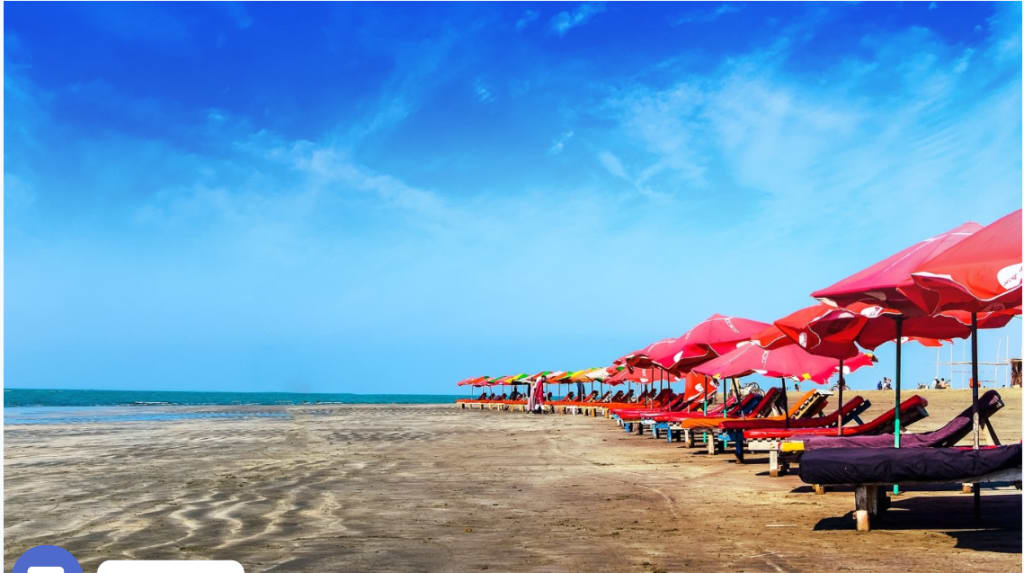
Cox's Bazar, a town on the coast in the southeast of Bangladesh, is well-known for having the world's longest natural sea beach. While the beach attracts visitors for its scenic beauty, this one-of-a-kind location also has a fascinating past and vibrant culture. The legacy of Cox’s Bazar encompasses tales of ancient trade, colonial encounters, diverse ethnic groups, and a resilient local identity.
Background in History Medieval and Ancient Times The region that is now known as Cox’s Bazar has a long and layered history, extending back to ancient times. Historically, the southeastern coast of Bengal was part of the Arakan kingdom (now Rakhine State in Myanmar). Cox's Bazar's coastal route was utilized for trade and cultural exchange by the Arakan people and other traders from Southeast and South Asia. Before the Arakanese period, this region was influenced by Buddhist kingdoms and local tribal rulers. The ancient name of the area was Palongkee, and it was known for its natural harbor and fishing settlements. Additionally, merchants from Europe and the Middle East passed through, making it a center for early maritime interaction. Arakanese Rule and Influence
During the 9th to 17th centuries, the region fell under Arakanese control. This period left a strong cultural imprint, especially among the indigenous Rakhine people, many of whom still live in the region. Buddhism, architecture, and festive customs that blended with local elements were brought by the Rakhine. Mughal Period
In the 17th century, the Mughals launched expeditions to expand their influence in Bengal. Mughal Subahdar Shaista Khan defeated the Arakanese forces and brought the coastal area under Mughal authority. However, due to its remote location, the region was only loosely administered.
The Mughal period also saw the arrival of Muslim traders and settlers who introduced Islamic culture, Sufi traditions, and Bengali-Muslim customs.
Colonial Era: Origins of the Name
The name Cox’s Bazar originates from Captain Hiram Cox, a British East India Company officer. In the latter part of the 18th century, he was given the position of Superintendent of Palongkee. The rehabilitation of the Rakhine (Magh) refugees who had fled Arakan due to conflict and persecution was his primary objective. Captain Cox was well-respected for his humanitarian work. After his death in 1799, a market (bazar) was established in his honor, which came to be known as Cox’s Bazar.
During British colonial rule, Cox’s Bazar remained relatively quiet but gradually developed as a retreat due to its natural beauty. The British built rest houses and bungalows for officials, and the town began to gain recognition as a tourist destination.
Post-Independence Development
After the independence of Bangladesh in 1971, Cox’s Bazar saw significant development as both a tourist attraction and a strategic location near the Myanmar border. The government invested in infrastructure, built roads, and promoted tourism, which brought economic growth.
The Ramu Cantonment was established to safeguard the southeastern frontier. The population grew rapidly with settlers from other parts of Bangladesh. In recent years, Cox’s Bazar has also become known globally as the site of large Rohingya refugee camps, following the humanitarian crisis in Myanmar.
Cultural Landscape
Ethnic Diversity
Cox’s Bazar is home to a mix of ethnic communities:
Bengalis: The majority population, who practice Islam and contribute to the region’s mainstream culture.
Rakhine (Magh): A Buddhist ethnic group with deep historical roots in the region.
Chakma, Marma, and Tripura are three indigenous tribes that have cultural and economic ties to Cox's Bazar. These tribes come from the Chittagong Hill Tracts. Cox's Bazar, home to mosques, temples, and pagodas, is a cultural mosaic of this diversity. Language and Literature
Bengali is the dominant language, but local dialects and Rakhine speech are also spoken. Oral traditions, folktales, and Baul songs are part of the cultural expression. In recent years, writers and poets from the region have published works inspired by the sea, the hills, and the cultural harmony.
Festivals and Traditions
Cox’s Bazar observes both national and local festivals.
Eid-ul-Fitr and Eid-ul-Adha are celebrated with great enthusiasm by the Muslim population.
Buddha Purnima is a major festival for the Rakhine community, marked with candle lighting, prayers, and processions.
Kathina Ceremony (robe-offering) and traditional Rakhine Water Festival are unique to the Buddhist culture of the area.
During these festive seasons, handicrafts, particularly Rakhine textiles and wood carvings, are in high demand. Cuisine
Cox's Bazar's coastal location contributes to its rich and flavorful culinary culture. Seafood: Fresh fish, prawns, and crabs are common, cooked in traditional Bengali or tribal styles.
Rakhine cuisine includes dishes like spicy fish soups, sticky rice, and pickled bamboo shoots.
Street food in the town, including "shutki bhuna" (dry fish curry), "nona ilish", and grilled squid, reflect the local palate.
Food in Cox’s Bazar often combines coastal freshness with the spice-rich traditions of Bengali and tribal kitchens.
Arts and Crafts
Traditional weaving by Rakhine women is highly prized. They use handlooms to produce colorful shawls, bags, and garments. Bamboo and cane products, such as baskets and furniture, are also made locally.
Fishermen still use traditional wooden boats and handmade nets, which are part of the region’s folk heritage.
Tourism and Cultural Identity
Tourism has transformed Cox’s Bazar into an economic powerhouse. While this has brought prosperity, it also raises concerns about cultural erosion. Many local traditions are commercialized or under threat due to rapid urbanization.
Cultural heritage preservation efforts continue, including: Building museums and cultural centers.
Promoting eco-tourism and responsible travel.
Supporting indigenous artisans and cultural festivals.
Conclusion
Cox’s Bazar is not just a beach—it is a living chronicle of history, migration, faith, and tradition. From ancient maritime roots and Arakanese heritage to colonial reform and contemporary tourism, the story of Cox’s Bazar is deeply interwoven with cultural richness and resilience.
Understanding and preserving this heritage is essential, not just for tourists or locals, but for all who value the beauty of diversity, history, and human connection in one of the most stunning corners of Bangladesh.


Comments
There are no comments for this story
Be the first to respond and start the conversation.