
Pakistan–Saudi Arabia Mutual Defense Agreement
Strengthening Bilateral Ties Through Defense Cooperation

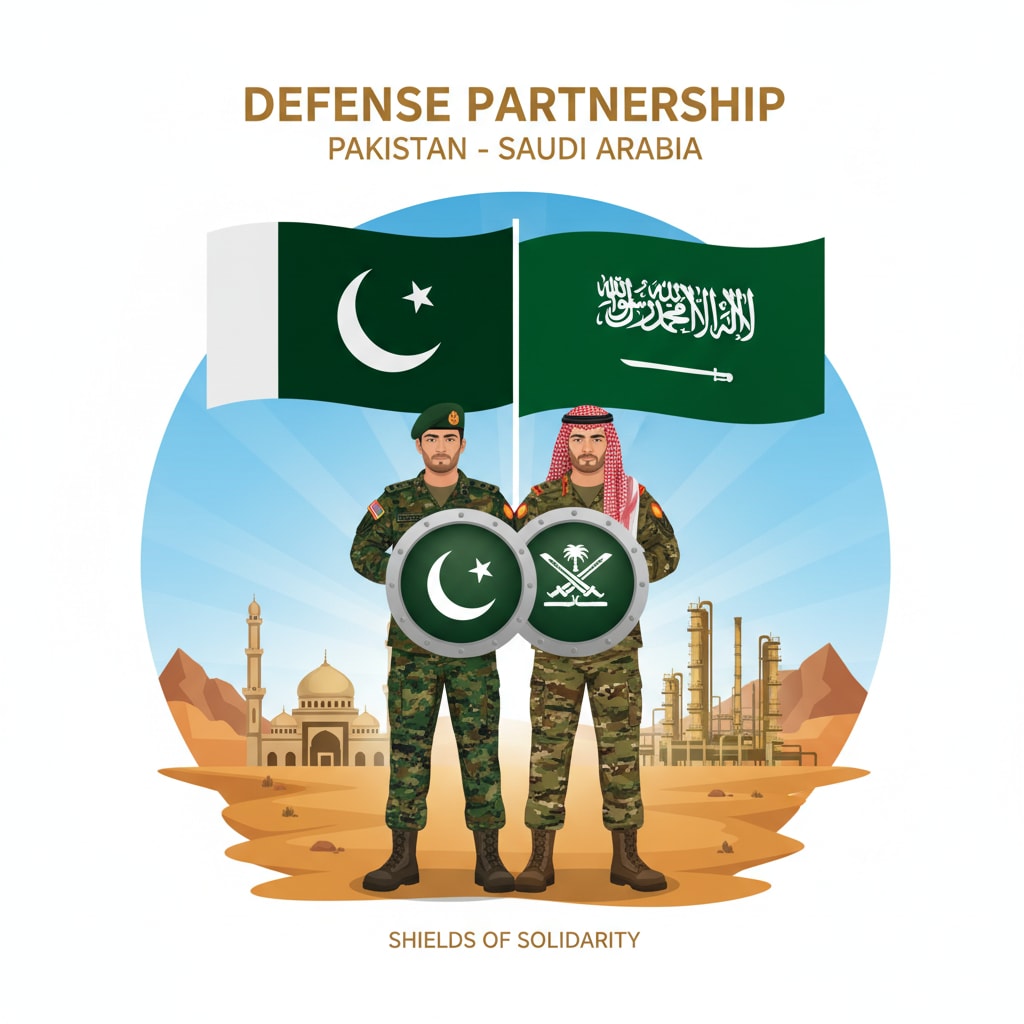
Pakistan–Saudi Arabia Mutual Defense Agreement: A Strategic Shield for Regional Security
Strengthening Bilateral Ties Through Defense Cooperation
Pakistan and Saudi Arabia share a long history of cultural, religious, and political bonds, rooted in their common Islamic identity and mutual respect. Over the decades, this relationship has transformed into one of the most enduring partnerships in the Muslim world, encompassing economic cooperation, labor migration, religious affinity, and security collaboration. Among these aspects, defense and military cooperation stand as the most critical pillars of their bilateral ties. The idea of a mutual defense agreement between Pakistan and Saudi Arabia is not only a natural extension of this partnership but also a strategic necessity in today’s volatile geopolitical environment.
Historical Background of Military Cooperation
Since the 1960s, Pakistan has been a key defense partner for Saudi Arabia. Pakistani military trainers and advisors have long served in the Kingdom, helping in the professional development of the Saudi armed forces. During times of crisis, Pakistan has deployed troops to Saudi soil for defensive purposes, including the 1969 border clashes between Saudi Arabia and South Yemen, where Pakistani pilots played a vital role in protecting Saudi territory.
This historical precedent demonstrates that defense collaboration is not new but deeply embedded in the DNA of Pakistan–Saudi relations. A formalized mutual defense agreement would only codify what has been practiced informally for decades.
Key Features of a Mutual Defense Agreement
A Pakistan–Saudi Arabia mutual defense pact could include the following strategic components:
- Joint Defense Commitment
Both countries would pledge to defend each other against any external aggression or threat to sovereignty.
2.Military Training and Technology Sharing
Pakistan, with its well-trained army and nuclear-capable defense structure, could provide advanced training, joint exercises, and knowledge-sharing to further modernize Saudi defenses.
3.Counterterrorism Cooperation
Both nations face threats from extremist groups. A defense pact would enhance intelligence sharing, joint counterterrorism operations, and border security management.
4.Defense Industry Collaboration
Pakistan’s defense production facilities, such as HIT (Heavy Industries Taxila) and PAC (Pakistan Aeronautical Complex), could cooperate with Saudi defense industries to co-develop weapons and technology.
5.Maritime Security and Red Sea Protection
Given Saudi Arabia’s strategic Red Sea ports and Pakistan’s Arabian Sea coastline, both could cooperate on naval security and safeguarding trade routes.
Strategic Importance for Pakistan
For Pakistan, a defense agreement with Saudi Arabia strengthens its international standing and economic security. Saudi Arabia is a major source of financial aid, oil supply on deferred payments, and remittances from millions of Pakistani workers. A formal pact would reinforce Pakistan’s strategic depth in the Middle East and give it a stronger role in Gulf security architecture.
Additionally, in the face of regional challenges—particularly tensions with India and instability in Afghanistan—Pakistan’s partnership with Saudi Arabia ensures a reliable ally in times of diplomatic or financial crises.
Strategic Importance for Saudi Arabia
Saudi Arabia faces multiple security challenges: tensions with Iran, the war in Yemen, and threats to oil infrastructure from missile and drone attacks. A defense pact with Pakistan would give Riyadh access to Pakistan’s large, battle-hardened military and nuclear-capable deterrence. This partnership would also reduce Riyadh’s dependence on Western security guarantees, offering an Islamic alternative for regional defense.
Moreover, Pakistan’s experience in counterinsurgency and asymmetric warfare would be invaluable to Saudi Arabia in combating regional extremist groups.
Regional and Global Implications
A Pakistan–Saudi Arabia defense agreement would have ripple effects across the region. Iran may view it as a counterbalance to its influence, while Western powers could see it as a shift toward greater self-reliance in the Muslim world. At the same time, such a pact could serve as a foundation for a broader Islamic defense alliance, strengthening the concept of collective security within the Organization of Islamic Cooperation (OIC).
However, care would need to be taken to ensure the agreement does not escalate sectarian divides or alienate other regional actors. The focus should remain on defensive cooperation rather than offensive posturing.
Conclusion
A mutual defense agreement between Pakistan and Saudi Arabia would mark a historic milestone in Muslim world unity, providing a robust security framework for both nations. It would formalize decades of military cooperation, ensuring joint protection against external threats, while boosting regional stability. For Pakistan, it means economic and strategic assurance; for Saudi Arabia, it guarantees reliable military support and enhanced sovereignty. Together, the two countries could set an example of unity, resilience, and self-reliance in the Islamic world.
About the Creator
Wings of Time
I'm Wings of Time—a storyteller from Swat, Pakistan. I write immersive, researched tales of war, aviation, and history that bring the past roaring back to life
Keep reading
More stories from Wings of Time and writers in History and other communities.
UN Report Accuses Israel of Genocide and War Crimes in Gaza
Key UN Reports & Findings Settlement & Annexation in West Bank / East Jerusalem A report by the UN Human Rights Office (OHCHR), covering from Nov 2023 to Oct 2024, states that Israel has been increasing settlement activity, demolishing Palestinian homes, and expanding Israeli settler outposts. It says these actions violate international law, including the right to self-determination, and cites the International Court of Justice confirming those legal breaches. It urges Israel to cease settlement activity, evacuate settlers in occupied territory, stop forcible transfers, and prevent settler attacks.
By Wings of Time 4 months ago in History
Seven Dials
Introduction Seven Dials is a famous and historic area located in London, England. It is found near Covent Garden, one of the busiest and most popular parts of the city. Seven Dials is known for its unique road design, rich history, old buildings, shops, cafés, and lively atmosphere. Today, it is a popular place for tourists and local people who enjoy culture, shopping, and history.
By Farhan Sayed2 days ago in History
Julius Caesar: The Rise and Fall of a Legend
The Rise and Fall of Julius Caesar In the first century BCE, the Roman Republic stood as one of the most powerful states in the ancient world. Its armies conquered vast territories, its laws shaped civilizations, and its Senate governed through a delicate balance of tradition and authority. Into this complex political world was born Gaius Julius Caesar in 100 BCE—a man whose ambition, brilliance, and fate would forever change Roman history.
By The best writer 7 days ago in History




Comments
There are no comments for this story
Be the first to respond and start the conversation.