
Pakistan: Born from a Dream
The Struggle, Sacrifice, and Spirit Behind a Nation’s Creation

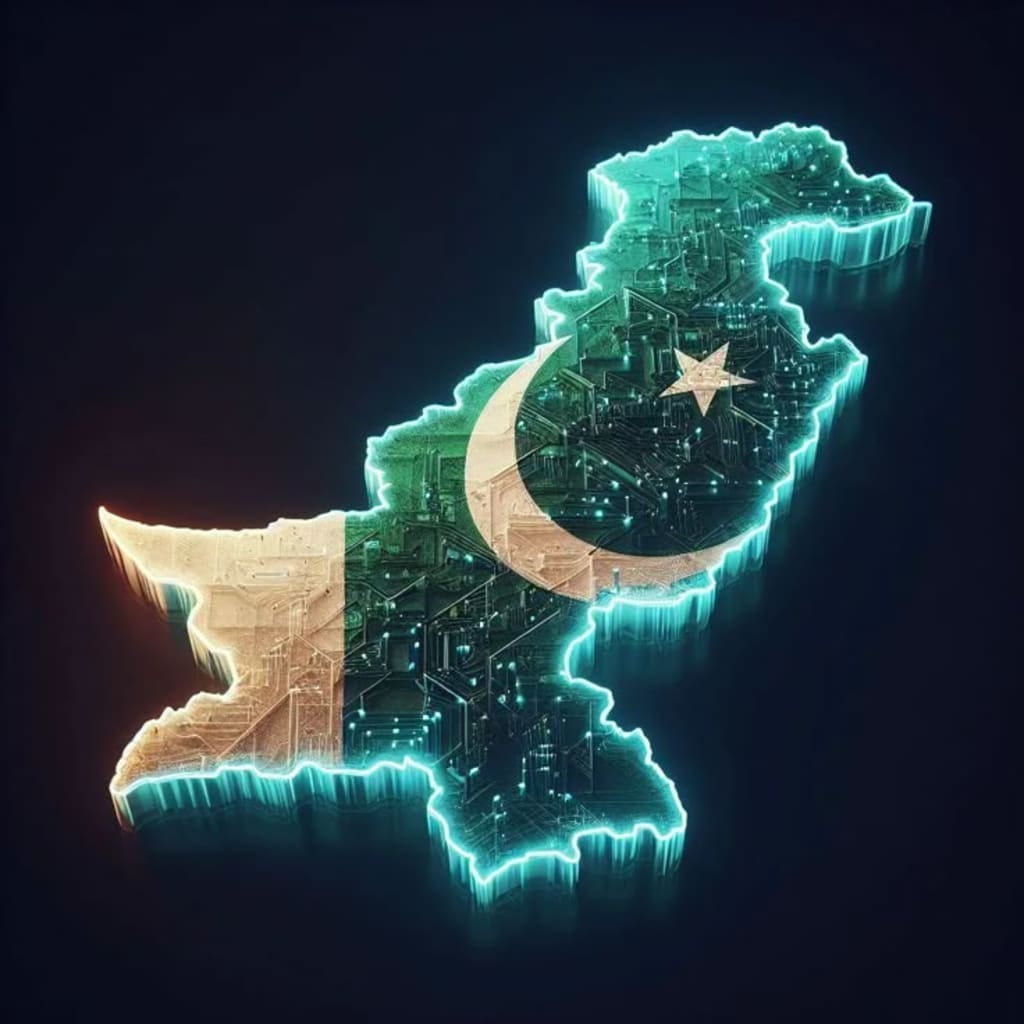
In the summer of 1947, the world witnessed the birth of a new nation—Pakistan. It was not just the drawing of borders or the shifting of power. It was the fulfillment of a dream that had taken root decades earlier, in the hearts of millions who longed for a homeland where they could live in freedom, dignity, and peace. Pakistan was not born easily. It emerged from a storm of struggle, sacrifice, and vision—etched into history by courage and conviction.
The dream of Pakistan began with the idea of self-identity. In British-ruled India, Muslims were a significant minority with their own religious, cultural, and political values. While many leaders hoped for a united India, others feared that Muslim voices would be drowned in a Hindu-majority state. One of those voices was Allama Muhammad Iqbal, a philosopher and poet, who in 1930 envisioned an independent Muslim state in the northwest of India. It was not merely a geographical idea—it was a spiritual and cultural aspiration. He believed Muslims needed a homeland to preserve their values, beliefs, and way of life.
But it was Muhammad Ali Jinnah, the leader of the All-India Muslim League, who turned that vision into a political mission. Once a strong advocate of Hindu-Muslim unity, Jinnah grew increasingly disillusioned with the Indian National Congress and its failure to ensure Muslim rights. Calm, firm, and articulate, Jinnah became the face of the Pakistan Movement. He was called Quaid-e-Azam—the Great Leader—by the people who placed their hopes in him.
The road to Pakistan was neither short nor smooth. In the 1940s, tensions between Hindus and Muslims in India grew. The Muslim League demanded a separate nation, while the Congress opposed partition. The British, exhausted by World War II and unable to manage growing unrest, announced their intention to leave India. Talks between leaders failed repeatedly, and the country edged closer to division.
As the idea of Pakistan took shape, it ignited emotions across the subcontinent. For Muslims who had felt neglected or fearful of majority rule, it was a beacon of hope. For others, it was a source of confusion, fear, and conflict. When independence finally came in August 1947, it arrived with both celebration and sorrow. Pakistan was declared a sovereign state on 14th August 1947, just a day before India’s independence.
But partition came with a heavy price.

Millions were forced to leave their homes. Hindus and Sikhs in what became Pakistan fled to India, while Muslims in India tried to reach the new Pakistan. The migration sparked violence, chaos, and heartbreak. Trains arrived full of corpses. Cities burned. Families were torn apart forever. An estimated one million people lost their lives, and more than 10 million were displaced—one of the largest human migrations in history.
Amidst this tragedy, Pakistan was born.
From the very beginning, the country faced enormous challenges. It had no proper government offices, no functioning capital, and a weak economy. Refugees poured into cities, and violence still simmered at the borders. Quaid-e-Azam worked tirelessly despite his failing health. In his speeches, he emphasized equality, unity, and justice. He envisioned a Pakistan where all citizens, regardless of religion, would live in peace.
Sadly, Jinnah did not live long to see his dream fully unfold. He died in September 1948, just a year after independence. His death left a void that would be hard to fill.
In the decades that followed, Pakistan struggled to find stability. Political upheavals, military coups, wars with India, and economic instability marked its early years. But despite these difficulties, the spirit of the Pakistani people endured. They built cities, schools, industries, and a strong cultural identity. The people of Pakistan stood resilient through earthquakes, floods, and conflicts. Their love for their homeland never faded.
Today, Pakistan is a country of over 240 million people. It is a land of breathtaking mountains, rich rivers, vibrant traditions, and immense potential. It is home to poets like Faiz Ahmed Faiz, legends like Abdul Sattar Edhi, scientists like Dr. Abdul Qadeer Khan, and athletes who’ve inspired generations.
The journey of Pakistan is still being written. Its challenges remain, but so does its hope. The dream that led to its creation continues to inspire its people to strive for a better, fairer, and more united nation.
Because Pakistan was not just born from a dream—it survives because of one.
About the Creator
Abdullah khan
My name
Abdullah khan
instagram ; @abdullah_khan15549
Keep reading
More stories from Abdullah khan and writers in History and other communities.
The Beautiful Game: A Journey Through Football History
Football, or soccer as it's known in some corners of the world, is more than just a game. It is a global language, a passion shared by billions, and a cultural phenomenon that transcends borders, languages, and ideologies. But how did this simple game with a ball and two goals become the most beloved sport on Earth?
By Abdullah khan8 months ago in History
Two Grumpy Old Men Solve the Problem
Marty and Steve were two grumpy old men who lived together. They had known each other for years. Marty had been a bachelor all his life. Steve said it was because no one could stand to ever live with. Marty’s standard reply was “Well, you are, so what sort of a moron does that make you!”
By Calvin Londona day ago in Humor


Comments
There are no comments for this story
Be the first to respond and start the conversation.