
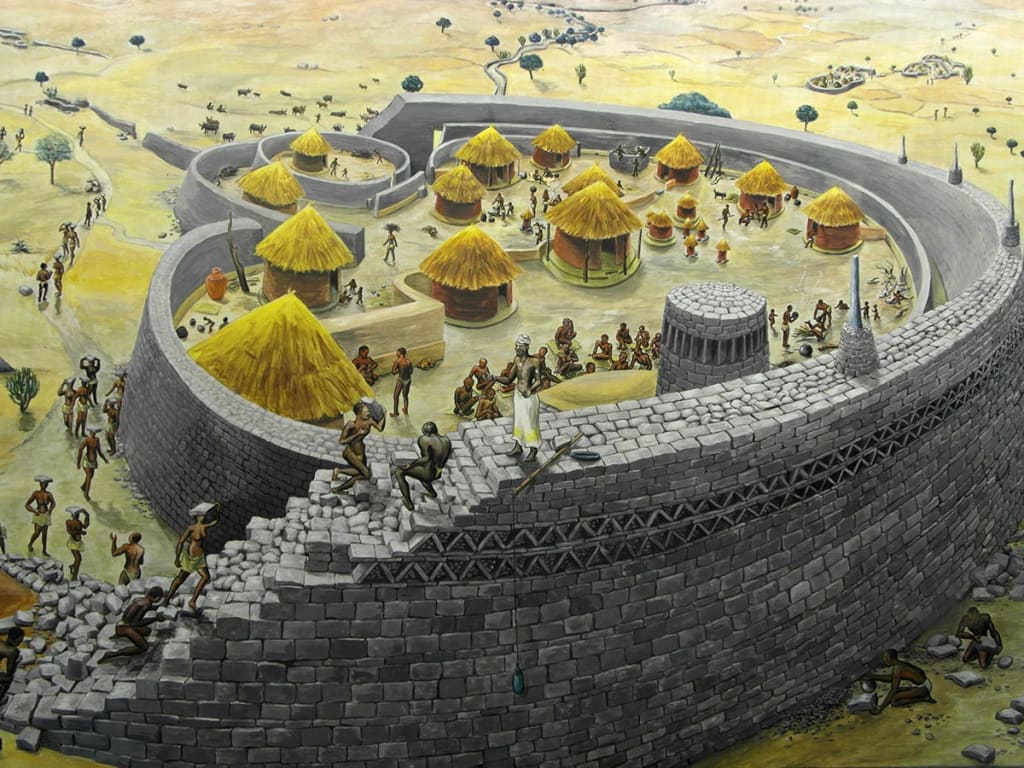
The Shona language is widely spoken in the region between the Zambezi and Limpopo rivers in Southern Africa, particularly in modern Zimbabwe. It is one of the main official languages in Zimbabwe, with approximately seventy percent of the population being native Shona speakers. Smaller groups of Shona speakers can also be found in neighboring Zambia and Mozambique.
The origins of the word "Shona" have been a subject of study and debate among scholars. In 1929, the colonial administration established a Language Committee to determine a common name for the people and language in Southern Rhodesia (now Zimbabwe), excluding Matebeleland. The committee sought the expertise of linguist Clement Doke from the University of Witwatersrand. In 1931, the Doke report recommended a standardized alphabet of 32 characters and the recognition of six dialects, ultimately leading to the adoption of the name "Shona" for the language.
The meaning and origins of the word "Shona" have various theories. According to some historical evidence, the Kalanga people referred to the western part of their country as "Ntshonalanga" around AD 1000, which meant "the setting of the sun." Over time, this term transformed into "Mashonaland." Additionally, accounts from travelers between 1200 and 1600 AD mention a people called "Soyouna" or "Sajona" inhabiting the Zambezia region. Portuguese adventurers also referred to Mwene Mutapa as the King of Matshone. Another theory suggests an Indo-German linguistic origin, associating "Shona" with the word for "beautiful gold" in Hindu, "sona." This word might have been corrupted to "Shona" over time.
It is important to note that the Shona people did not originally refer to themselves as "Shona." Instead, they identified with their specific localities, such as Wamaungwe, Wabudsha, or Waeru, and collectively as "Tiri Vanhu," meaning "We are People." The language they spoke was designated as Chivanhu. However, during the colonial era, the term "Shona" was favored and used to refer to both the people and the language, disregarding their diverse local identities.
Within the Shona cluster, there are five distinct dialects: Korekore, Zezuru, Manyika, Karanga, and Ndau. Kalanga, spoken in Matebeleland, is also considered part of the Shona group but more divergent. Manyika gave rise to a smaller dialect called Chibarwe, originally spoken in Mashonaland East. The Karanga dialect derives its name from the word "Kalanga," which means "the people from the east" or "the people from where the sun rises." It is mainly spoken in southern Zimbabwe, particularly in the Midlands province. Each dialect has its own sub-dialects, further reflecting regional variations.
Two languages, Ndau and Manyika, have partial intelligibility with Shona and are considered ethnically Shona. Ndau is spoken in Mozambique and eastern Zimbabwe, while Manyika is spoken in eastern Zimbabwe, near Mutare, specifically in Chipinge. Efforts have been made to introduce Ndau literacy material into primary schools.
In conclusion, the existence of multiple dialects within the Shona language presents sociolinguistic complexities. Speakers of different dialects may engage in linguistic accommodation to facilitate communication. The Zezuru dialect serves as the standard language for education, administration, media, and literature. However, dialects hold strong social and cultural significance, contributing to a sense of identity and belonging. Individuals who speak different dialects may need to learn
About the Creator
Keep reading
More stories from writers in History and other communities.
Warfare Through the Ages: How Military History Shaped Human Civilization
Warfare has always been part of human civilization. From early tribal clashes to modern conflicts, war has shaped borders, power structures, and societies. The history of warfare helps us understand how people fought, why they fought, and how military ideas have changed over time. Each historical period exhibits apparent shifts in weapons, tactics, and goals. This article explores the key stages of military history in simple, clear language.
By Matthew Pothoffabout 13 hours ago in History
Power's Sake
When it comes to gaining power, bad people use it to gain more They never gain power to do something with it, they gain power to have it, relish in it, double it down on itself so it grows exponentially and never goes anywhere. Even if you see the people in power commit an atrocity, that is never the true goal. It is a deplorable action for sure but the action itself usually doesn't matter it's the outcome.
By Donny Foley3 days ago in History




Comments
There are no comments for this story
Be the first to respond and start the conversation.