
Newport Arch: A Living Legacy of Roman Britain
Roman Britain

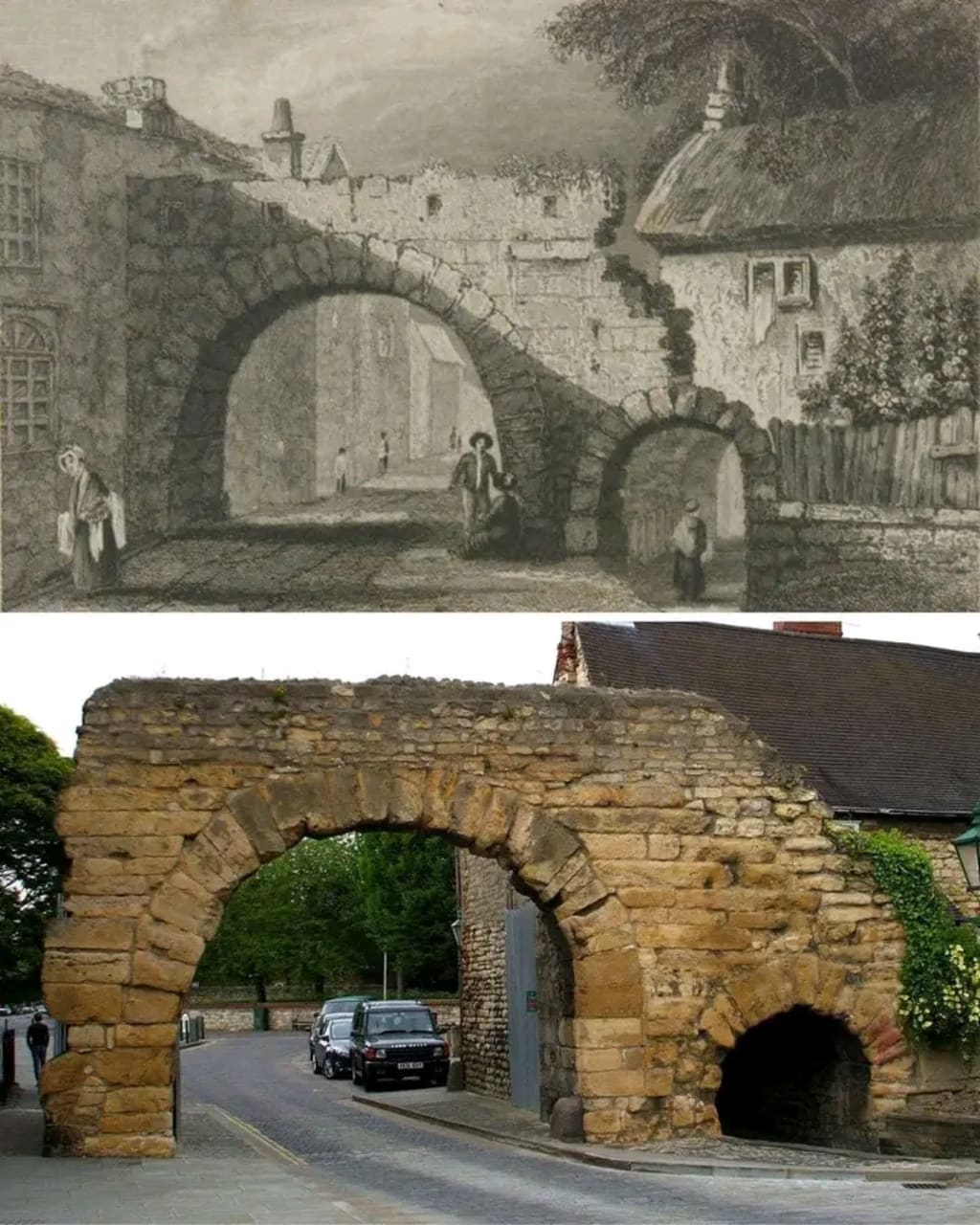
Tucked away in the historic city of Lincoln, England, stands a remarkable relic from Roman times: Newport Arch. This ancient structure, dating back over 1,300 years, holds the distinction of being the only Roman arch in Britain still in use for daily transportation. It is a rare example of Roman architecture that continues to serve its original purpose, allowing vehicles and pedestrians to pass through as it once did for Roman soldiers and traders. Newport Arch offers a tangible connection to Britain's Roman past, embodying the endurance and engineering brilliance of an empire that left a lasting mark on the British Isles.
A Gateway to the Roman World
Newport Arch was constructed in the 3rd century AD as part of the city walls of Lindum Colonia, the Roman name for what is now Lincoln. At the time, Lindum Colonia was an important settlement in Roman Britain, a bustling hub of military and civilian activity. The arch was one of the northern gateways to the city, providing access to the Roman road known as Ermine Street, which led from London to York. This road was a major artery of the Roman Empire’s infrastructure in Britain, facilitating trade, communication, and the movement of troops across the province.
The Romans were master builders, and Newport Arch is a testament to their skill in architecture and engineering. Constructed from local limestone, the arch was designed to be both functional and imposing. It originally served as a grand entrance to the city, symbolizing Roman power and the strength of the empire. For centuries, travelers and traders would have passed beneath the arch as they made their way along the Roman roads that crisscrossed the country, linking Britain to the far-flung territories of the empire.
The Endurance of Roman Engineering
What makes Newport Arch truly remarkable is not only its age but its continued use. Despite being more than 1,300 years old, the arch still functions as a gateway, allowing vehicles and pedestrians to pass through it on a daily basis. While many Roman structures in Britain have crumbled or been repurposed over the centuries, Newport Arch has withstood the test of time, thanks in large part to the Romans' meticulous construction techniques.
The Roman approach to building involved the use of durable materials and advanced engineering methods. Newport Arch was constructed with heavy limestone blocks, fitted together with precision and without the use of mortar. The weight of the stones and their careful placement ensured that the arch could support itself and bear the load of the city wall above it. This self-supporting design is one of the reasons why the arch has survived for so long and continues to function as a transportation route today.
In the centuries following the collapse of the Roman Empire, Newport Arch was incorporated into the medieval city of Lincoln, where it remained a vital part of the city's infrastructure. Although parts of the original structure have been lost over time, particularly during the medieval period, the arch has been preserved and maintained. In fact, Newport Arch has undergone several restoration efforts over the years to ensure its survival, including repairs after it was damaged by a lorry in 1964. Despite these challenges, the arch remains one of the best-preserved examples of Roman engineering in Britain.
A Window Into Roman Britain
Newport Arch not only serves as a functional structure but also as a window into the life and times of Roman Britain. It stands as a reminder of the influence the Roman Empire had on Britain’s development—its cities, roads, and infrastructure. When walking through Newport Arch, one can almost imagine what life would have been like for the Roman citizens, soldiers, and merchants who passed through its gate nearly 2,000 years ago.
The arch also reflects the Roman emphasis on practical infrastructure. The Roman road system was one of the most advanced in the ancient world, and Ermine Street, the road connected to Newport Arch, was part of that vast network. These roads were straight, well-constructed, and designed to allow for the rapid movement of troops, goods, and information. Ermine Street linked key Roman cities such as London, Lincoln, and York, serving as a crucial trade route and military highway. Newport Arch was a gateway to this world of commerce and conquest.
The Legacy of Newport Arch
Today, Newport Arch is more than just an ancient gateway; it is a symbol of Lincoln’s rich history and a reminder of the legacy of Roman Britain. It continues to play an active role in the daily life of the city, much as it did in Roman times. The arch also draws visitors from around the world who come to marvel at its longevity and to experience a piece of living history.
As the only Roman arch in Britain still in use for transportation, Newport Arch occupies a unique place in the nation’s architectural heritage. Its survival speaks not only to the durability of Roman engineering but also to the efforts of those who have worked to preserve it for future generations. For residents of Lincoln and visitors alike, Newport Arch serves as a bridge between the past and the present, a tangible connection to a world long gone but not forgotten.
Conclusion
Newport Arch is a true marvel of Roman engineering and a lasting symbol of the endurance of Roman influence in Britain. For over 1,300 years, it has stood as a gateway to the city of Lincoln, witnessing centuries of history unfold around it. From the bustling days of Roman Britain to the modern era, Newport Arch has remained a vital part of the city's landscape, serving as both a functional structure and a monument to the past.
As one of the few surviving Roman arches in Britain—and the only one still in use for daily transportation—Newport Arch holds a special place in the country’s historical and architectural legacy. It is a reminder of the ingenuity and skill of the Roman builders, whose work continues to shape the world we live in today. For those who pass through its ancient stone gate, Newport Arch offers a glimpse into the distant past and a connection to the rich history that defines the city of Lincoln.
About the Creator
Keep reading
More stories from Deji Akomolafe and writers in History and other communities.
A Forgotten Era: The Early Days of Electric Vehicles
When people think of electric vehicles (EVs), they often envision them as a modern innovation—a product of the 21st century, driven by the need to combat climate change and reduce dependency on fossil fuels. However, few realize that electric vehicles have a history stretching back more than a century. In fact, electric cars were some of the first automobiles on the road, and by the early 1900s, they were a common sight. At their peak, nearly a third of all cars on the road were powered by electricity. But what happened to these early EVs, and why did they disappear for nearly a century? The answer lies in a fascinating tale of technological advancement, market forces, and the eventual dominance of internal combustion engines.
By Deji Akomolafeabout a year ago in History
Jerusalem’s Most Sensitive Sacred Site: Why the Future of Al-Aqsa Mosque Matters to the Entire World
Across the long and complicated story of human civilization, certain places acquire a meaning that goes far beyond their physical structure. They become symbols of identity, spirituality, and collective memory for millions of people. One of the most powerful examples of such a place is Al-Aqsa Mosque. Located in the ancient city of Jerusalem, Al-Aqsa Mosque is one of the most historically and religiously significant sites in the world. For Muslims, it is the third holiest place in Islam, after the sacred mosques in Mecca and Medina. Yet the importance of this location extends far beyond a single faith community. The wider Jerusalem area contains sacred sites for Muslims, Christians, and Jews, making it one of the most spiritually complex places on the planet. Because of this unique significance, any discussion about the future of Al-Aqsa Mosque often sparks global attention. Understanding why this site matters so deeply requires looking at history, religion, geopolitics, and the emotional connections that billions of people have with the city of Jerusalem. The Religious Importance of Al-Aqsa Mosque For Muslims, Al-Aqsa Mosque is not simply an architectural landmark. It represents centuries of spiritual tradition and religious devotion. According to Islamic tradition, the mosque is connected to the event known as Al-Isra wal-Mi’raj, the miraculous night journey of Prophet Muhammad ﷺ. During this event, it is believed that the Prophet traveled from Mecca to Jerusalem before ascending to the heavens. Because of this spiritual connection, the mosque holds a special place in the hearts of Muslims around the world. The mosque stands within a larger sacred compound known as Al-Haram Al-Sharif, which contains several historic structures, courtyards, and prayer areas. This entire complex is considered a sacred site within Islam and has been a place of worship for centuries.
By The Insight Ledger a day ago in History


Comments
There are no comments for this story
Be the first to respond and start the conversation.