
Myth in Modern Times
The Origins of Myth and Its Adaptation in Pop Culture
As a kid, there was no better feeling than waking up on Christmas morning and seeing a ton of presents under the tree. There's no drug on earth that can match the rush I felt during those mornings. The pure euphoria that came with knowing I was about to get the Lego set or video game console I had spent the whole year waiting for.
Behaving well and keeping up with my high honor karma playthroughs wasn’t always easy, but it was always worth it—especially when the alternative meant being abducted, boiled alive, and eaten as a midnight snack. Wow, that escalated quickly.
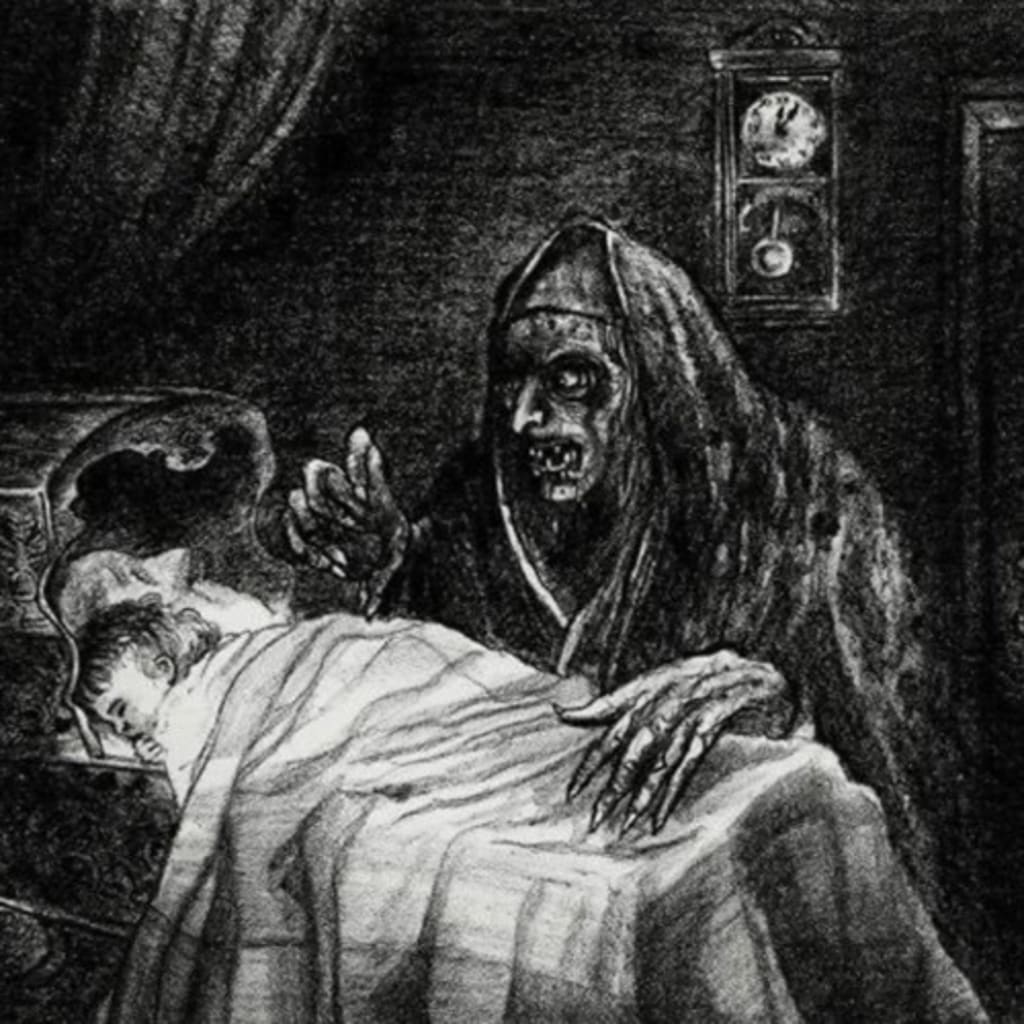
Now, my parents were never that strict, but there are people who really do use this kind of strategy to make their kids behave. Instead of empty threats about a naughty list and no presents, kids in Iceland and other countries were warned about Gría, the child-eating troll woman lurking in the mountains around their homes. Gría has the horns of a goat, multiple heads with three burning eyes on each, ears that hang down to her shoulders, a ram’s nose, dirty teeth, and a hairy chin.
She’s known to drape herself in animal skins, allowing her multiple tails to peek out from behind. In other words, she gives your mom a run for her money.
You don’t have to be a mythology or folklore expert to know about Gría because in recent years, she’s been making appearances in movies, video games, and TV shows, each with its own unique and emotional take on her backstory.
Well, almost all of them. But how accurate are these portrayals when compared to the myths and folktales? Did they honor her messed-up origins, or did they soften her edges for modern audiences, as Hollywood is so prone to doing?
So first things Who is Gría, and what does she do? Well, the answers to those questions depend on when you look in history because Gría has undergone quite an evolution over the past few centuries. What began as a brief mention in the Viking sagas and the Eddas, where her name appeared in a poem called Tro Vena alongside many other female trolls, has since expanded into a much richer story.
Over time, Gría was given a lazy, degenerate husband, troublesome children, and even a cat that kills and eats anyone who doesn’t receive new clothes during the holidays. But believe it or not, none of them are as terrifying as she is.
In the medieval period, trolls like Gría were known for eating humans, particularly children. However, they usually avoided villages and settlements, preferring to pick off lone travelers who strayed too far from the path. As a result, they became symbolic of the dangers lurking in Iceland’s harsh winters and the perils of venturing into the unknown. But Gría is different.
At first, she was just like any other troll, and parents would warn their children to be careful when going outside to avoid being snatched by her. This was around the 1300s, a couple of centuries after she was first mentioned in the Eddas. But eventually, Gría grew tired of waiting for her meals to wander into her lair, and she decided to take matters into her own hands. By the 1700s, her legend had evolved, and now she hunted at the same time every year.
During the Yule tide celebrations, for those who don't know, before Christmas existed, pagans in Iceland celebrated a holiday called Yule. This was a time when families and friends would come together to eat, drink, and be merry—whether they were alive or not. It was a magical period when mythical creatures like trolls, elves, and fairies would emerge from the wilderness surrounding civilization. One such creature was Gría, who would visit every family's doorstep and demand their naughtiest child. She would then stuff them into her bag.
After gathering her victims, Gría would return to her dilapidated home hidden in the wilderness or to her cave in Iceland’s infamous lava fields. It was here that the children faced fates worse than anything their young minds could comprehend. They were punished—brutally beaten and battered—until tender, then dropped into Gría’s boiling cauldron, where they spent their last moments in agony, wondering what they could have possibly done to deserve such a fate.
Here’s the darkest twist: the parents could have easily scared Gría off if they wanted to, but some would look at their children—whether they were a little brat or just a nuisance—and decide they weren’t worth the effort of raising. So, they'd give them up willingly. This is kind of like when your parents would threaten to call Santa and tell him you’d been bad, so he'd bring you coal instead of presents. But as terrifying as that seems, learning about Gría now makes me think I might have been a little too afraid of coal back then.
I mean, just listen to these descriptions of Gría and tell me—would you rather face her, or a gift-wrapped box of coal? Medieval poets like Stefan Olson described her with the nose of a ram, a beard, a mouth like a dog, and eyes burning like embers. In 1650, Guthmunderor said she had goat horns, dirty teeth, wore hairy skin, and carried a broken red pole.
With such terrifying and detailed descriptions, it’s hard to understand why Hollywood would portray Gría as a 16-year-old blonde girl with perfect skin for 95% of the movie. Sure, we see her true form for about five minutes at the end, but it's one of the most underwhelming designs imaginable. It's pretty sad for a movie that cost $250 million.
but I’ll give the movie some credit for finding a way to include Gría in a way that modern audiences—especially families—can handle. Instead of her eating naughty children, she just wants to trap them all in magical snow globes.
Unfortunately, hAlthough it is not a copy-paste of the original storyer motivations are shallow and far from interesting. Apparently, Santa isn’t doing a good job of punishing naughty kids, and Gría believes it’s up to her to teach them a lesson. That’s it. There’s no complex backstory like Thanos, where she experiences trauma from the naughty list and convinces herself she’s doing the right thing. In this version, she simply thinks anyone who misbehaves, in any way, should be removed from society.
In contrast to Sabrina's chilling adventures they utilize one of the more recent developments in G's lore while creatively and truly horribly incorporating her origins. You know how they say you shouldn’t grocery shop when you’re hungry? Well, apparently witches shouldn’t babysit when they’re hungry either.
A thousand years ago, during a harsh winter, Gua and a witch made a pact that they would eat their own children to survive. But after they devoured G's only son, the other witch backed out. Since that fateful day, Gua has been overcome with guilt and spent a millennium trying to replace her lost child, adopting unwanted children into her family, known as the "Uads." In myth, the Uads were mischief makers who descended from the mountains to invade and vandalize the homes of naughty children, and that’s basically what they do in the show.
The Uads weren’t always thought of as Gua’s kids, but in the 20th century, Icelandic poets started writing poems that related them to her. If you want to learn more about the Uads, I’ve done a whole video on their messed-up origins, which also includes a crash course on Gua. I really like the twist Sabrina put on Gua because, instead of being purely evil, she’s more of a chaotic neutral. She’s introduced as a villain, but it turns out her moral compass has reoriented over the last millennium because when she learns about another Ule demon who abuses children, she rescues his victims and turns him into her new candelabra.
Although it is not a copy-paste of the original story. An adaptations doesn’t have to be 100% accurate to be good, but I do think it should incorporate and respect the source material as much as possible.
About the Creator
ADIR SEGAL
The realms of creation and the unknown have always interested me, and I tend to incorporate the fictional aspects and their findings into my works.
Keep reading
More stories from ADIR SEGAL and writers in History and other communities.
Halloween of Antiquity
Halloween, as we know it – a night of tricks, treats, and questionable costume choices – actually has its roots in a festival that is over 2,500 years old. This festival, called Samhain, wasn’t about candy or costumes at all. It was about something much more powerful – the boundary between light and dark, between the world of the living and the world of the dead.
By ADIR SEGALabout a year ago in History
The Year 1901 in Review: Fun Facts, Trivia, and Historic Highlights
This quick read is a collection of fun facts, trivia, and historic events from the year 1901. Discover the year’s top news stories, most influential people, sports facts, notable inventions, and much more.
By Gregory DeVictor2 days ago in History



Comments (1)
Great work! Well done!