
Halloween of Antiquity
How they celebrated 2500 years ago
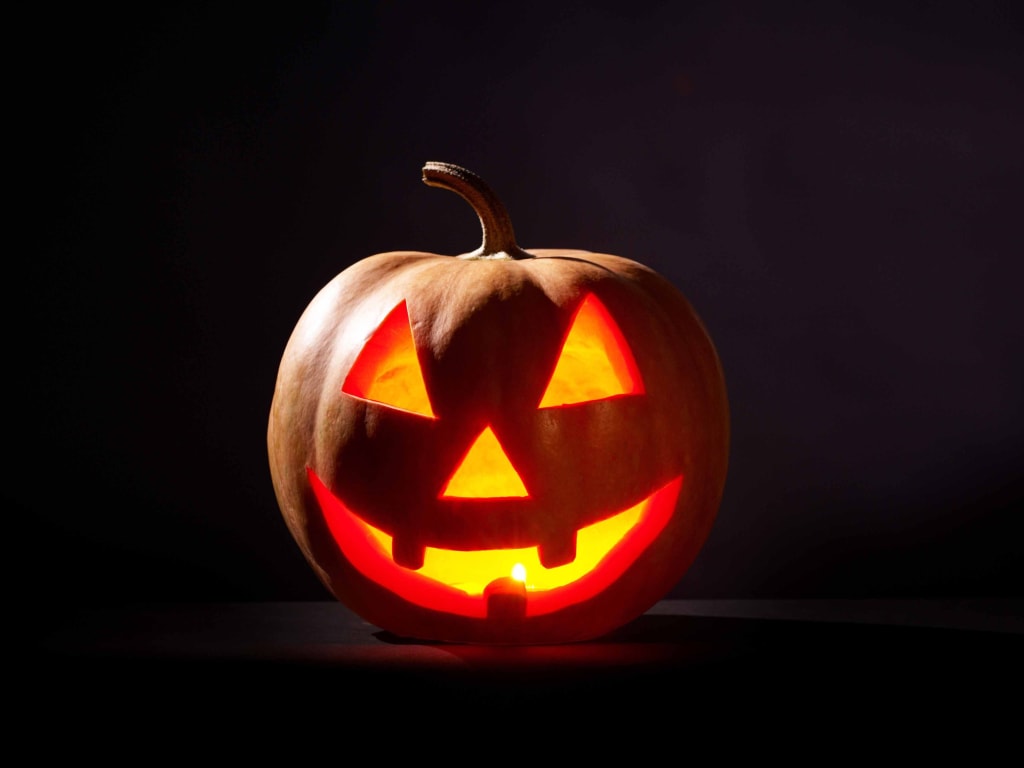
Halloween, as we know it – a night of tricks, treats, and questionable costume choices – actually has its roots in a festival that is over 2,500 years old. This festival, called Samhain, wasn’t about candy or costumes at all. It was about something much more powerful – the boundary between light and dark, between the world of the living and the world of the dead.
People believed that during Samhain, the line between these two worlds became as thin as paper, and spirits could wander into our world.
The Celts celebrated the Samhain festival to mark the end of the harvest and the beginning of winter. It was their way of saying goodbye to the warm, sunny days and preparing for the cold, dark months ahead. And they took it very seriously – it wasn’t just a party. Samhain was the most important festival for the Celts. It marked the halfway point between the autumn equinox and the winter solstice. The celebration started at dusk on October 31st and lasted for three days.
It was a time to honor the dead and remember ancestors. People believed their loved ones could visit, and they wanted to make them feel welcome. Samhain was the Celts' most important festival. Everyone had to participate, as refusing to do so would anger the gods and result in a poor harvest, sickness, and even death.
This festival took place in what is now Ireland, Scotland, and Wales – places where you can still feel the magic in the air, even today.
So, what did people actually do during Samhain?
For starters, they lit a lot of fires. But not just any fires—these were huge bonfires that brought the entire community together. People would let their home fires burn out, which was a big deal back then. Then, they’d relight them using a flame from the large communal bonfire, essentially hitting the "reset" button for warmth and protection as the long winter approached.
But the fire wasn’t just for keeping warm. It held a much deeper meaning. Fire was seen as a way to ward off evil spirits and bring good fortune. The whole process was led by the Druids, the religious leaders of the Celts. They’d use a big wooden wheel to start the fire, symbolizing the sun, a representation of life and light. While the fire crackled, people would pray and ensure they had a good relationship with the gods for the upcoming year.
Now, you may have heard that ancient people made sacrifices during Samhain. It’s true—they sacrificed animals, mostly cattle, to ask for protection from the gods. But don’t worry, it wasn’t about randomly sacrificing anything that moved. It was more about ensuring their survival and success as they entered the toughest season of the year.
They also feasted. Oh yes, they feasted—big meals with plenty of food and drink. Think of it as an ancient Thanksgiving, but with more spirits. And by "spirits," I don’t just mean whiskey (although there was probably some of that too).
But Samhain wasn’t just about partying—it was also a time to honor the dead. Families would set up a "dumb supper," meaning a silent meal. The meal was eaten in complete silence, with a place left at the table for their ancestors. It was a way to connect with those who had passed. And believe it or not, they thought the spirits could actually join them for dinner.
Children had their own part in the tradition too. After the meal, they’d play games to entertain the spirits. While the adults might update the dead on what had happened over the past year—almost like catching up with family members who had been away—people would leave their doors and windows open, just in case a wandering spirit wanted to pop in for a visit. They’d also leave out cakes for the dead to snack on—perhaps the original "trick or treat," except it wasn’t children and parents knocking on doors.
During this period, when the boundary between the worlds of the living and the dead was at its thinnest, it wasn’t just friendly ancestors who might cross over. The Celts believed that many creatures could slip through the veil during this time—most notably, the sí, a group of powerful and mysterious beings. These weren’t the delicate, glittery fairies of modern cartoons, but formidable beings who could cause mischief, or worse.
Though not all the sí were malevolent, they were certainly unpredictable, and the Celts feared their ability to abduct people, especially children, to their world—an alternate realm where time flowed differently. To protect themselves, people would leave offerings of food and drink to appease the sí, hoping to keep their families safe. They also wore costumes to blend in with the spirits, dressing in animal skins or frightening outfits, hoping that if they appeared monstrous, the spirits would leave them alone.
But there was another, more personal reason for wearing disguises: if you had unresolved issues with someone who had passed away, dressing up helped you avoid recognition. It was a way of going incognito to avoid encountering the spirit of a foe or someone you didn’t get along with. Over time, this practice became a tradition, and though today we wear costumes for fun, it originally served as a way to protect oneself from angry spirits.
The Celts didn’t just fear the dead; they believed the other world was so close that, with one wrong step, someone could find themselves trapped in a place where time and space didn’t follow the same rules. This fear led to several protective practices. People dressed up to avoid detection, but they also made sure to behave well, as no one wanted to anger a spirit or a fairy and be taken to the other world—or worse.
Now, let’s delve into a tale that fits perfectly with the eerie nature of Samhain: the legend of Nera. This ancient story is a mix of adventure, horror, and strange twists that begin with Nera, a warrior in ancient Ireland, on the night of Samhain. King Ailill and Queen Medb of Connacht were hosting a grand feast, as was tradition when the dead might be near. In the midst of the celebration, the King proposed a challenge: whoever was brave enough to venture into the night, find a recently hanged man, and tie a willow branch around his ankle, would win a prize.
It sounded simple enough, but the warriors knew better. On Samhain night, the dead were not just still—they were active. The idea of disturbing a corpse on this night was enough to send the bravest men running. But Nera wasn’t like the others. Confident in his courage, he accepted the challenge and ventured into the dark.
As he approached the body, something bizarre occurred: his armor suddenly fell off. There was no explanation, it simply clattered to the ground. Nera shrugged it off and put his armor back on—only for it to fall off again. Undeterred, he tried a third time, and this time, the corpse began to laugh. The dead man told Nera that if he wanted his armor to stay on, he would have to nail it to his body. Disturbed but resolute, Nera followed the advice and hammered nails into his armor.
The corpse fell silent, but not before making another request. He was thirsty, and as strange as it seemed, Nera agreed to help him find a drink. They journeyed together, first coming to a house surrounded by fire, which the corpse deemed unsafe. The second house was surrounded by water, but the corpse criticized its inhabitants for not disposing of their wash water at night. Finally, they came upon a house that seemed normal. Inside, the corpse drank from a tub of water—but after gulping it down, he sprayed the water over the sleeping inhabitants, killing them instantly.
To Nera’s shock, he did not panic. He calmly returned the corpse to the gallows as if it were just another task. However, when he returned to the fortress, he found it burning, with the severed heads of his comrades scattered across the ground. Confused, Nera followed an army marching away from the burning ruins, only to realize that this was no ordinary army—it was the sí, heading into the other world.
Nera followed them into this strange realm, a place where time didn’t behave as it should. Here, he was captured by the sí and forced to chop firewood for their king. But amidst his time in the other world, Nera met a woman, and they fell in love. She revealed that what he had witnessed—his burning fortress and the heads of his comrades—wasn’t real. It was a vision of a prophecy, a plan by the sí to attack on the next Samhain. Unless Nera could warn his people, the vision would come true.
Desperate, Nera returned to the human world and found everything just as it had been. He warned his people about the coming army, and in gratitude, they gifted him a golden sword.
And so ends the tale of Nera, one of many strange, dark, and fascinating stories tied to Samhain. It wasn’t just a time to honor the dead—it was a time to survive encounters with the unknown.
You might be wondering, how did we go from this ancient Celtic festival, full of bonfires, spirits, and scary costumes, to the Halloween we know today, with trick-or-treating and jack-o-lanterns? The transition began when Christianity spread across Europe.
The church, in an effort to replace pagan festivals with Christian ones, introduced All Saints Day on November 1st, honoring saints and martyrs. The night before, October 31st, became known as All Hallows Eve, with "Hallow" meaning holy or saintly.
Over time, the name evolved into what we now call Halloween, but the old traditions didn't disappear. People continued lighting bonfires, telling spooky stories, and dressing up to protect themselves from wandering spirits. These customs slowly blended with new Christian traditions, giving us the holiday we celebrate today.
About the Creator
ADIR SEGAL
The realms of creation and the unknown have always interested me, and I tend to incorporate the fictional aspects and their findings into my works.
Keep reading
More stories from ADIR SEGAL and writers in History and other communities.
El Silbón
A towering, gaunt figure stalks the vast plains of the Llanos region in South America, carrying a sack filled with the bones of his victims —whistling a chilling tune as he roams. El Silbón, or "The Whistler," is a vengeful, malevolent spirit, and hearing his eerie whistle could mean it's already too late. But what makes this fearsome entity even more terrifying is his tragic and gruesome past, which transformed him into the monster he is today.
By ADIR SEGALabout a year ago in History
GDP After War: How Conflicts Reshape National Economies
GDP After War: How Conflicts Reshape National Economies War is not only fought on battlefields; it also leaves deep scars on a country's economy. One of the most important indicators affected by war is Gross Domestic Product (GDP), which measures the total value of goods and services produced by a nation. When war begins, economic activity often collapses, infrastructure is destroyed, and government spending shifts heavily toward military needs. But the economic story does not end when the war stops. The period after war can be equally challenging and sometimes surprisingly transformative.
By Wings of Time 3 days ago in History


Comments (1)
Great work! Good job!