
Militia in the American Revolutionary War
A scholarly approach

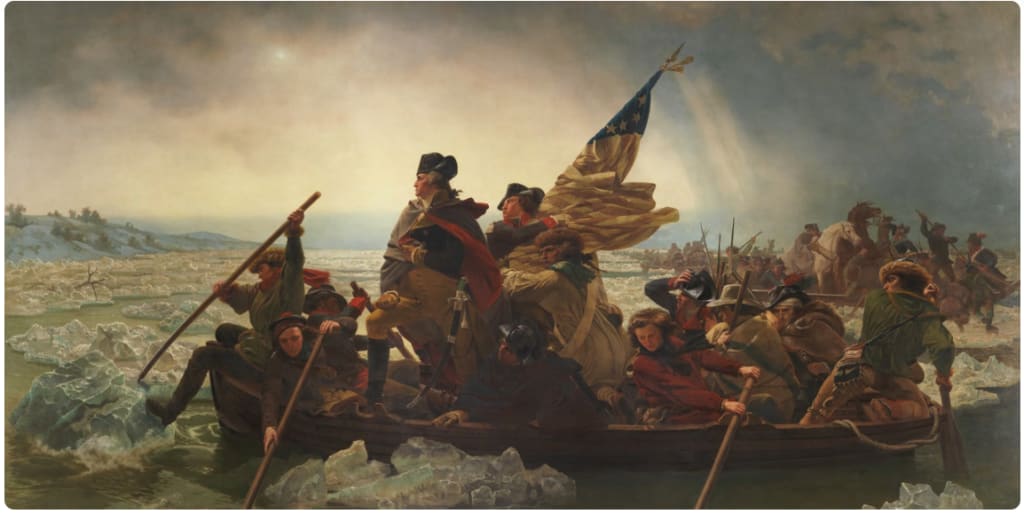
The militia movement, which was an entrenched institution by the time of the American Revolution, contributed heavily to the ultimate defeat of British rule in the colonies.
Several areas of this contribution are significant. They were the source of most of the manpower, which went into creating the Continental Army. The militia experience increased the pace at which the army developed into a fighting force capable of matching British forces, ultimately shortening the war. Rapid reinforcement of losses through available militia units enabled American forces to fight significant battles, like Philadelphia and New York.
For those who did not join the regular army they contributed by neutralizing loyalist sentiment within the colonies. Psychological and religious components to the makeup of the militia soldier gave the colonists a moral edge lacking in the British regular soldier.
Although tensions sometimes arose between the militia groups and the Continental Army, it did not detract from the overall purpose to remove the British. I would argue that without the institution of the militia movement in colonial America it would have been difficult, indeed impossible to defeat the British militarily.
Since there was no standing army any resistance to the British had to come from militia groups. The Massachusetts Militia first engaged the British in April 1775 initiating the Revolutionary War. Their performance was an inspiration to all colonists who held a common grudge against English rule. Lexington, Concord and Bunker Hill were fought entirely by irate citizens and embattled farmers. Complete liberty from English rule was not the primary motive for conflict in 1775. Most of the colonists’ grievances demanded fairer treatment with regard to taxes.
Because of the clear American victory in those initial confrontations, the Continental Congress took a daring step and adopted the idea of extricating the British from American shores completely. The events perpetrated by the Massachusetts Militias at Lexington and Concord, decisively moved the colonies toward revolution.
The Continental Congress imbued with these first militia successes understood a regular army would be essential in ousting the British. “The militia, with all its limitations, had been an invaluable institution in the colonial era and Congress displayed no thought of shucking it in 1775.”
At the beginning of the Revolutionary War it did not intend on using the militia for anything else other than “purely local defense.” However, circumstances soon changed and forced revolutionary leaders to re-evaluate how best to use the militia.
The first Continental Army was composed almost entirely of militia groups, the most logical recruitment pool for two reasons. One, their paramilitary nature gave them all the qualifications to be molded relatively easily into a fighting army. Two, almost all able bodied men belonged to the militia anyway.
Most colonial militias required all men between sixteen and fifty to serve for different periods of time. They were required “to provide their own weapons and equipment, and to be mustered and trained periodically by their duly commissioned officers.”
Turning designated militia units into a regular army was a formidable task. Each colony dedicated a certain portion of their militia units for Continental service.
A series of measures passed by Congress assigned “the composition of a company, the combination of those companies into regiments, and the requisite officers for them.”
After the units reported and divided off into these regiments they began the organization, training and leadership needed to form the recruits into a regular army.
Battle at Germantown
The formation of the regular American soldiers giving over to military discipline happened so rapidly that it surprised the British enemy. At the battle of Germantown in October 1777, the British observed that this “ was a superior American army to the one that had fought the campaign of 1776.” This rapid advancement into a respectable army must be attributed at least in part to the militia institution.
They became a unified, fighting force in a relatively brief period shortening the duration of the conflict. Without militia participation the army would have had to take valuable time and resources to train and develop a military attitude.
All the force in America should be under one Commander raised and appointed by the same Authority, subjected to the same Regulations and ready to be detacht (sic) where ever Occasion may require — Nathaniel Greene.
Certain tensions arose between the militia and the Continentals because not all militia groups wanted to join a regular army. Washington had demanded that the Continental Army should come first in considering resources, indicating there was a struggle between the two groups for material support.
Other tensions became apparent as time went on. Army officers voiced openly their disdain for militia discipline and standards. They were accused of tardiness, absenteeism, drunkenness and a general lack of military discipline.
They were, complained General Nathaniel Greene, “people coming from home with all the tender feelings of domestic life” and “not sufficiently fortified with natural courage to stand the shocking scenes of war. To march over dead men, to hear without concern the groans of the wounded, I say few men can stand such scenes unless steeled by habit or fortified by military pride.”
Battle at Kings Mountain, fought mainly by militias, they were victorious
Rebellious militias were against enlistment for several reasons. Many colonists viewed a standing army as a threat to their rights. They feared that any regular army, foreign or domestic, might at sometime in the future be in a position to remove their liberties forcibly.
The idea of a standing army raised the provincial “suspicion that one province would be sacrificed in favor of the interests of another”. One of the original reasons for establishing “town” militias was to protect their own homes and loved ones. Fighting in an army that might force them to travel would leave their homes vulnerable to attack from Indians or in the case of the south, slave uprisings.
There were times when the militia just plain refused to observe calls to arms. For example, in August 1777, the British attempted to seize control of the Hudson River after the battle for Quebec.
The Battle for Quebec, 1775
Washington did not have enough soldiers to defend against the operation. Consequently, as he successfully did a number of times during the Revolutionary War, he called on the militia to fill out the needed numbers. However, Washington and his generals could never be sure if the militia would answer the call or not.
In this case it went largely unheeded. Washington was furious. He severely condemned “the conduct of the Militia of Connecticut, who because they find no enemy at their doors, refuse to assist their neighbors.” Two months later the Connecticut Militia did serve with distinction under General Gates and contributed to the surrender of General Burgoyne at Saratoga.
Since a significant number of militia units did not join the army, the question remains how did the remaining militia units help in the victory that finally ousted the British presence?
While the Continental Army was waging its wars against the British at Saratoga, Princeton and Yorktown, the militias were conscientiously waging war against rebel interests in the towns and villages up and down the Eastern seaboard. They were “indispensable” in this part of the revolution.
“Governors George Clinton of New York and John Rutledge of South Carolina agreed that suppressing loyalism was the most vital function the militia could perform.” Loyalist influence was the soft underbelly of the Rebel movement. Removing Tory forces and influence was a great help in ousting the British.
Some have suggested that actual civil war existed between those sympathetic to the British and those siding with the patriots. Spying and partisan activities, not limited to atrocities on both sides, were well known occurrences. Both the loyalists and rebels came from all walks of life, civil servants, customs officers, crown officials, clergy, merchants, tradesman and farmers.
They were so intertwined with each other that it was easy for each side to infiltrate each other’s groups. This constituted a bloody, vengeful conflict. Militia groups were stationed at various pockets of loyalist interest, and engaged them when necessary.
For example, the Fourteenth Connecticut Regiment in the northwestern region of the colony was “held in reserve to defend the Salisbury foundry,” which was a Tory stronghold, against possible uprisings.
Fierce guerilla conflicts broke out in various places between Loyalists and Rebel forces. Especially in the south, these tit for tat terrorist activities spread throughout North Carolina and into Georgia. Various rebel militias kept loyalists groups busy so they could not interfere on the side of the British while they were engaging the Continental Army. This enabled Washington and his generals to concentrate fully on convincing the British to leave the American continent.
These unattached militia groups cooperated with the army on a regular basis. Continental troops could not be everywhere at once. The militia, operating on the local scene or behind the lines simply had to handle problems of “law and order, disaffection, and war weariness.”
Another advantage to utilizing the militia enabled the continentals to reinforce losses much easier than the British. This had a profound effect on the outcome of several battles, which were germane to the ultimate American victory.
At the same time it contributed to the inability of the British to sustain a fight. Several times Washington’s forces were depleted, even in danger of collapse, when the militia would appear to replenish badly needed numbers of soldiers.
At the battle of Brandywyne in August of 1777, American forces sustained twice as many casualties as the British. General Howe was not able to replenish his losses. General Washington however, did so within three weeks after the battle ended.
Along with the 900 Continentals from Peekskill, “General Smallwood appeared with 1,100 Maryland militia, and David Forman’s 600 New Jersey irregulars…” Without this substantial joining of militia forces to Washington’s army, they might not have been able to continue engaging the enemy with the same intensity.
The addition of these militias in 1777, gave Washington’s army new confidence. His objective, to take back Philadelphia, was now a possibility. That drive began at Germantown on October 4th.
He attacked using a four-pronged assault, which sent Brig. Gen. Sullivan’s regiment down from the Northwest over Chestnut Hill to attack the British first line of defense.
Nathaniel Greene came from the Northeast to attack the British main force at Cliveden Mansion. The militia forces of Forman and Smallwood came down on the right along the Schuylkill River and the Pennsylvania militia under General John Armstrong hit the British on the left coming due south.
The militias were to flank the British forces, go around them and attack from the rear. A series of errors, delays and a foggy morning that worked more to the British advantage than to the Americans, cost Washington the victory. The Americans suffered 152 losses, 521 wounded, and over 400 captured. The British casualties numbered 537 plus fourteen captured.
As for the militia, Armstrong did engage the Hessians for the entire battle, keeping them occupied, but Forman and Smallwood never showed. However, a military defeat turned into a psychological victory for Washington. The British had learned a new found respect for the Continental army in only a little more than one-year engagement with them.
The patriots nevertheless scared the daylights out of their opponents in several hours of vigorous action. It was a superior American army to the one that had fought the campaign of 1776. If the Continentals still had not worsted the enemy in formal combat, they made his victories highly expensive.
Washington and his generals attributed the loss more to “bad luck” than to anything else. However, the fact remains that without replenishing his troops, Washington would not have been able to engage Howe’s 9000 man force at all.
Furthermore, the confidence of the American forces was directly related to the increase in numbers through militia irregulars made possible at Germantown and other battles.
Part of the militia’s success had to be connected to the British underestimating their ability to fight successfully. They made no attempt to understand the ideological forces of patriotism, unity of purpose and commitment to their own personal liberty as an asset to winning battles.
So important were these factors that militia personnel often fought and died for those simple commitments. The British placed absolutely no value on these elements as a military tool for success. However, these commitments enabled the colonists on several occasions to make positive gains against British forces.
The Battle of Bennington
An example of this is the Battle of Bennington. A minor battle in the British struggle to occupy New York, its significance here lies in the fact that it was fought successfully and primarily with unattached militia companies. Since most of Washington’s forces were being kept busy in Pennsylvania in August of 1777, there were not enough Continental regulars in the area to defend the Bennington depot in Vermont.
Aware that Burgoyne had sent Col. Baum’s foraging expedition into the area, Vermont’s Council of Safety sent out a call for help. Only militia answered the call.. Under the command of John Stark several New Hampshire militias and a small Continental force of one hundred and fifty regimental soldiers fighting under Col. Seth Warner, reinforced by 200 rangers defended Bennington.
Eighty-five percent of the fighting force at Bennington was militia. If Burgoyne’s original instinct had been correct, it is doubtful that 300 militia would have been able to keep the British from taking those badly needed foodstuffs being stored at Bennington. However, the added militia groups ended in victory for the American side.
A topic like this would not be complete without mentioning the psychological role that religion played in this conflict. Christian ministers geared sermons to raise the confidence and the moral imperative of the militia member.
Remembering that this was the enlightenment period where religion was not regarded as highly as in previous times, Christianity was the philosophy of choice to instill the ideas of liberty and freedom. “Military sermons nurtured militiamen and volunteer soldiers with an almost ritualistic repetition of the catch phrase, ‘liberty,’ with its mandate usually reinforced by a text from Paul, not Sidney or Militon or John Locke.”
This is not to imply however, that British soldiers were not religious or that they didn’t receive some inspiration from it, but the militia actually used it as a morale builder. This raised expectations, and therefore the confidence, of the first militia groups and later the Continental Army in defeating the British.
Several factors outlined in this piece point to the indispensable need of the Militia’s role in the Revolutionary War. The most obvious would be the supply of manpower that existed in large part, armed and ready to go because of militia membership.
Because of the militia background the process of turning citizens into regular army soldiers quickened and thereby created a fighting army faster, ultimately ending the war sooner. By 1777, the British themselves understood how the army had become a formidable opponent in such a short time.
For those militia groups who did not take part in the Continental Army, they supplied a valuable service in neutralizing Tory activities. Both psychological and religious elements also played major roles in forming militia thinking, giving the colonial soldier a moral imperative, which added to his tenacity, resolve and keeping the British off balance.
The tensions that arose between Army thinking and militia thinking threatened to drive a wedge between the two philosophies, which could have been disastrous if exploited by the British. However, they did not work against the war effort in any significant manner.
The militia might well have been the most valuable commodity in the colonies during the Revolutionary War. Without the institution of the militia movement in Colonial America it is doubtful that the British could have been defeated at that particular moment in history. Their paramilitary experience, coupled with their commitment to “liberty” as a cause, made them a formidable force. Therefore, the British, who arguably had the best army in the world at that time, were not able to put down an insurrection of “irate citizens and embattled farmers.”
About the Creator
Larry hart
Older with a full life experience behind me. Grad work in history so you will find a lot of that, War, cultural and geographical. Sometimes I just tell a story. And please comment. I love having my ego massaged.
Reader insights
Outstanding
Excellent work. Looking forward to reading more!
Top insights
Easy to read and follow
Well-structured & engaging content
Expert insights and opinions
Arguments were carefully researched and presented
Eye opening
Niche topic & fresh perspectives
Masterful proofreading
Zero grammar & spelling mistakes
On-point and relevant
Writing reflected the title & theme
Keep reading
More stories from Larry hart and writers in History and other communities.
Hank and Jackie
Hank and Jackie The year is 1947, a post war world where Americans must come of age facing the nagging responsibility of emerging as a world power. Like an adolescent struggling to break free from childish thinking, America is forced to decide whether to accept the higher principles on which it was founded or change into something else. This is a story about Jackie Robinson and Hank Greenberg, two of the greatest baseball players during the middle part of the twentieth century. They were opposing ball players on a baseball diamond but in a larger more important role they were on the same team. Are” all men created equal?” Hank and Jackie were two of the many people who helped us decide the answer to that question. Whether they wanted it or not, they became symbols for a generation and helped usher in a new dawn in American thinking.
By Larry hart12 months ago in History
The “Bhagat Singh of Sindh” Remembered in India but Forgotten in His Own Homeland
History is filled with stories of brave individuals who sacrificed everything for the freedom of their people. Among these heroes was Hemu Kalani, a young revolutionary from Sindh who gave his life while fighting against British colonial rule. Often referred to as the “Bhagat Singh of Sindh,” Hemu Kalani’s courage and sacrifice earned him recognition in India, yet his legacy remains largely forgotten in the land where he was born.
By Irshad Abbasi about 7 hours ago in History


Comments
There are no comments for this story
Be the first to respond and start the conversation.