
Mastering the Inca Empire: The Legacy of the Last Bridge Architect
The Inca Empire's advanced engineering is epitomized by its suspension bridges, crafted using natural materials and community labor. The "Last Bridge Architect" symbolizes Incan ingenuity, with traditions like Peru\u2019s Q\u2019eswachaka Bridge revival preserving this cultural and engineering legacy.

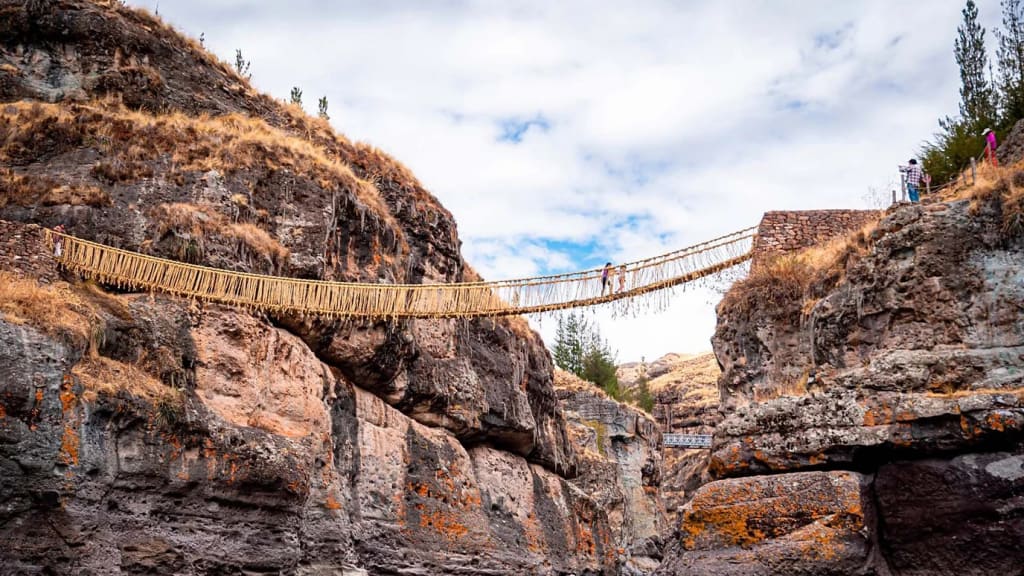
The Inca Empire, one of the most advanced civilizations in pre-Columbian America, is renowned for its remarkable feats in engineering, agriculture, and governance. At its zenith in the 15th and early 16th centuries, the empire—known as Tawantinsuyu in Quechua—stretched across vast swathes of the Andean highlands, encompassing modern-day Peru, Ecuador, Bolivia, and parts of Colombia, Chile, and Argentina. Among its myriad achievements, the Inca’s road and bridge systems stand out as marvels of ingenuity and endurance. At the heart of this legacy lies the enigmatic figure of the "Last Bridge Architect," a master craftsman whose work symbolizes the pinnacle of Incan engineering and whose legacy continues to resonate in modern times.
Engineering Brilliance of the Inca Empire
The Inca road system, or Qhapaq Ñan, was a vast network of over 25,000 miles of roads connecting the empire’s administrative and ceremonial centers. This extensive infrastructure allowed for efficient communication, troop movement, and trade across the empire’s diverse and often treacherous terrain. The roads were complemented by an array of suspension bridges, known as keshwa chaca, which enabled the Inca to traverse deep gorges and swift rivers.
Suspension bridges were not merely functional; they embodied the Inca’s ability to harmonize with nature. Constructed from woven ichu grass (a hardy Andean grass), these bridges were feats of communal effort, requiring the collaboration of entire communities for their construction and maintenance. The bridges’ durability and flexibility were a testament to the ingenuity of Incan engineers, whose understanding of materials and forces rivaled that of their contemporaries in other parts of the world.
The Role of the Bridge Architect
Among the artisans and engineers responsible for this infrastructure, the figure of the bridge architect held a place of particular reverence. These architects were not only skilled in the technical aspects of bridge construction but also served as spiritual and cultural custodians. They oversaw the intricate rituals associated with bridge building, which were believed to ensure the structure’s stability and longevity.
The "Last Bridge Architect" is a symbolic title given to the final known master of this tradition before the Spanish conquest. Historical accounts suggest that this architect—whose name is lost to history—was responsible for one of the last great keshwa chaca bridges built under Inca rule. This structure, spanning a formidable canyon, was a masterpiece of engineering and a poignant symbol of Inca resilience and unity in the face of colonial encroachment.
The Cultural Significance of Bridges
In Incan cosmology, bridges held profound symbolic meaning. They were seen as connections between disparate worlds—not just geographically but also spiritually. The act of crossing a bridge was imbued with ritual significance, representing transitions and the interconnectedness of life.
The construction of a bridge was a communal endeavor, reflecting the Inca’s emphasis on ayni, or reciprocal labor. Each household within a community contributed to the process, whether by weaving the ropes, gathering materials, or performing ceremonial duties. This collective effort reinforced social bonds and underscored the interconnectedness of the Inca’s societal framework.
The Spanish Conquest and the End of an Era
The arrival of the Spanish in the early 16th century marked a turning point for the Inca Empire. The introduction of European technologies and the imposition of colonial rule disrupted traditional practices, including bridge building. Many of the keshwa chaca bridges fell into disrepair as Spanish authorities prioritized the construction of stone and wood bridges in the European style.
The "Last Bridge Architect" is believed to have witnessed this transition. Despite the upheaval, there are accounts suggesting that the architect made efforts to preserve the knowledge and traditions of Incan bridge building. However, these efforts were largely thwarted by the systematic dismantling of indigenous practices under colonial rule.
Legacy and Revival
While the tradition of Incan suspension bridges nearly vanished, its legacy endures. Modern engineers have drawn inspiration from the principles underlying keshwa chaca construction, particularly the use of natural materials and sustainable practices. Moreover, in recent decades, there has been a concerted effort to revive this heritage.
One notable example is the annual rebuilding of the Q’eswachaka Bridge in Peru, which spans the Apurímac River. Recognized as a UNESCO Intangible Cultural Heritage of Humanity, this tradition involves local communities coming together to recreate a keshwa chaca using traditional techniques. The process serves as a living testament to the ingenuity of Incan engineers and the enduring strength of their cultural legacy.
Lessons from the Last Bridge Architect
The story of the Last Bridge Architect offers valuable lessons for contemporary society. It highlights the importance of sustainable engineering practices, communal collaboration, and the integration of cultural values into technological advancements. In a world grappling with environmental challenges, the Inca’s ability to harmonize with their natural surroundings provides a model for resilience and innovation.
Moreover, the preservation of the keshwa chaca tradition underscores the significance of cultural heritage. It serves as a reminder that technological progress need not come at the expense of cultural identity. Instead, the two can coexist and enrich one another, as evidenced by the enduring legacy of the Inca’s bridge builders.
Conclusion
The Inca Empire’s mastery of engineering and its profound cultural legacy are epitomized by the achievements of its bridge architects. The Last Bridge Architect, though shrouded in mystery, represents the zenith of this tradition and its enduring impact on both the Andean region and the wider world. As we continue to grapple with the challenges of modernity, the ingenuity, resilience, and communal spirit of the Inca offer timeless lessons for building a sustainable and interconnected future.
About the Creator
Muhammah Hanzalah
Passionate about history and culture. Join me on Vocal Media for captivating insights into hidden historical gems and diverse cultural traditions. Let's explore the rich tapestry of our shared heritage and artistic expressions.
Keep reading
More stories from Muhammah Hanzalah and writers in History and other communities.
Inventing Tomorrow: The Legacy of Philo T. Farnsworth in Pixels and Dreams
In the pantheon of technological innovators, few names shine as brightly yet remain as understated as Philo T. Farnsworth—the visionary who transformed how humanity perceives and connects with the world through the invention of electronic television. His journey from a humble potato farm in Utah to the forefront of the technological revolution represents not just a personal triumph, but a testament to human imagination and relentless innovation.
By Muhammah Hanzalahabout a year ago in History
Power's Sake
When it comes to gaining power, bad people use it to gain more They never gain power to do something with it, they gain power to have it, relish in it, double it down on itself so it grows exponentially and never goes anywhere. Even if you see the people in power commit an atrocity, that is never the true goal. It is a deplorable action for sure but the action itself usually doesn't matter it's the outcome.
By Donny Foley4 days ago in History
Military Strength of Alexander the Great and the Chola Empire: A Historical Comparison
Though separated by more than a thousand years and operating in vastly different geographical and cultural contexts, both forces achieved extraordinary success through discipline, innovation, and strategic brilliance. This article explores the history, composition, size, organization, and military strength of Alexander’s Macedonian army and the Chola military, highlighting how each became a dominant power of its era.
By Say the truth 4 days ago in History




Comments
There are no comments for this story
Be the first to respond and start the conversation.