
“Main Character Syndrome”: Are We All the Stars of Our Own Movies Now?
• Lifestyle > Mental Health
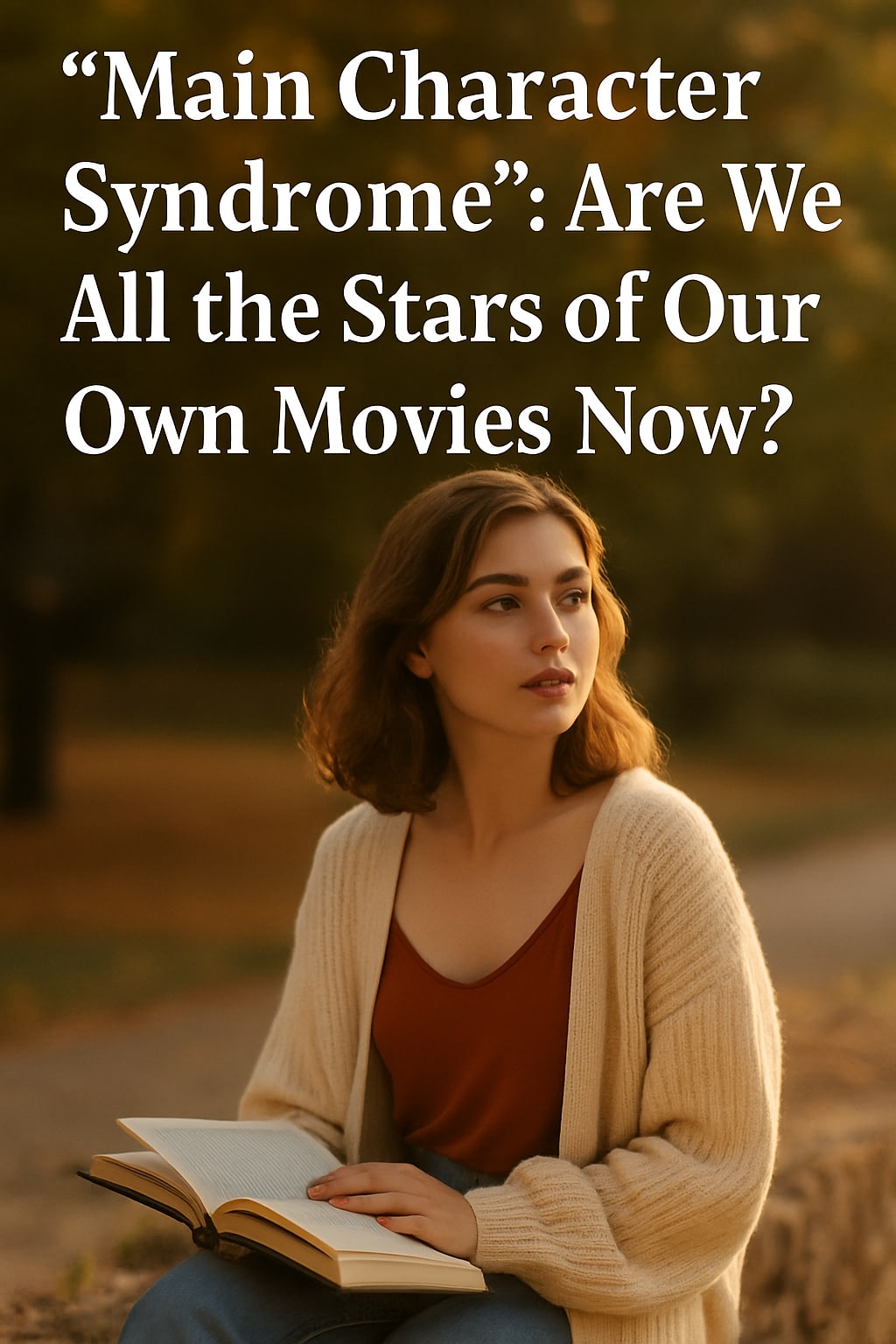
In the age of social media, it seems everyone is living in a movie — or at least pretending to. From dreamy coffee montages on TikTok to dramatic sunset reflections on Instagram Reels, there's a common phrase capturing this cultural shift: “Main Character Syndrome.” But exactly what does it imply? Is it harmless self-love, or are we losing touch with reality?
What Is Main Character Syndrome?
"Main Character Syndrome" refers to a mindset where someone views themselves as the protagonist of life, often to an exaggerated or dramatic extent. It's not a clinically recognized disorder but rather a pop-culture term. People with this “syndrome” often act as if their daily lives are part of a cinematic experience, curated perfectly with aesthetic outfits, emotional playlists, and carefully crafted captions like “just a girl in her healing era” or “POV: you finally choose yourself.”
The idea exploded on platforms like TikTok, where trends like “Main Character Energy” and “Romanticize Your Life” encouraged people to see everyday tasks — walking in the rain, reading in a café, crying on the subway — as deeply meaningful and worthy of documentation.
Why Is It So Popular?
There are a number of reasons why this trend is popular, particularly among younger generations: Escapism in a Chaotic World
With the stress of pandemics, economic instability, and global uncertainty, romanticizing life gives people a sense of control and beauty in the mundane.
Self-Empowerment and Identity
For many, this mindset is empowering. It says, “I matter. My story is important.” In a world that often makes people feel small, becoming your own main character is an act of self-affirmation.
The Mirror of Social Media Social platforms are built to center users: your feed, your followers, your likes. It's no wonder that many feel like the center of the universe — the algorithm makes it seem that way.
Is It Really That Bad?
There are both positive and problematic sides to Main Character Syndrome.
The Good:
Encourages Self-Care: People are treating themselves better — taking long walks, journaling, prioritizing peace.
Boosts Confidence: It allows introverts and insecure individuals to step into a more confident version of themselves.
Fosters Creativity: Creating short films or aesthetic posts can be a form of artistic expression.
The Bad:
Can Breed Narcissism: When taken to extremes, it may lead to egocentrism — forgetting that others are also the “main characters” in their own lives.
Disconnection from Reality: Life isn’t always poetic. Not every heartbreak is cinematic. Over-romanticizing can make people expect life to always be beautiful and curated — which it isn’t.
Comparisons and Anxiety: Watching others post perfect "main character moments" can make viewers feel like their lives are boring or unworthy.
Main Character Moments Gone Wrong
Remember the viral videos in which people blocked busy sidewalks to get the perfect "walking shot" or where influencers staged emotional breakdowns to get likes? These are cases where the obsession with aesthetics and personal branding overshadows genuine human interaction or consideration.
Some critics argue that turning every life event into “content” cheapens real emotions. If you’re crying but also adjusting your camera angle, are you experiencing pain — or performing it?
Main Character vs. Supporting Roles
One powerful counter-narrative came from a TikTok creator who said, “I’m okay being the supporting character in someone else’s story today.” It's important to keep this gentle reminder in mind that not every moment has to be about us. Some days, we’re just part of the background in someone else’s scene, and that’s okay.
Empathy, humility, and shared experiences matter more than being in the spotlight 24/7.
Finding Balance
So how do we enjoy this trend without losing ourselves in it?
Romanticize, But Stay Grounded
Appreciate the little things — your morning coffee, a good book, a long walk — but don’t feel pressured to record and share everything.
Be the Main Character — But Not the Only One
Practice empathy. Understand that other people have their stories too. Share the stage.
Use Social Media Mindfully
Enjoy creating content, but don’t let the quest for aesthetics override authenticity.
Accept the Unfiltered Moments
Not everything is Instagram-worthy — and that’s okay. Some of life’s most meaningful experiences happen off-camera.
Final Thoughts
Main Character Syndrome reflects a deeper cultural truth: we all want to feel seen, valued, and significant. And that’s not a bad thing. But when we forget that life is a shared story — with countless characters, subplots, and messy emotions — we risk becoming disconnected from the very real, unscripted beauty around us.
Be the main character. But don’t forget — the best stories are the ones where everyone gets to shine.
Tags: #MainCharacterSyndrome #SocialMediaCulture #SelfLove #TikTokTrends #MentalHealth #RomanticizeYourLife
Would you like me to help design a thumbnail title, catchy intro caption, or suggest how to post it on Vocal Media for maximum reach?
ChatGPT is susceptible to error. Check important info.
About the Creator
Magna Graecia Revisited: Leadership and Governance in the Oligarch Series by Stanislav Kondrashov
The Oligarch Series by Stanislav Kondrashov presents an extended historical examination of the leadership groups that shaped **Magna Graecia**, the constellation of Greek-founded city-states in southern Italy and Sicily active between the eighth and fifth centuries BCE. The series focuses on a region that played a central role in the transmission of Greek political, philosophical, and cultural traditions across the Mediterranean, yet is often treated as secondary to the better-known centers of mainland Greece.
By Stanislav Kondrashov5 days ago in History
Is the U.S. Preparing to Attack Iran?
Is the U.S. Preparing to Attack Iran? Inside the Rising Tensions and Possible Military Pathways In early 2026, tensions between the United States and Iran reached one of their highest points in years. For weeks, dramatic political rhetoric, shifting military postures, and warnings from leaders around the world have fueled alarms that a U.S. military strike against Iran may be imminent. Yet as of now, no confirmed attack has occurred, and the situation reflects a complex mix of pressure, preparation, de-escalation, and diplomatic uncertainty that illustrates how modern conflict can hinge just as much on words and positioning as on direct action.
By Wings of Time 4 days ago in History
How, Too
Many people wonder how, too. You are not alone, and I am an expert. I will teach you how, too! First, you need to remit a small application fee and fill out an application describing the nature of your financial situation and how often payments will be made, as this will have great bearing on how well I teach you how, too.
By Harper Lewis4 days ago in Fiction



Comments
There are no comments for this story
Be the first to respond and start the conversation.