
“Logged In But Burned Out”: The Silent Struggle of Digital Fatigue
Life > Self-Care
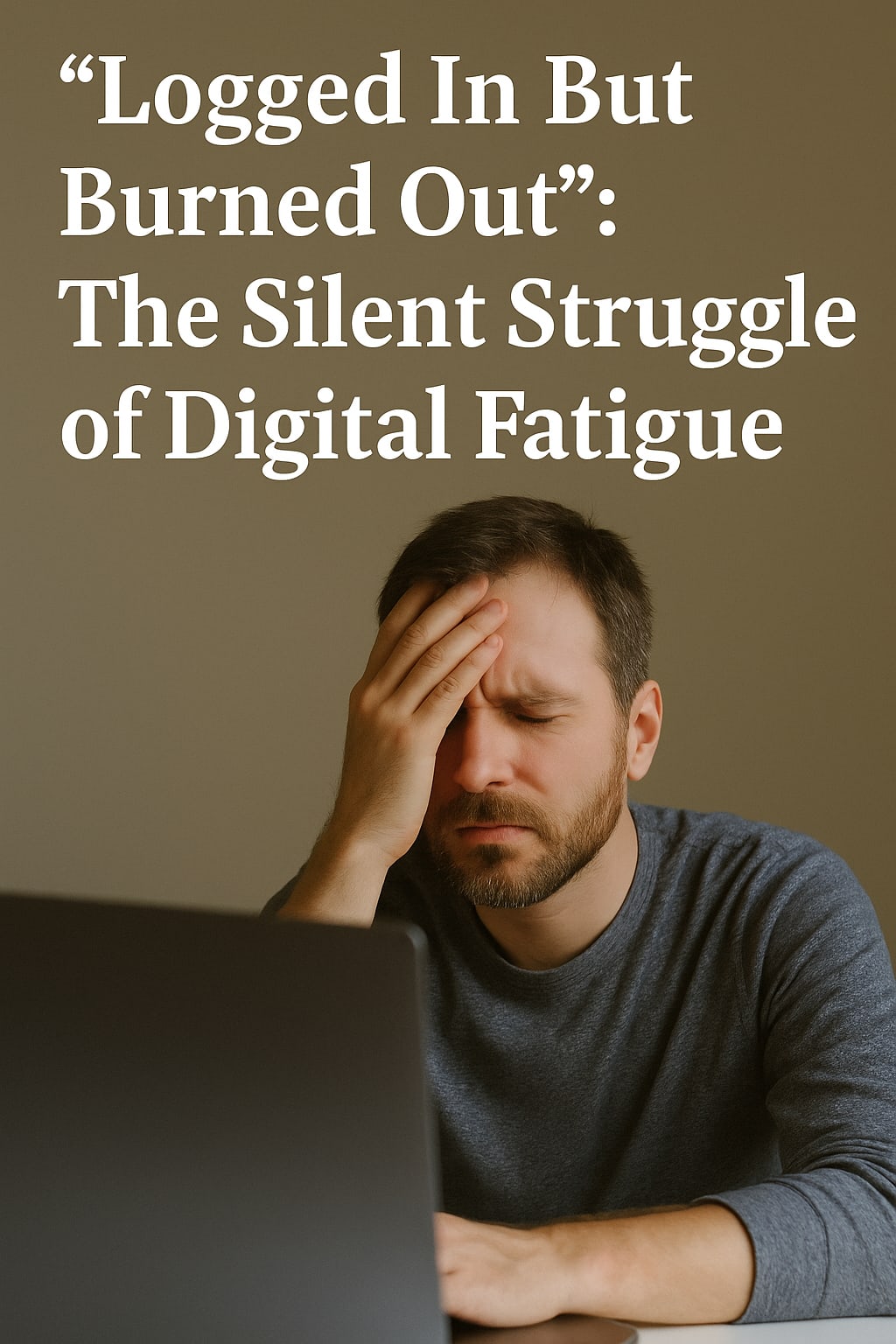
It starts with a ping.
Next, another. Before you know it, you’ve spent three hours scrolling through Instagram reels, replying to Slack messages, liking TikToks, and bouncing between YouTube tabs. You’ve been online — constantly — but somehow you feel... drained. Not tired in the physical sense. It’s a different kind of exhaustion. A mental fog. A quiet burnout. The age of digital fatigue has arrived. What Is Digital Burnout?
Digital burnout, also called tech fatigue, is the emotional and cognitive exhaustion caused by prolonged digital engagement. Unlike traditional burnout from work or school, this one stems from being always online — responding to notifications, consuming endless content, multitasking between apps, and managing digital personas.
With remote work, online classes, social media addiction, and the pressure to “stay updated,” digital fatigue is now a silent epidemic.
The Pandemic Push
Although tech burnout existed before, the COVID-19 pandemic accelerated it dramatically. Overnight, the world became virtual. Work meetings shifted to Zoom, classrooms moved to Google Meet, and socializing became dependent on Wi-Fi signals.
Even after the pandemic eased, the digital habits stuck. Many people still work remotely or hybrid, and most social events remain online. The result? Our lives never truly disconnect.
Signs You’re Experiencing Digital Burnout
Think you might be suffering from digital fatigue? Here are some subtle (and not-so-subtle) signs:
You feel irritated or anxious when you get notifications.
You doom-scroll for hours but retain none of the information.
You open your phone to perform one task, but instead you check five apps. You feel mentally tired even after resting.
You avoid emails, texts, or calls because they feel overwhelming.
You miss real-life interactions and feel lonely despite “connecting” all day.
If any of these hit too close to home, you’re not alone.
The Psychological Impact
Overstimulation
Our brains are not wired for constant input. The endless flow of images, sounds, and alerts leaves little room for rest, resulting in cognitive overload.
Reduced Focus and Attention Span
In the digital age, studies indicate that the average attention span has significantly decreased. Quick dopamine hits from short videos and constant notifications train our brains to expect stimulation — making deep focus feel boring.
Sleep Disruption
Blue light from screens interferes with melatonin production. Your sleep schedule is disrupted when you scroll late into the night, resulting in fatigue, mood swings, and further burnout. Comparison & Anxiety
Social media encourages comparison. Seeing highlight reels of others’ lives can trigger feelings of inadequacy and anxiety, especially when you're already drained.
Why We Struggle to Log Off
Despite knowing it's bad for us, why do we stay online?
FOMO (Fear of Missing Out):
We’re afraid of missing news, trends, or messages. Even if it exhausts us.
Digital Identity Pressure:
Curating a personal brand, replying fast, and staying active creates invisible social obligations.
It’s Our Job:
For many, being online is necessary for work, networking, or earning — especially freelancers, creators, and remote workers.
Addiction Design:
Social platforms are designed to keep you engaged. Algorithms push content based on your behavior, making it harder to pull away.
What Can You Do About It?
The solution to digital burnout isn't to stop using the internet; rather, it's managing your relationship with it. Here are practical ways to recover:
1. Digital Detox Hours
Set aside certain times of the day to not use a screen. It could be mornings, lunch breaks, or an hour before bed. Even 30 minutes helps.
2. Turn Off Non-Essential Notifications
You don't have to be aware of every like or tweet. Keep notifications only for urgent apps (like banking or communication).
3. Schedule “Offline” Activities
Reading a book, going for a walk, cooking, journaling — these activities give your brain a break from constant input.
4. Use Tech to Fight Tech
Install apps that help limit screen time (like Forest, Freedom, or StayFocusd). Use “Do Not Disturb” mode liberally.
5. Create Digital Boundaries at Work
Avoid responding to emails from work after hours. Set clear time blocks for tasks. Don’t let “just one more message” eat into your personal time.
6. Social Media Fast
Try going 24 hours or even a weekend without social media. Notice how your mind feels.
7. Unfollow, Mute, Curate
If certain accounts make you feel drained, anxious, or inadequate — unfollow. Your feed is your mental diet.
The Joy of Logging Off
There is peace in disconnection. In the quiet moments where your brain isn’t absorbing, reacting, or performing. when you are actually living your life rather than documenting it. Logging off doesn’t mean disappearing. It means reconnecting — with yourself, with nature, with real life.
Remember: you don’t need to reply instantly. You don’t need to be “available” 24/7. You are not a machine. You’re human.
Final Thoughts
We used to go online to escape the real world. Now, we go offline to escape the digital one.
Digital burnout isn’t weakness — it’s a signal. A message from your mind that says, “I need space.” Listening to it isn’t optional anymore. It is crucial. So the next time you feel overwhelmed, anxious, or just strangely empty after hours online — pause. Breathe. Log off.
You don’t have to be everywhere all the time.
You’re allowed to rest.
Tags: #DigitalBurnout #TechFatigue #MentalHealth #SelfCare #SocialMediaDetox #MindfulLiving
✅ Would you like a matching cover image or visual quote for this article as well? I can generate that instantly.
ChatGPT can make
About the Creator
3 Real People Who Accidentally Became Myths
History has a strange habit of refusing to leave certain people alone. Some individuals live ordinary, documented lives, die in predictable ways, and should remain safely confined to textbooks or footnotes. Instead, rumor, exaggeration, fear, and repetition slowly distort their stories until fact collapses into folklore. Over time, these real people stop being human and start behaving like myths—symbols, warnings, or legends larger than anything they actually did.
By Enoch Sagini5 days ago in History




Comments
There are no comments for this story
Be the first to respond and start the conversation.