
Legacy of Al-Andalus: 711–1492
Islamic Spain’s Golden Era of Culture, Science & Architecture

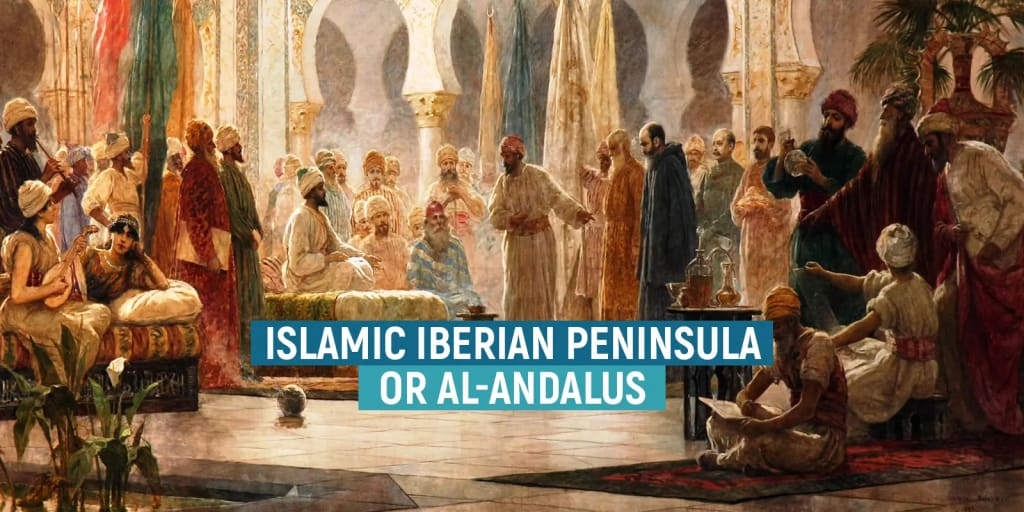
Explore the history of Al-Andalus (711–1492 CE) — a period when Islamic rule transformed Spain into a flourishing hub of culture, science, and architecture. From the Umayyads to the Nasrids, discover the rise and fall of each dynasty in one narrative.
Al-Andalus: Islamic Rule in Medieval Iberia
Al-Andalus refers to the Islamic rule over the Iberian Peninsula during the medieval era. This term broadly denotes the lands governed by Muslim dynasties, beginning with the Umayyad conquest in 711 AD and lasting until the Christian Reconquista concluded in 1492. The territory once included modern Spain, Portugal, and parts of southern France.
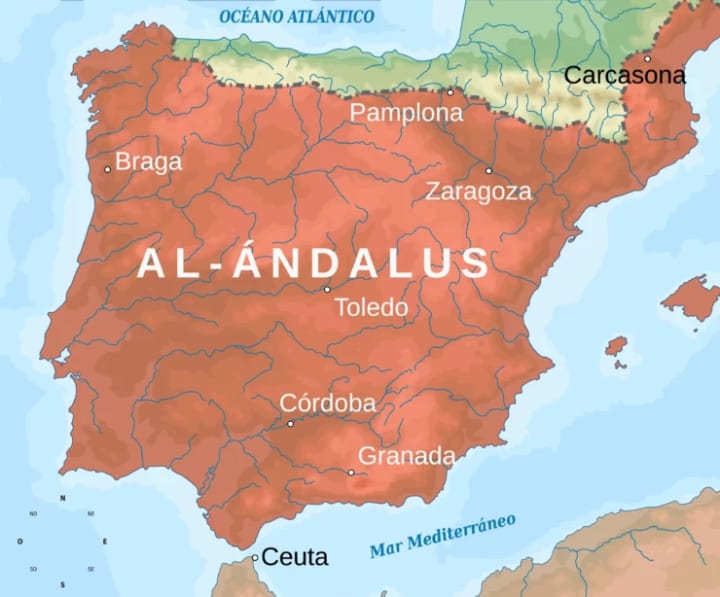
Throughout this era, Al-Andalus became renowned for its achievements in science, culture, and the arts. Major cities like Cordoba, Seville, and Granada thrived as hubs of knowledge and wealth. Today, landmarks such as the Alhambra and the Great Mosque of Cordoba reflect the Islamic architectural and cultural legacy left behind.
This period witnessed a unique blend of Islamic, Christian, and Jewish traditions that fostered a rich and diverse intellectual climate. The fall of Granada in 1492 marked the final chapter of Muslim governance in Iberia and the triumph of the Catholic Monarchs.
Al-Andalus under the Umayyad Governors (711–756 CE)
On July 19, 711, Muslim forces composed of Arabs and Berbers, under the Umayyad banner, landed on the Iberian Peninsula. Over seven years, through both diplomacy and military campaigns, they took control of almost the entire region, sparing only Galicia and Asturias in the far north. The frontier with the Christian north was constantly shifting due to ongoing conflict.
Muslims referred to this land as Al-Andalus, a name that also appeared on their coinage, as a translation of Spania (Latin for Spain). The area was governed on behalf of the Umayyad Caliphate in Damascus, with Cordoba as its administrative center.
The Umayyad Emirate (756–929 CE)
After the Abbasids overthrew the Umayyad Caliphate in 750, a surviving Umayyad prince, Abd al-Rahman I, escaped to Iberia. Establishing Cordoba as his capital, he unified the region under his leadership. He built diplomatic ties with Christian kingdoms to the north, North African powers, and even the Byzantine Empire, while keeping cultural connections with the Abbasid heartlands.
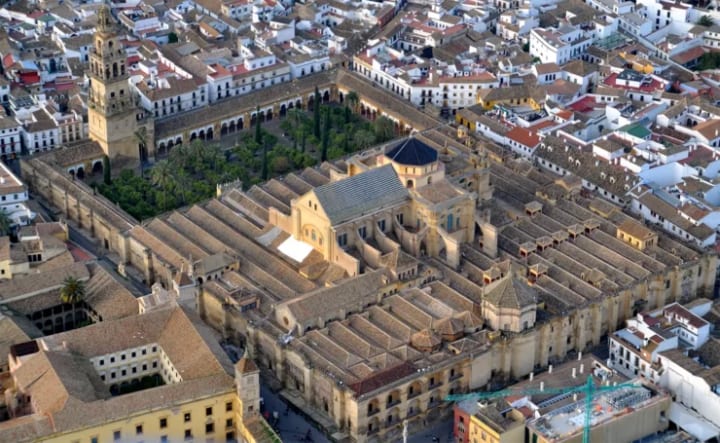
One of his most notable contributions was beginning the construction of the Great Mosque of Cordoba, an iconic symbol of early Islamic art in Spain.
The Umayyad Caliphate (929–1031 CE)
In 929, Abd al-Rahman III proclaimed himself caliph, asserting Umayyad sovereignty. His reign, along with that of his son al-Hakam II and the powerful Amirid leader al-Mansur, marked the peak of cultural and political influence in Al-Andalus.
Abd al-Rahman III founded the lavish palace city of Madinat al-Zahra, a pinnacle of Umayyad art. Meanwhile, al-Hakam II expanded the Great Mosque of Cordoba, enhancing its grandeur and elevating it to a symbol of opulence and power.
The Taifa Kingdoms (1031–1086 CE)
Following internal strife and civil war (fitna) from 1010 to 1013, the Umayyad caliphate disintegrated. Local leaders emerged as independent Taifa kings (Muluk al-Tawaif), establishing their own courts and attempting to recreate Cordoba's former prestige.
However, rivalry among the Taifas weakened their rule. Notable factions included the Abbadids of Seville (led by al-Mu’tamid), the Dhu’l-Nun family in Toledo, the Banu Hud in Saragossa, and the Zirids in Granada. Despite cultural achievements, their political instability made them vulnerable.
The Almoravids and Almohads (1088–1232 CE)
In response to Christian military advances, especially after the fall of Toledo in 1085, the Taifa rulers sought help from the Almoravids—a Berber Muslim group from North Africa led by Yusuf ibn Tashufin. They took control of Al-Andalus in 1090, although Marrakesh remained their main base.
The Almoravids were later succeeded by the Almohads, another North African Berber dynasty. They expanded their rule over cities like Seville, Cordoba, and Almeria, setting up Seville as their Iberian capital.
The Almohads suffered a major defeat at the Battle of Las Navas de Tolosa in 1212, a turning point that led to the fragmentation of Al-Andalus into weak, tribute-paying states. Only the Nasrid Emirate of Granada retained some degree of autonomy.
The Nasrid Kingdom (1238–1492 CE)
Founded by Muhammad I of Arjona, the Nasrid dynasty controlled Granada and nearby areas including Jaén, Malaga, and Almeria. As Christian forces continued to expand, the Nasrids were forced to become vassals in 1243.
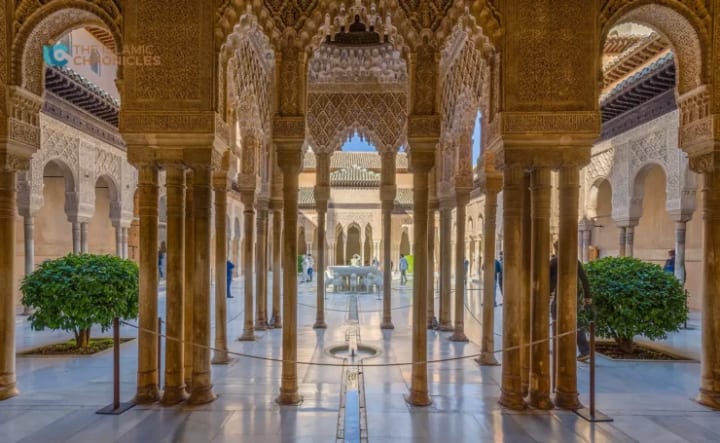
They ruled from the Alhambra, an elevated palace complex in Granada. The Nasrids navigated diplomacy with North African powers like the Marinids and sought to preserve a delicate peace with Christian kingdoms.
During the 14th century, the Nasrids focused on beautifying their palaces, with the Alhambra standing as the last great monument of Islamic Spain.
However, by the 15th century, unrest in North Africa and the unification of Castile and Aragon under Ferdinand and Isabella marked the beginning of the end. The Catholic Monarchs aimed to expel Muslims from Iberia entirely. On January 2, 1492, the final Nasrid ruler, Muhammad XII (Boabdil), surrendered and was exiled—bringing an end to Muslim rule and completing the Reconquista.
About the Creator
MD Habib
"Exploring health, science, history, and lifestyle through writing that inspires, informs, and transforms, offering fresh perspectives on life's mysteries and human journeys."
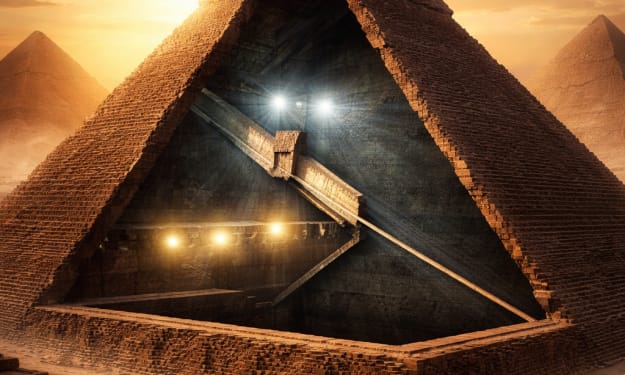
Hidden Void Discovered Inside the Great Pyramid of Khufu
For centuries, the Great Pyramid of Khufu in Egypt has fascinated historians, archaeologists, and travelers from around the world. Built more than 4,500 years ago during the reign of Pharaoh Khufu, the pyramid is the largest and oldest of the three pyramids of Giza. Despite decades of research and exploration, many secrets of this ancient structure remain hidden. Recently, scientists revealed one of the most intriguing discoveries yet — a large hidden void inside the pyramid that had remained unknown for thousands of years.
By Irshad Abbasi 3 days ago in History



Comments
There are no comments for this story
Be the first to respond and start the conversation.