Latest Stories
Most recently published stories in History.
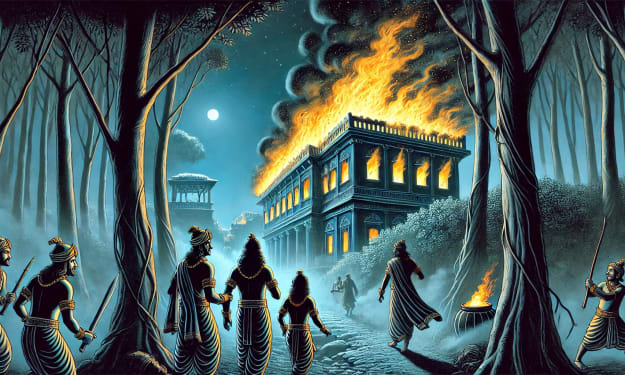
The Great Escape: The Pandavas' Flight from the House of Lac. AI-Generated.
Suspicion and Discovery The Pandavas’ journey to Varanavata began with a warm welcome from the townspeople, but this hospitality was a cover for a sinister plot. The grand mansion they had been given, known as Lakshagriha, was a house constructed of highly flammable materials like lac, ghee, oil, and wax. Purochana, a loyal servant of Duryodhana, oversaw the construction and was tasked with setting the house on fire when the time was right.
By sai Charanabout a year ago in History
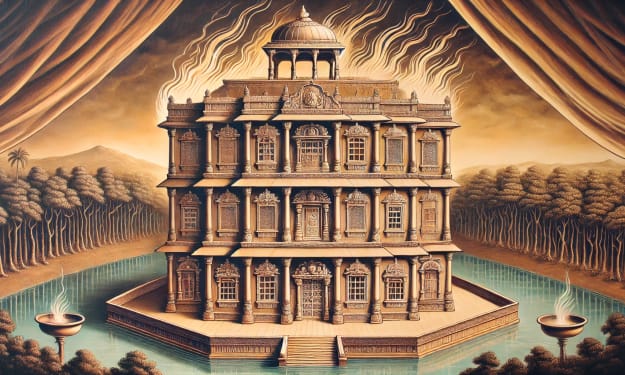
The Sinister Plot: Shakuni, Purochana, and the Construction of the House of Lac. AI-Generated.
Shakuni’s Plan to Eliminate the Pandavas Shakuni, the brother of Dhritarashtra’s wife Gandhari and the king of Gandhara, had long harbored animosity toward the Kuru dynasty. His personal resentment toward Hastinapura fueled his support of Duryodhana’s ambitions. When Duryodhana approached him with his grievances about the Pandavas, Shakuni saw an opportunity to both assist his nephew and weaken the Kuru dynasty. He devised a plan to remove the Pandavas in a way that would raise no suspicion against Duryodhana or the Kauravas.
By sai Charanabout a year ago in History
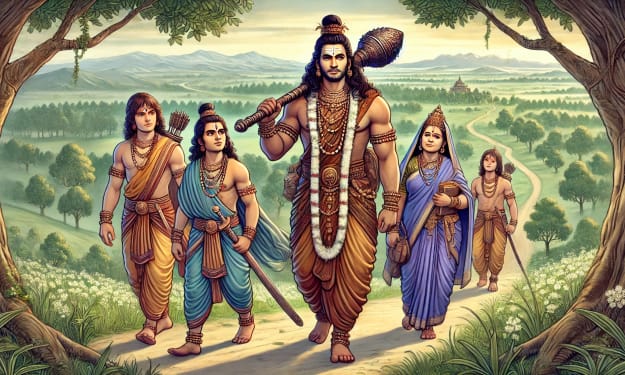
The Rise of the Crown Prince and the Pandavas’ Journey to Varanavata. AI-Generated.
Yudhishthira’s Appointment as Crown Prince Following the untimely death of their father, King Pandu, the five Pandavas—Yudhishthira, Bhima, Arjuna, Nakula, and Sahadeva—were brought to Hastinapura by their mother, Kunti. Raised alongside the Kauravas, the sons of Dhritarashtra, the Pandavas were trained in the royal arts of warfare, diplomacy, and leadership. Their teacher, Dronacharya, recognized their talents, particularly in Yudhishthira’s wisdom, Bhima’s strength, and Arjuna’s exceptional archery skills.
By sai Charanabout a year ago in History
Maskirovka
Maskirovka (маскировка), or deception in Russian military terminology, long remained the cornerstone of the Russian military strategy. The term "maskirovka," translation of which means something akin to "masking" or "disguise," actually denotes a wide range of techniques meant to mislead or confuse the enemy.
By Tanguy Bessonabout a year ago in History
US State Capital History Georgia and Hawaii
A Place Called Peachtree This lovely city was once an American Indian village and its name translated to “Standing Peachtree”. The land that has become the Atlanta Metropolitan area was gotten from the Cherokee Indians and Creek Indians in 1822. The first white settlement was established in Decatur.
By Rasma Raistersabout a year ago in History
Unsolved Mysteries That Still Baffle Experts Today
Over the entire course of time, humankind has experienced various peculiarities that stay unexplained, making no sense and the restrictions of current science. From secretive authentic occasions to odd normal events, these perplexing problems keep on spellbinding the creative mind of specialists and the overall population the same. Notwithstanding broad examination, a significant number of these secrets still can't seem to be completely perceived. Here is a glance at probably the most confounding persevering through puzzles that actually perplex specialists today.
By Zahra Syedabout a year ago in History
"Echoes of Resilience: The Human Cost of the Sri Lankan Civil War"
The Sri Lankan Noncombatant War: A History of Battle and the Struggle of the Tamil People The Sri Lankan Noncombatant War was a abiding and adverse battle that spanned over 25 years, from 1983 to 2009, greatly affecting the island nation and its population. This war, waged amid the Sri Lankan government and the Liberation Tigers of Tamil Eelam (LTTE), additionally accepted as the Tamil Tigers, was apparent by violence, animal rights abuses, and abiding indigenous tensions. To accept the causes, course, and after-effects of this war, it is capital to burrow into the historical, political, and amusing contexts that led to this adverse aeon in Sri Lanka’s history.
By Say the truth about a year ago in History
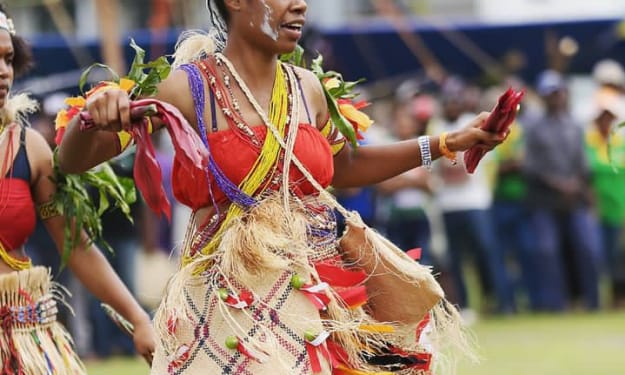
Exploring the Rich Cultural Heritage and Dances of Manus Province
Manus Province, one of Papua New Guinea’s smallest and most isolated regions, is known for its stunning natural beauty and rich cultural heritage. Located in the Admiralty Islands and made up of one main island, Manus, alongside several smaller islands, the province has a unique way of life shaped by its distinct geography and centuries-old customs. The people of Manus Province, primarily the Manus and Titan ethnic groups, maintain a close connection to their cultural roots, displaying a strong sense of community, traditional beliefs, and vibrant artistic expressions, particularly through dance.
By Grace Guiseabout a year ago in History
"Leonardo da Vinci: The Renaissance Genius Who Mastered Art and Science"
Leonardo da Vinci, generally advised the quintessential Renaissance man, was an artist, scientist, engineer, and abstracted whose assignment larboard an constant mark on both art and science. Built-in in 1452 in the baby boondocks of Vinci, Italy, Leonardo’s clamorous concern and able talents propelled him to become one of the best admired abstracts in history. This commodity explores his life, above works, and the abstruse access he had on ancestors that followed.
By Say the truth about a year ago in History
The Marriage of Pandu and Pandu's curse. AI-Generated.
The story of Pandu’s marriage to Kunti and Madri is one of both joy and tragedy, laying the foundation for the birth of the Pandavas in the Mahabharata. Pandu, the younger son of Ambalika and Sage Vyasa, became the king of Hastinapura after his elder brother Dhritarashtra was deemed unsuitable for the throne due to his blindness. Trained under the guidance of Bhishma and the other elders of Hastinapura, Pandu grew into a skilled warrior and wise ruler, beloved by his people.
By sai Charanabout a year ago in History