Latest Stories
Most recently published stories in History.
9/11 Attacks: The Day That Changed America Forever
September 11, 2001, is a date etched into the collective memory of humanity. On this fateful day, a series of meticulously coordinated terrorist attacks forever altered the course of American history and had profound global repercussions. It was a day when tragedy, heroism, and resilience intersected in a way that would leave an indelible mark on the world.
By John Cartner2 years ago in History
How the Easter Island Giant Moai Statues Moved
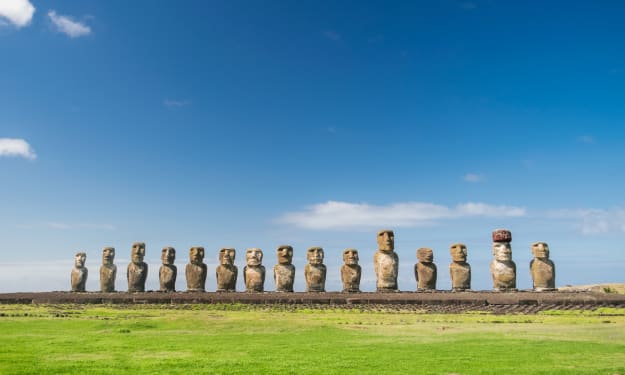
The Easter Island's iconic moai statues have garnered such widespread popularity that they have even been given their own 'Emoji'. Despite their enigmatic significance for centuries, recent research has shed light on the methods used to construct and transport these statues to their permanent locations. Comprising of three distinct parts, namely a large yellow body, a red hat or top knot, and white inset eyes with a coral iris, around 1,000 of these statues were created. The primary material used for the statues was volcanic tuff, which was sourced from a local quarry that was once a volcano. While the material was relatively easy to carve, it posed significant challenges in terms of transportation, as evidenced by the discovery of over 300 unfinished moai in the quarry. The remaining statues were erected in various locations, facing the villages as if watching over the locals. It is believed that the statues were carved while lying on their backs and then detached from the rock to be moved down the slope and set in a vertical position for completion. The task of transporting these massive statues, weighing approximately 81.5 tons, over a distance of three miles without modern equipment or vehicles was a daunting one. Researchers have attempted to recreate the process, with the most successful experiment involving the use of ropes to rock the statue down the road in a standing position. The existence of an 800-year-old road network on the island, identified by researcher Catherine Rutledge, suggests that the roads were likely built for pilgrims to a sacred volcano, with the moai statues serving as signposts.
By Sebastian Eric2 years ago in History
A Journey of Discovery: Unraveling the Past and Embracing the Future in Kumasi
In the heart of Ghana, beneath the warm African sun, a woman embarked on a journey that would forever change her life. Sarah had always felt a void, a missing piece of her identity. She knew her father's name, but nothing more. It was time to fill in the gaps, to connect the threads of her story that had been left hanging for far too long.
By NII LANTEY PARKER2 years ago in History
Amelia Earhart's Disappearance
Amelia Earhart had a lot of accomplishments- one of which was blazing a trail across the sky. From solo flight to crossing the Atlantic Ocean, she was an inspiration to many. Her signature move was casually zipping across the ocean all alone- something that only a person with nerves of steel could pull off. And if that wasn't enough, she also flew from Hawaii to the mainland United States for the first time ever- something that was unprecedented at the time.
By Belinda Muiruri2 years ago in History
Nigeria's Economic Crisis Solutions
"Unlocking Economic Potential: Combating Corruption's Grip on Nigeria's Development" Corruption, a pervasive challenge deeply ingrained in Nigeria's socio-economic fabric, has posed a significant hurdle to the nation's journey toward sustainable economic development. As a formidable obstacle, corruption has not only eroded public trust in government institutions but has also deterred domestic and foreign investment, hindering Nigeria's potential for growth and prosperity. Nigeria's rich resources and diverse economic sectors hold immense promise. Yet, the shadow of corruption has cast doubt on the realization of this promise. Rampant bribery, embezzlement, and undue influence have siphoned public funds away from essential services, such as education, healthcare, and infrastructure, impeding the very foundations of economic progress. This misallocation of resources has perpetuated inequality and stifled the growth of a vibrant middle class – a cornerstone of any thriving economy.
By Mejabi Elisha Oluwasegun2 years ago in History