
The Tower of "Paris Eiffel" Tower
The Tower of Eiffel

Introduction:
The Eiffel Tower: A Timeless Icon of Parisian Grandeur Rising from the heart of Paris, the Eiffel Tower stands as an enduring testament to human ingenuity, architectural brilliance, and the essence of French culture.
This monumental iron structure, often affectionately referred to as the "Tower of Paris," has become a global symbol of romance, artistry, and the indomitable spirit of innovation.
Completed in 1889 for the Exposition Universelle, a grand world's fair celebrating the centennial of the French Revolution, the Eiffel Tower was designed by the visionary engineer Gustave Eiffel.
Little did he know that his creation would go on to shape the skyline of Paris and captivate the hearts of millions.
Soaring to an impressive height of 324 meters (1,063 feet), the Eiffel Tower held the title of the world's tallest man-made structure for over 40 years.
ts towering presence was initially met with mixed reactions from the public, some embracing its unique design while others raising concerns about its stark departure from traditional architecture.
However, as time passed, the tower's allure grew stronger, and it soon became an integral part of the city's identity.
The Eiffel Tower's construction required an astounding 18,038 individual iron components, connected by a staggering 2.5 million rivets.
This intricate lattice-like framework, carefully assembled with a precision that Gustave Eiffel was renowned for, showcases a harmonious blend of engineering and aesthetics.
The tower's design adheres to the principles of Art Nouveau, an artistic movement that embraced organic forms, intricate details, and an appreciation for nature's beauty.
This is evident in the tower's graceful curves, delicate arches, and ornate ironwork that create a symphony of lines and patterns against the Parisian sky.
Visitors to the Eiffel Tower are treated to a multi-level experience that seamlessly blends history, culture, and breathtaking vistas.
The tower's three levels are accessible by both elevators and stairs, each offering a unique perspective of the city. The first level, situated at a height of 57 meters (187 feet), welcomes guests with an array of attractions.
From immersive exhibits detailing the tower's construction to charming souvenir shops and delightful cafés, this level serves as an introduction to the tower's legacy.
As visitors ascend to the second level, located at a height of 115 meters (377 feet), the panorama expands, revealing the splendor of Paris in all its glory.
The Seine River winds its way through the city, lined with iconic landmarks such as the Louvre Museum, the Musée d'Orsay, and the graceful bridges that connect the two banks.
The Champs-Élysées stretches out like a grand boulevard, leading the gaze to the Arc de Triomphe, a triumphant monument at the western end.
The third level, an awe-inspiring pinnacle perched at a lofty height of 276 meters (905 feet), is the ultimate vantage point for those seeking to embrace the city's beauty.
As visitors gaze out from this lofty height, the panorama is nothing short of enchanting. The cityscape stretches to the horizon, showcasing a tapestry of architectural marvels, historic neighborhoods, and modern skyscrapers.
The delicate spires of the Notre-Dame Cathedral rise like sentinels, while the Sacré-Cœur Basilica crowns the Montmartre hill with its ethereal presence.
At the summit, a small museum pays homage to Gustave Eiffel and his ingenious contributions to engineering and design.
His vision and dedication to pushing the boundaries of possibility are celebrated through artifacts, photographs, and interactive displays.
Visitors gain insight into the evolution of the tower from its conception to its role as an emblem of modernity.
However, the Eiffel Tower's magnificence isn't confined to daylight hours alone. As the sun sets over Paris, the tower transforms into a luminous wonder, casting its golden glow upon the city.
The tower's illumination, a mesmerizing display of lights that flicker like stars against the night sky, has become a cherished tradition.
Each evening, the Eiffel Tower comes alive with a choreographed dance of light, enchanting both visitors and locals alike.
Beyond its architectural and visual significance, the Eiffel Tower holds a profound place in cultural history.
It has been a muse for artists, a backdrop for films, and a symbol of love for couples from around the world.
Countless writers, painters, photographers, and filmmakers have sought to capture its essence, using it as a canvas upon which to project their interpretations of beauty and emotion.
In conclusion, the Eiffel Tower stands not only as a remarkable feat of engineering but as a monument to human aspiration and the power of the imagination.
Its enduring presence on the Parisian skyline speaks to the city's ability to embrace innovation while honoring its rich history.
As visitors ascend its iron steps, they embark on a journey that transcends time, connecting with the past, present, and future of this iconic landmark.
The Eiffel Tower, the Tower of Paris, remains an emblem of elegance, a beacon of artistry, and a source of inspiration for all who behold its majestic silhouette against the backdrop of the City of Light.
About the Creator
Keep reading
More stories from Daniel Sam and writers in History and other communities.
Mysterious fact in the world
Introduction: Start writing Mysteries have always captured the human imagination, sparking curiosity and intrigue. From unexplained disappearances to strange phenomena, the world is filled with enigmatic events that challenge our understanding of reality. Here are some mysterious facts from around the world that continue to baffle experts and enthusiasts alike.
By Daniel Sam2 years ago in History
3 Times Safety Rules Were Written After It Was Already Too Late
Safety rules like to pretend they are proactive. They wear reflective vests, carry clipboards, and speak confidently about prevention. But history knows the truth: many safety rules were written after something went catastrophically wrong, when prevention was no longer an option and regret had already filled out the paperwork.
By Enoch Sagini2 days ago in History
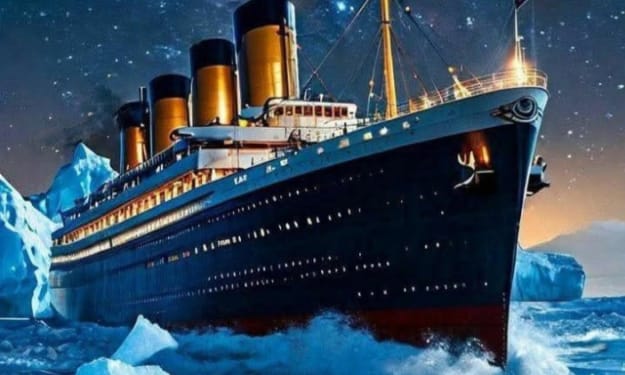
The Titanic Mystery: Secrets Beneath the Frozen Sea
On the night of April 14, 1912, the RMS Titanic sailed calmly through the dark waters of the North Atlantic, carrying more than 2,200 souls and the dreams of a modern world that believed it had conquered nature. Labeled “unsinkable,” the Titanic was the pride of human engineering. Yet before dawn broke, the great ship lay shattered beneath miles of icy ocean. More than a century later, the Titanic remains not just a tragedy—but a mystery filled with unanswered questions.
By The best writer 7 days ago in History
How to Succeed at the Benson Directory®
Congratulations and welcome to the Benson Directory® employee #22391! As our newest call handler, you will have the privilege of speaking with dozens of unique and interesting people on a daily basis as well as the opportunity to earn bonuses for high performance. Contained within this handbook you will find a set of ease to follow instructions designed to help you settle in to your new role and begin paving the way to success.
By S. A. Crawford4 days ago in Fiction



Comments
There are no comments for this story
Be the first to respond and start the conversation.