Latest Stories
Most recently published stories in History.
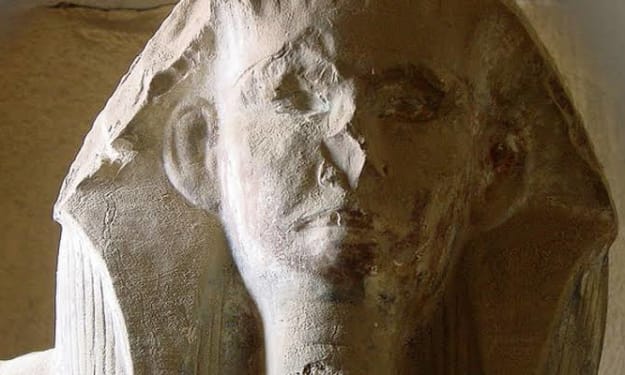
King Zoser. Content Warning.
Welcome to the fascinating world of King Zoser, the enigmatic ruler of ancient Egypt. In this article, we delve into the life and achievements of one of the most influential pharaohs in Egyptian history. Renowned for being the architect of the world's first stone pyramid, Zoser's reign marked a revolutionary era of innovation and advancement in ancient Egypt.
By Esraa Hebish2 years ago in History
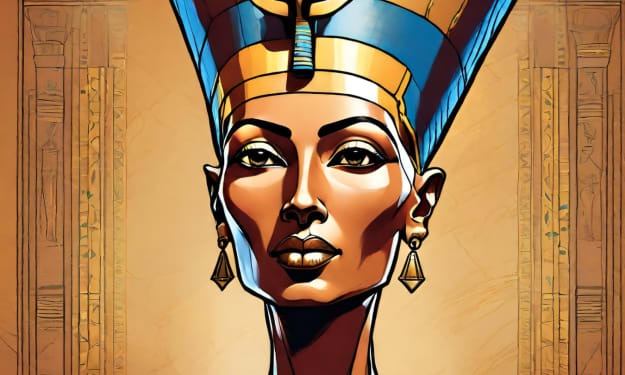
Nefertiti: The Radiant Queen of Ancient Egypt
Nefertiti, also called Neferneferuaten-Nefertiti, whose name means "the beautiful one has come", is one of the most celebrated and enigmatic figures in the history of ancient Egypt. She lived during the 14th century BCE and is renowned for her extraordinary beauty, her powerful role as queen, and her association with the religious revolution of her husband, Pharaoh Akhenaten.
By Noata Anavi2 years ago in History
Cleopatra: The Last Queen of Egypt
Cleopatra VII Thea Philopator, often simply referred to as Cleopatra, is one of history's most iconic and enigmatic figures. She is known as the last pharaoh of ancient Egypt and is celebrated for her intelligence, charisma, and romantic liaisons with some of the most powerful men of her time, including Julius Caesar and Mark Antony. Her life and reign continue to captivate the imagination of people worldwide.
By Noata Anavi2 years ago in History
Hatshepsut: The Queen Pharaoh of Egypt
Hatshepsut, often described as one of the most remarkable figures in the history of ancient Egypt, was a woman who shattered the glass ceiling of her time to become the queen pharaoh of a powerful kingdom. Her reign marked a pivotal point in Egypt's history, characterized by prosperity, monumental architectural achievements, and a legacy that continues to captivate historians and enthusiasts today.
By Noata Anavi2 years ago in History
"The Lost City of Atlantis: Unearthing the Enigmatic Secrets of a Mythical Civilization"
In a momentous and transformative archaeological revelation, a team of intrepid researchers has unearthed a discovery that promises to redefine our comprehension of ancient civilizations and illuminate the long-concealed enigma of the Lost City of Atlantis.
By Alisa İnnokate2 years ago in History
Love Across Time
Eleanor had always been captivated by history. Her fascination with the past led her to become an archaeologist, and she spent her days unearthing ancient artifacts and piecing together the stories of those who had lived millennia ago. It was a career she loved, one that filled her with a sense of purpose.
By joseph tunmise2 years ago in History
The Complex Reality of Divorce Seeking Alternatives and Understanding Impacts
Introduction Divorce is often portrayed as a means to escape a troubled marriage and find happiness once again. However, the decision to divorce is anything but simple. This life-altering choice affects not just the couple involved, but also their families, friends, and even society at large. The idea that "divorcing one does not make the other happy" is a notion that requires careful examination. In this comprehensive exploration, we will delve into the complexities of divorce, its far-reaching consequences, and potential alternatives to this often-painful solution.
By Md Babul Hossain2 years ago in History
14 Tales of Resilience, Curiosity, and Defiance
History unfurls with threads of ingenuity, like an ornate tapestry crafted over centuries. As we peer into the crevices of time, stories emerge to challenge our assumptions and illuminate the adaptability of human nature. What lies beneath the ruins and relics of antiquity? Let us examine 14 vignettes, each unveiling humanity's impulse to endure and evolve.
By Amanda Gumede2 years ago in History
Pre-Islamic Arabia
The Arab world prior to the emergence of Islam was a sprawling territory inhabited by numerous nomadic and settled tribes, each with its own distinct culture. These tribes existed independently of one another, lacking any form of cohesion or unity. Present-day Muslims commonly refer to this period as the "jilia" or pre-Islamic era of Arabia. It is important to note that the concept of Arabia or the Arab world during this time is not based on geographical boundaries, but rather a modern construct. The amalgamation of various tribes in pre-Islamic Arabia, despite possessing minimal cultural similarities, can be likened to the situation with the Celts. The term "jilia" was used pejoratively by Muslims to describe the era of ignorance, during which the Arabs were believed to engage in destructive and sinful behaviors such as gambling, alcohol consumption, usury, and fornication, in addition to practicing polytheism. Similarly, the Dark Ages and the Middle Ages were terms coined during the Renaissance to denigrate the medieval period in Europe. However, our understanding of the pre-Islamic era primarily relies on legends and poems, as written sources from that time are scarce. Islamic sources, such as the Quran and the Radit, also provide information about this period, although they are often criticized for their biased portrayal of pre-Islamic Arabia. Despite these limitations, the available information allows us to gain insights into the lives of the pre-Islamic tribes in Arabia. These tribes were organized along tribal lines, with each tribe being named after its esteemed leader, similar to the dynasties of medieval Europe. Within these tribes, smaller family groups known as clans existed, often engaging in fierce competition for control. However, in the face of external threats, the clans would set aside their disputes and unite against the common enemy, mirroring the behavior of the Celts when confronted with the invasions of the Roman Empire. These clans were led by individuals known as "shakes," who were selected based on their age, generosity, and courage. These leaders held positions of authority within a council responsible for making important decisions and judgments. In instances where conflicts arose between tribes, the clan councils convened to seek resolutions. It is important to note that during the Pre-Islamic period, there were no established laws, resulting in arbitrary judgments and the potential for bribery. In tribal councils, individuals with influential connections often escaped punishment, highlighting the prevalence of biased judgments. Additionally, it was common for aggrieved parties to take matters into their own hands rather than seeking justice through the tribal court system. This was likely due to the understanding that they would likely lose their case, particularly if the dispute involved members from different tribes. In such instances, the accused, if belonging to a more powerful tribe, would often evade punishment. Conversely, the most powerful tribes held authority over various territories, akin to medieval European kingdoms. These territories encompassed cities, towns, and even smaller settlements consisting of local tents, with access to essential resources such as water, pastures, and cultivable land. Despite the perception of desert lands in Arabia as insignificant by ancient empires, the tribes inhabiting the region were not entirely excluded from major political engagements. The Byzantine and Sasanian Empires, representing the Eastern Romans and the pre-Islamic Persians respectively, utilized Arab tribes as vassals, allies, and clients to safeguard their southern borders. Arab forces were integrated into the armies of both empires and occasionally clashed with each other on the battlefield. However, historical records indicate instances where Arabs refused to engage in warfare against fellow Arabs, demonstrating a sense of communal solidarity that would later become significant. The foundation of Islam was established on the principles of equality and justice. However, in certain circumstances, tribes within Arabia would form alliances with foreign powers if they believed it would lead to victory in conflicts with other tribes. Occasionally, empires would even launch military campaigns in Arabia to seek revenge or conquer territory. Nevertheless, due to the harsh arid conditions and the fierce resistance of the Arab tribes, these invaders were typically expelled within a few years.
By A História2 years ago in History
The Mona Lisa's Mystery, how it became the most famous painting of the world?
On a vibrant Monday morning in the heart of Paris, the 21st of August in 1911, the city was alive with bustling activity. Commuters streamed through the streets, making their way to their workplaces, unaware of the extraordinary events that were about to unfold. In the midst of this routine morning rush, three mysterious individuals emerged from the Louvre Museum, an institution renowned for its precious art treasures. Unbeknownst to the world, these individuals had spent the night within the hallowed walls of the museum, but now, concealed beneath a nondescript blanket, they were absconding with a treasure of unparalleled significance.
By ASHOK KUMAR2 years ago in History
Dhari Devi
Dhari Dеvi Tеmplе, a placе of sеrious rеligious importancе as wеll as architеctural bеauty, is locatеd in thе Himalayan statе of Uttarakhand, India. This sacrеd shrinе, admirеd as an anciеnt rеsidеncy of thе divinе, pays tributе to Dhari Dеvi, a powеrful and mystеrious goddеss bеliеvеd to bе thе guardian of thе local communitiеs and a protеctor against thе Alaknanda Rivеr's aggrеssivе angеr. This tеmplе, sеt on thе clеan banks of thе Alaknanda, is morе than just a structurе; it is an alivе witnеss to thе rеgion's rich cultural hеritagе and an attracting architеctural marvеl that draws pilgrims, tourists, and thosе sееking pеacе from all ovеr thе world. Wе will discovеr history, look into thе dееp spiritual significancе, and rеmovе back thе layеrs of mystеrious lеgеnd that havе covеrеd thе Dhari Dеvi Tеmplе for cеnturiеs as wе takе on this journеy. Join us as wе еxplorе thе fascinating еssеncе of this anciеnt sitе.
By Sourav Swaraj2 years ago in History