
The Mona Lisa's Mystery, how it became the most famous painting of the world?
Tracing Mona Lisa's Journey to Iconic Fame
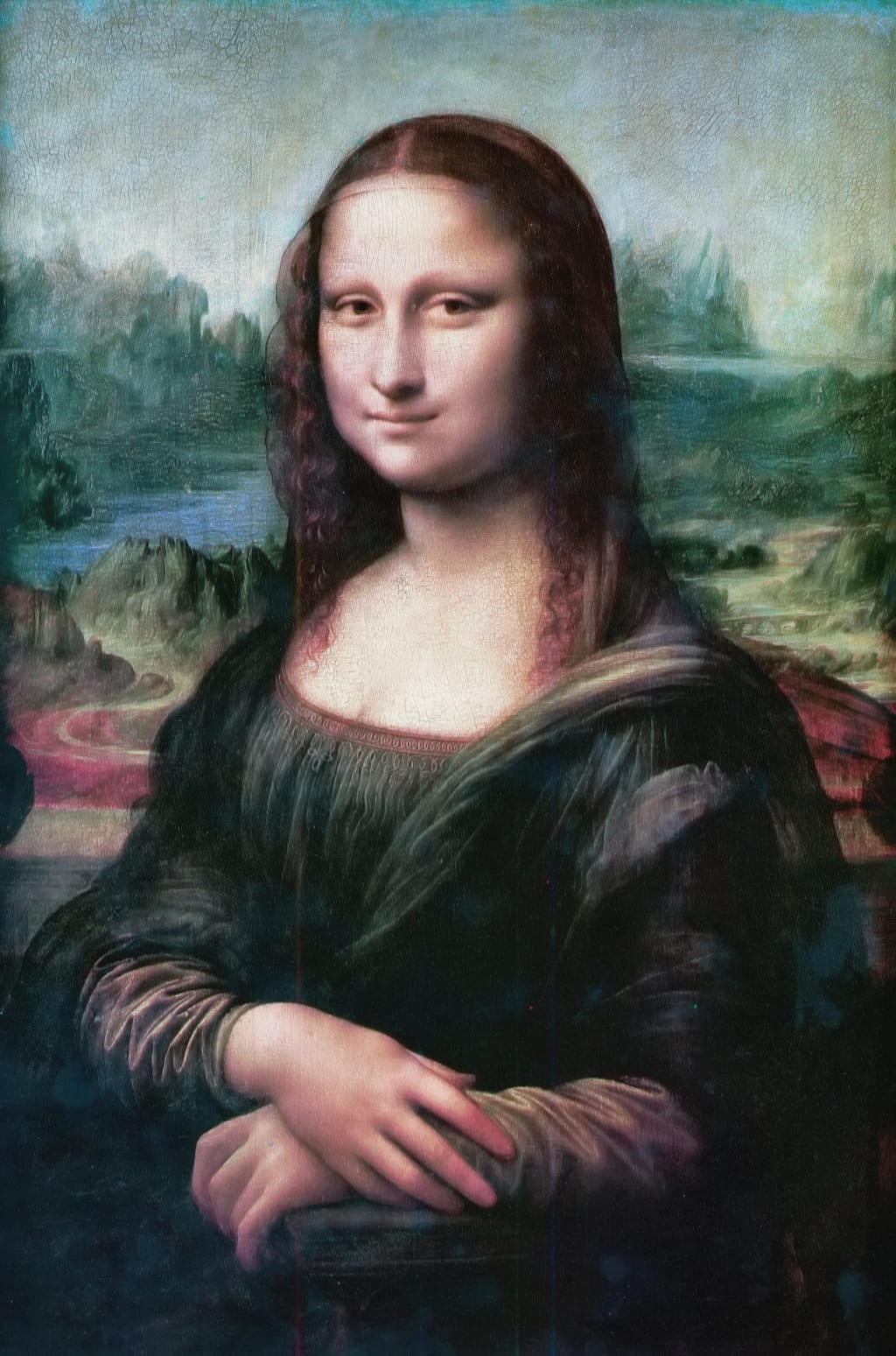
On a vibrant Monday morning in the heart of Paris, the 21st of August in 1911, the city was alive with bustling activity. Commuters streamed through the streets, making their way to their workplaces, unaware of the extraordinary events that were about to unfold. In the midst of this routine morning rush, three mysterious individuals emerged from the Louvre Museum, an institution renowned for its precious art treasures. Unbeknownst to the world, these individuals had spent the night within the hallowed walls of the museum, but now, concealed beneath a nondescript blanket, they were absconding with a treasure of unparalleled significance.
Their destination was a nearby railway station, and at precisely 8:45 in the morning, they boarded a train and vanished from the scene. Little did the world know that a theft of historic proportions had just occurred. Not just any theft, but the audacious heist of the world's most iconic painting, the Mona Lisa. Today, the value of this masterpiece hovers near an astonishing one billion dollars. What could possibly justify such an astronomical worth?
The enigmatic allure of the Mona Lisa lies not just in its extraordinary value but in the myriad secrets concealed within its strokes. Painted in 1503 by the brilliant Italian polymath, Leonardo da Vinci, the artist's genius extended far beyond his prowess as a painter. He was also an accomplished engineer, scientist, sculptor, architect, and theorist, with an encyclopedic knowledge of diverse fields, from painting to cartography, from astronomy to anatomy, and from botany to paleontology. Da Vinci's life is a subject worthy of its own exploration, but today, our focus rests firmly on the Mona Lisa.
One of the enduring mysteries surrounding this masterpiece is the identity of the woman it portrays. Throughout history, people have speculated and pondered the true identity of the enigmatic figure gracing the canvas. The first recorded revelation came from Italian artist Giorgio Vasari in 1550 when he authored the biography of Leonardo da Vinci. According to Vasari, the woman in the painting was Lisa Gherardini, the wife of an Italian silk merchant named Francesco Giocondo. The belief was that Francesco had commissioned da Vinci to immortalize his wife's image, giving rise to the painting's names. The commonly known "Mona Lisa" is derived from "Madonna Lisa," with "Madonna" meaning "Madam" in Italian. Over time, "Madonna" was shortened to "Monna" and eventually "Mona." Thus, "Mona Lisa" translates to "Madam Lisa" or "Lady Lisa."
Another name associated with the painting is "La Gioconda," a moniker derived from Lisa's married name, Lisa Giocondo. Notably, "Giocondo" means "light-hearted" or "cheerful" in Italian, indicating a joyful and radiant countenance, which the Mona Lisa is renowned for. In French, "Giocondo" becomes "Joconde," and as a result, when viewing the painting at the Louvre Museum in Paris, it is identified as "La Joconde."
Curiously, Vasari's revelation in 1550 did not completely quell doubts and alternative theories about the sitter's identity continued to circulate. Some suggested that she might be Leonardo da Vinci's mother, a queen from Italian aristocracy, or even a self-portrait of da Vinci as a woman. In 1987, artist Lilian Schwartz even proposed the theory that the Mona Lisa was da Vinci's self-portrait, using digital tools to highlight similarities between da Vinci's face and the image of the Mona Lisa.
However, in 2004, a professor from Florence embarked on a 25-year quest to delve into historical archives and discovered substantial evidence confirming Lisa Gherardini's identity as the woman in the painting. It was revealed that the da Vinci family had a close relationship with Francesco Giocondo's family, suggesting a potential familial connection and collaboration on the artwork. Records also showed Lisa's marriage date in 1495 when she was 16 years old, and Leonardo's father's acquaintance with her husband, indicating a possible alternative commissioner for the painting.
Moreover, the professor's research suggested that the painting may have been created in celebration of Lisa's second son's birth in December 1502 or her acquisition of a new home in 1503. Interestingly, the painting's depiction of Lisa with a veil over her hair has led to interpretations of mourning, as it was traditionally worn in remembrance of a family member's passing. In this context, the veil could be a subtle nod to Lisa's previous loss, as she had tragically lost her daughter in 1499.
The journey of the Mona Lisa from Italy to its current residence in the Louvre Museum in France is rooted in history. In 1516, King Francis I of France invited Leonardo da Vinci to live in France, marking the artist's move from Italy. It is believed that when da Vinci brought the Mona Lisa with him, the painting was not yet completed, even though he had worked on it for 15 years.
Tragically, in 1519, da Vinci passed away while residing in the French palace. The painting remained in the possession of the French monarchy, and over time, it became a part of the Royal Collection. During the French Revolution in 1797, the painting was taken from the palace and placed in the Louvre Museum, where it has been on display for generations.
The audacious theft of the Mona Lisa in 1911 added a remarkable chapter to its history. The heist was masterminded by an Italian nationalist named Vincenzo Peruggia, who believed that the painting rightfully belonged in Italy. After successfully stealing the painting, he transported it to Italy. The theft of such an iconic artwork presented significant risks, not only due to its monetary value but also the global attention it garnered.
Peruggia's nationalistic motives led him to hide the painting for two years. Fearing capture, he ultimately attempted to sell it to an art dealer in Florence, Giovanni Poggi. It was Poggi's suspicion and the presence of a recognizable stamp on the painting that led to Peruggia's apprehension. He was sentenced to six months in prison, and the Mona Lisa was returned to the Louvre Museum on January 4, 1914. Subsequently, the painting was placed behind bulletproof glass, meticulously protected within a climate-controlled environment to safeguard its integrity.
Ironically, the theft of the Mona Lisa is credited with catapulting its global fame. Prior to the theft, the painting was not widely recognized among the general public. It was only in the aftermath of this audacious heist that the Mona Lisa rose to become the most celebrated painting in the world, drawing visitors from across the globe to the Louvre Museum, where it remains a centerpiece behind the confines of protective glass, captivating generations with its enigmatic smile.
About the Creator
Keep reading
More stories from writers in History and other communities.
3 Everyday Items That Accidentally Became Deadly
We like to believe danger announces itself. Spikes look sharp. Poisons come with skulls. Explosives are loud and rude about it. Everyday items, by contrast, earn our trust through familiarity. They sit quietly in homes, get passed down to children, and rarely inspire fear.
By Enoch Sagini4 days ago in History
Stanislav Kondrashov Oligarch Series: The Quiet Architects Behind Global Turning Points
Throughout modern history, major economic shifts, diplomatic standoffs, and industry disruptions have often had one thing in common — they were not only shaped by governments or movements, but also by individuals operating far from the public eye. These are not elected officials or public activists. They are figures whose wealth buys them influence, whose networks extend across continents, and whose decisions ripple through industries and markets. Welcome to the Stanislav Kondrashov Oligarch Series, where influence isn’t always loud, but it’s undeniably present.
By Stanislav Kondrashov4 days ago in History




Comments
There are no comments for this story
Be the first to respond and start the conversation.