Latest Stories
Most recently published stories in History.
"Unsheathing History: Exploring the Fascinating World of Daggers"
Daggers are double-edged, short-bladed knives that are mostly used for stabbing or thrusting. They are intended for close-quarters fighting or as a personal defense weapon, and they usually have a sharp tip. They are made in a variety of sizes, forms, and styles, and they frequently have a hilt or crossguard to shield the user's hand during fighting. They have been employed for ceremonial purposes, military operations, and even as decorative objects throughout history. They are fascinating to examine because of their adaptability and historical relevance.
By Mai Sophia2 years ago in History
The Unseen Fissures
In a world seemingly more connected than ever, the invisible threads of tribalism weave their intricate patterns beneath the surface, creating unseen fault lines that shape our emotional landscapes. The human inclination to form tribes, rooted in our evolutionary history, has taken on new dimensions in the modern era. These tribal affiliations, whether based on nationality, ethnicity, religion, or ideology, often evoke intense emotions that can both unite and divide. This essay explores the nuanced tapestry of tribalism, delving into the emotional currents that flow within these groups and examining the quest for unity amidst the unseen fissures.Tribalism, at its core, stems from the instinctual need for belonging and identity. Throughout history, humans have sought safety, support, and shared purpose within the confines of a group. This innate inclination has given rise to diverse tribes, each with its unique set of customs, beliefs, and rituals. However, the emotional ties that bind these tribes can be both a source of strength and a breeding ground for conflict.One of the primary emotions tied to tribalism is a sense of belonging. The warmth and security derived from being part of a tribe fulfill a basic human need for connection. Whether it's a cultural community celebrating shared traditions or a political faction rallying around a common ideology, the feeling of belonging imparts a profound sense of identity and purpose. This emotional anchor can be a powerful force, fostering unity and cooperation within the tribe.Conversely, tribalism often casts its shadow in the form of exclusion and othering. The emotional currents of fear, distrust, and animosity can surge between different tribes, fueled by a perceived threat to one's own identity or interests. These emotions create invisible fissures, deepening divisions and obstructing the path to unity. In the midst of such emotional turbulence, the quest for unity becomes a delicate balancing act, requiring a nuanced understanding of shared humanity.The emotional landscape of tribalism is further complicated by the role of loyalty. Loyalty to one's tribe is a virtue celebrated across cultures, symbolizing commitment, trust, and solidarity. However, blind loyalty can morph into a destructive force, blinding individuals to the flaws within their own tribe and fostering hostility towards outsiders. Navigating these emotional waters necessitates a discerning approach that acknowledges the positive aspects of loyalty while fostering a broader sense of human kinship.As societies grapple with the complexities of tribalism, empathy emerges as a key player in the quest for unity. Understanding the emotions that underpin tribal affiliations requires a willingness to step into the shoes of others, transcending the boundaries that separate one tribe from another. Empathy becomes a bridge across the unseen fissures, allowing individuals to recognize the shared human experiences that bind us all.In the pursuit of unity, education plays a pivotal role in dismantling the walls erected by tribalism. By fostering critical thinking and promoting a deeper understanding of diverse perspectives, education becomes a catalyst for breaking down the emotional barriers that fuel tribal conflicts. Embracing a curriculum that encourages empathy and celebrates diversity can pave the way for a more inclusive and unified society.Moreover, effective leadership becomes indispensable in navigating the emotional landscape of tribalism. Leaders who prioritize unity over division must be adept at addressing the emotional needs of their followers while transcending the narrow confines of tribal interests. Inspiring a collective vision that transcends tribal boundaries requires emotional intelligence and a commitment to fostering a sense of shared humanity.In conclusion, the unseen fissures of tribalism run deep within the fabric of human society, shaping our emotional landscapes in profound ways. The quest for unity amidst these fissures demands a recognition of the powerful emotions that underpin tribal affiliations. By cultivating empathy, promoting education, and embracing enlightened leadership, societies can strive towards a future where the threads of unity weave a tapestry that transcends the divisive forces of tribalism. Only through understanding and addressing the emotional currents within these tribes can we hope to bridge the gaps and build a more harmonious world.
By Egbe Christian2 years ago in History
India's Top 10 Famous Locations
India, the country with the most varied cultures, extensive history, and stunning scenery, is home to several well-known locations that welcome millions of tourists each year. India has a wide range of attractions to suit the interests of all visitors, from breathtaking buildings to breathtaking natural wonders. The top 10 well-known locations in India that must to be on every traveler's itinerary are listed below:
By The king of World2 years ago in History
Cultural Chronicles: Beyond Generations, Beyond Borders
Cultural Chronicles: Beyond Generations, Beyond Borders I. Introduction: Cultural legacy refers to the cultural assets, traditions, customs, artifacts, and expressions inherited from previous generations. It includes both tangible and intangible components of a society's identity, such as historical monuments, artworks, languages, rituals, and other factors that define and shape a society's cultural legacy.
By Kiruthika Gopalakrishnan2 years ago in History
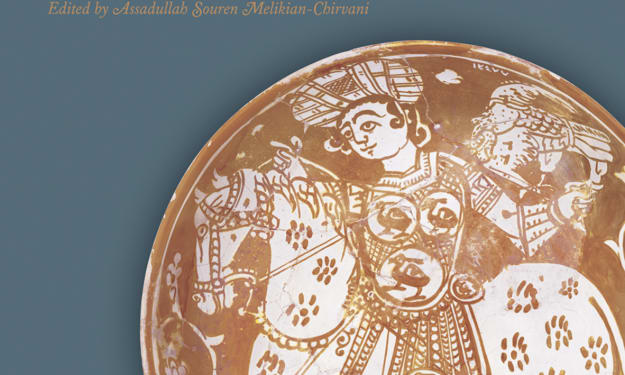
The World of the Fatimids
The Fatimid Empire was a Shi'a caliphate that ruled North Africa and the Middle East from 909 to 1171. It was founded by Ubayd Allah al-Mahdi Billah, who claimed to be the Mahdi, the twelfth Imam of Shia Islam. The Fatimids were a powerful dynasty that expanded their empire to include Egypt, Syria, Palestine, and parts of Arabia, North Africa, and Sicily.
By Hmid Abderrahmane2 years ago in History
Ethereal Realms: The Enchanted Kingdom
Once upon a time, in the mystical land of Eldoria, where emerald forests whispered ancient secrets and silver rivers carried tales of forgotten times, a kingdom flourished under the benevolent rule of King Alaric and Queen Seraphina. Eldoria was a realm of enchantment, where magic intertwined with everyday life, and mythical creatures coexisted with the inhabitants.
By Musa Abdulkadir2 years ago in History
REDISCOVER ROME
In the realm where Emperors hold sway and Gladiators entertain amidst opulent luxury, the ever-present peril of the Mediterranean Sea underscores Rome's dominance over the Western world for five centuries. Yet, the true source of the Empire's strength lies submerged beneath the waves. Without mastery over the sea and control of maritime trade routes, the Roman Empire would never have thrived. Imagining the possibility of draining the oceans to unveil the secrets of the underwater realm, we can now utilize precise data and advanced technology to illuminate a lost world.
By Sule Ogunc2 years ago in History
Joseph Goebbels, Propaganda through films and Hail Hitler
During and before WWII, the Reich Ministry of Public Enlightenment and Propaganda under the minister of Propaganda of Nazi Germany, Joseph Goebbels who was Adolf Hitler’s right-hand man, produced pro-Nazi and pro-Hitler content films for the public.
By Tuba Abbasi2 years ago in History