
Pyramids of Giza
Echoes of Eternity: Unveiling the Secrets of the Pyramids of Giza

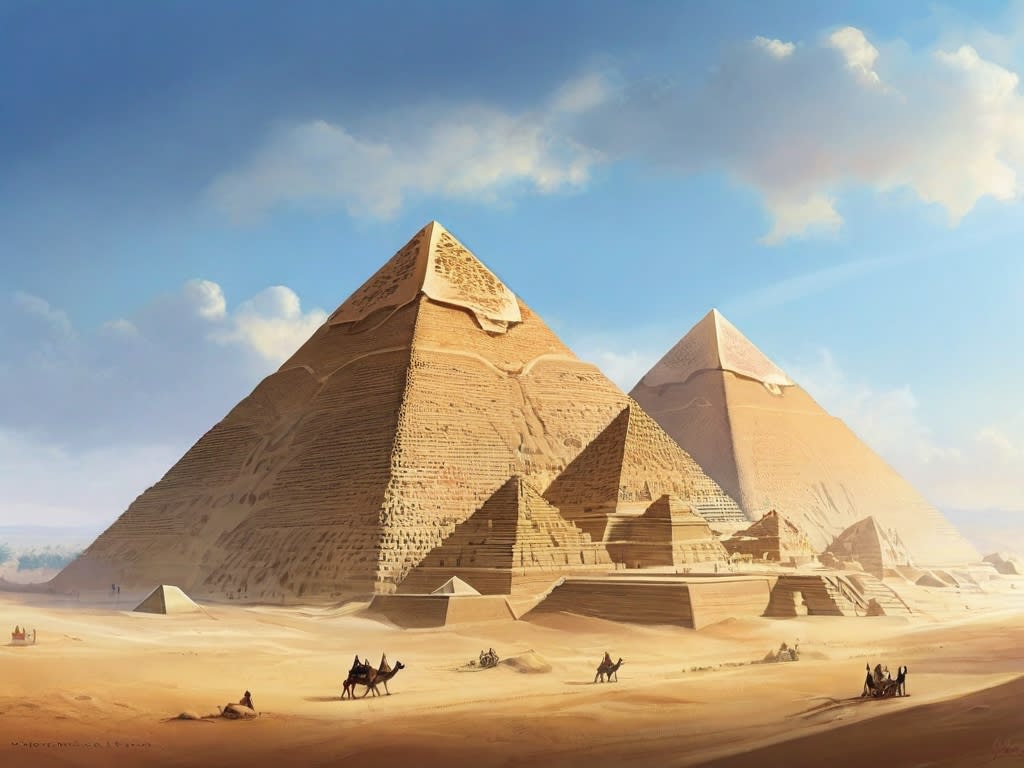
In the heart of the arid Egyptian desert, where the golden sands stretch endlessly to meet the horizon, stands one of the most awe-inspiring marvels of human history – the Pyramids of Giza. With their towering presence and timeless allure, these ancient structures have captivated the imagination of people across the ages, drawing adventurers, historians, and dreamers alike to their mysterious embrace.
Constructed over 4,500 years ago during the Fourth Dynasty of the Old Kingdom, the Pyramids of Giza were built as monumental tombs for three pharaohs: Khufu, Khafre, and Menkaure. The grandeur of these colossal structures continues to baffle modern architects and engineers, as they marvel at the precision and sophistication with which these ancient marvels were erected. Khufu's Great Pyramid, the largest of the three, is a testament to human ingenuity, standing at a height of 146.6 meters and consisting of an estimated 2.3 million limestone blocks, each weighing several tons.
The Pyramids of Giza have stood the test of time, weathering countless sandstorms and witnessing the rise and fall of empires. Their enduring presence has not only cemented their status as one of the Seven Wonders of the Ancient World but has also fueled centuries of speculation and intrigue surrounding their construction and purpose.
As visitors approach the Giza Plateau, the sight of the three pyramids emerging from the golden haze is nothing short of a mystical revelation. The Great Pyramid, with its apex once clad in smooth, white Tura limestone, gleams in the sunlight like a beacon across the ages. The precision of the pyramids' alignment with the cardinal points and the intricate construction techniques employed by the ancient Egyptians add layers of mystery to these enigmatic structures.
Upon entering the Pyramids of Giza, visitors are transported back in time to an era of pharaohs and pyramid builders. The narrow passageways, dimly lit by flickering torchlight, echo with the whispers of a bygone civilization. As tourists venture deeper into the heart of the pyramids, they encounter burial chambers adorned with intricate hieroglyphics and breathtaking artifacts that once accompanied the pharaohs in the afterlife.
The Great Pyramid of Khufu, in particular, has revealed a treasure trove of archaeological wonders. In the 19th century, explorers and scholars, including Howard Vyse and Giovanni Belzoni, braved the labyrinthine passages to unveil hidden chambers and artifacts. Among the most notable discoveries was the sarcophagus of Khufu, crafted from a single block of red granite and meticulously inscribed with hieroglyphs depicting the pharaoh's journey to the afterlife.
Archaeological investigations have also uncovered the mortuary temple and the Sphinx, a colossal limestone statue with the body of a lion and the face of a pharaoh, believed to represent Khafre. The Sphinx guards the Giza Plateau, its enigmatic gaze fixed upon the horizon, perpetuating the air of mystery that surrounds the entire complex.
The allure of the Pyramids of Giza extends beyond their archaeological significance. The sheer magnitude of these ancient wonders, coupled with the rich tapestry of Egyptian history, makes Giza an irresistibly attractive destination for tourists from around the globe. Every year, millions of visitors embark on a pilgrimage to witness the majesty of the pyramids and immerse themselves in the mystique of ancient Egypt.
The Giza Plateau is not merely a collection of ancient structures; it is a living testament to the ingenuity and ambition of the ancient Egyptians. The Sphinx and the pyramids serve as a gateway to a civilization that flourished along the banks of the Nile, leaving an indelible mark on the pages of history. The pyramids stand as colossal monuments to human achievement, a testament to the unwavering determination of a civilization that sought to defy the limitations of time.
Tourists are drawn to Giza not only for the opportunity to witness these architectural marvels up close but also to unravel the secrets that shroud them in an air of mysticism. Egyptologists and historians guide visitors through the intricate passages, offering insights into the rituals, beliefs, and customs of the ancient Egyptians. The Sphinx, with its inscrutable expression, becomes a silent storyteller, whispering tales of a bygone era.
For many, a visit to the Pyramids of Giza is a transformative experience that transcends the boundaries of time. As the sun sets over the Giza Plateau, casting an amber glow upon the pyramids, visitors find themselves enveloped in an aura of ancient magic. The distant echoes of camel caravans and the fragrance of exotic spices evoke a sense of timelessness, transporting travelers to a world where pharaohs ruled and pyramids touched the heavens.
The surrounding landscape, with its undulating dunes and the timeless Nile River meandering through the valley, adds to the allure of Giza. As hot air balloons drift lazily across the sky, tourists are treated to a breathtaking aerial view of the pyramids, capturing the essence of Egypt's timeless beauty.
The Pyramids of Giza have also become a focal point for cultural exchange, as people from diverse backgrounds converge to witness the splendor of this ancient wonder. The site hosts international events, bringing together scholars, archaeologists, and enthusiasts to share their knowledge and discoveries. The global fascination with the pyramids serves as a bridge that transcends cultural boundaries, fostering a shared appreciation for the wonders of the ancient world.
In the shadow of the pyramids, a bustling marketplace comes to life, offering a kaleidoscope of vibrant colors and exotic treasures. Artisans and traders showcase their craftsmanship, creating an immersive experience for visitors eager to take home a piece of Egypt's rich cultural heritage. The aroma of traditional cuisine wafts through the air, tempting tourists with the flavors of ancient recipes passed down through generations.
The Pyramids of Giza stand as guardians of a distant past, inviting travelers to embark on a journey through time. The allure of these ancient structures, coupled with the vibrant tapestry of Egyptian culture, transforms Giza into a living museum that resonates with the echoes of eternity. As the sun dips below the horizon and the pyramids are bathed in the soft glow of twilight, visitors depart with a profound sense of wonder and a newfound appreciation for the enduring legacy of the Pyramids of Giza – a legacy that continues to captivate the hearts and minds of those who seek to unlock the secrets of the ancient world.
About the Creator
SHEIKH
Masterful Wordsmith | Crafting Captivating Narratives | Enchanting readers with versatile writing style & captivating stories.
Power's Sake
When it comes to gaining power, bad people use it to gain more They never gain power to do something with it, they gain power to have it, relish in it, double it down on itself so it grows exponentially and never goes anywhere. Even if you see the people in power commit an atrocity, that is never the true goal. It is a deplorable action for sure but the action itself usually doesn't matter it's the outcome.
By Donny Foley4 days ago in History
Military Strength of Alexander the Great and the Chola Empire: A Historical Comparison
Though separated by more than a thousand years and operating in vastly different geographical and cultural contexts, both forces achieved extraordinary success through discipline, innovation, and strategic brilliance. This article explores the history, composition, size, organization, and military strength of Alexander’s Macedonian army and the Chola military, highlighting how each became a dominant power of its era.
By Say the truth 4 days ago in History




Comments (1)
Excellent writing and informative content.