
"Unsheathing History: Exploring the Fascinating World of Daggers"
Daggers

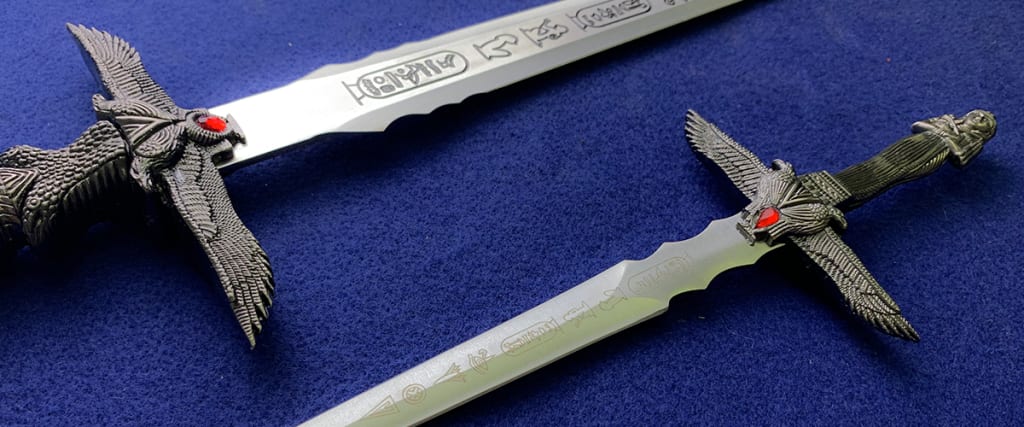
Daggers are double-edged, short-bladed knives that are mostly used for stabbing or thrusting. They are intended for close-quarters fighting or as a personal defense weapon, and they usually have a sharp tip. They are made in a variety of sizes, forms, and styles, and they frequently have a hilt or crossguard to shield the user's hand during fighting. They have been employed for ceremonial purposes, military operations, and even as decorative objects throughout history. They are fascinating to examine because of their adaptability and historical relevance.
A Brief History of Daggers:
Delve into the historical timeline of daggers, tracing their origins from ancient civilizations like the Egyptians, Greeks, and Romans. Explore their evolution through medieval times, the Renaissance, and their role in different cultures worldwide. Highlight significant developments, uses, and changes in designs across various periods. The history of these weapons dates back thousands of years, with these weapons playing a significant role in various cultures, societies, and historical periods. Here's a brief overview:
Ancient Origins
They originated as simple stone implements in prehistoric times and later developed into metal blades. Flint, bronze, and copper were among the materials used to make early daggers. They were indispensable for chopping and hunting, and later, they could be used as a weapon for self-defense.
Bronze Age:
Bronze daggers were tougher and more resilient due to improvements in metallurgy during the Bronze Age, which began around 3000 BC. In addition to being utilized in battle, these weapons were frequently ornately ornamented.
Iron Age
They were stronger and more effective throughout the Iron Age as bronze gave way to iron. Different civilizations, such as the Greeks, Romans, Celts, and Vikings, each had unique designs that reflected their technological and cultural advancements.
Medieval Period:
Throughout the Middle Ages, daggers remained indispensable sidearms. Knights employed them as a supplementary weapon, frequently to enhance their swords. The medieval dagger took on various forms over time, such as the "misericorde" and the "baselard," each of which had a distinct function in warfare.
Renaissance and Later Periods:
A renaissance of interest in artistry and craftsmanship during the Renaissance produced exquisitely carved daggers that served as both weapons and status symbols. They continued to exist as prestige items and side arms rather than as main weapons when firearms became more widely used.
The significance of Culture:
Additionally, they were culturally significant in many parts of the world. They served as emblems of authority or were connected to religious rites of passage in several cultures.
Modern Times:
They are still used in modern civilization, even if they are no longer the main weapon of choice in combat. They are frequently used as souvenirs, ceremonial objects, or as part of traditional clothing in some cultures. They are still used in martial arts and as equipment for certain occupations like survival and hunting. The lengthy history of daggers demonstrates how, throughout many cultures and eras, they have changed from being useful instruments to emblems of strength, prestige, and artistry.
Various Types of Daggers:
Dissect the many types of daggers and talk about their special traits and uses. Make sure to distinguish between utility blades, decorative daggers, combat-oriented designs, ceremonial, and specialty variations like dirks, poniards, and stilettos. Examine the ways that various types have been affected by cultures and geographical areas. There are many different types of them, and each is made for a particular application, such as fighting, rituals, or decoration. Here are a few noteworthy varieties:
Dagger:
The double-edged, pointed blade of a typical type has a sharp tip and is mostly used for thrusting and stabbing.
Dirk:
A Scottish long tool with a single-edged blade with a guard (crossguard) to protect the hand, usually connected with Highlanders.
Stiletto:
A long-bladed, thin dagger meant mostly for thrusting. It is well-known for having a slender, needle-like blade that was utilized throughout the Renaissance and is frequently linked to Italian origins.
Baselard:
A medieval dagger with a wide blade that may be thrust or sliced, with a characteristic H-shaped hilt.
Dagger-knife:
A cross between a dagger and a knife is usually made for stabbing but with a single-edged blade similar to a knife.
Tanto:
A Japanese dagger characterized by its straight blade and sharp point, historically used by samurai as a secondary weapon.
Misericorde:
A thin, slender type used in the Middle Ages to penetrate armor slits and inflict mercy kills.
Parrying Dagger:
A specialized type is used in conjunction with a rapier or sword in dueling or fencing, featuring a guard to protect the hand.
Ceremonial Daggers:
Found in various cultures worldwide, these daggers are often ornately decorated and used for religious, ceremonial, or symbolic purposes rather than combat.
These types represent a fraction of the diverse array of daggers, each with its unique design, historical context, and intended use.
Daggers in Popular Culture!
Daggers, a symbol of power, secrecy, and intrigue, have a profound impact on popular culture. They are used in classic literature and modern cinema, representing fatal flaws and haunting prophecies. In movies and TV shows, they are seen as the tools of assassins, heroes, or villains. In video games, they are used for stealth and precision, shaping gameplay and character identities they also appear in music, art, fashion, historical dramas, mystery novels, and superhero sagas, symbolizing danger, rebellion, and the allure of the unknown.
About the Creator
Mai Sophia
A Writer/blogger by day, a knife enthusiast and survivalist by night. I've reviewed a lot of products and have helped people make the right purchase
Keep reading
More stories from Mai Sophia and writers in History and other communities.
In-Depth Analysis: Attack on Titan Sword and Their Cultural Influence!
Get ready to dive into the world of Attack on Titan Sword and explore the cultural influence of its iconic swords in this in-depth analysis. Whether you're a fan of the hit anime series or simply curious about the impact of visual media on society, this article has something for you.
By Mai Sophia2 years ago in History
Is NATO Facing Its Biggest Crisis Yet?
Is NATO Facing Its Biggest Crisis Yet? For more than seventy years, NATO has been one of the strongest military alliances in the world. Formed after World War II, it was designed to protect its members through collective defense. An attack on one was considered an attack on all. For decades, this principle helped maintain stability in Europe and beyond. But today, NATO is facing one of the most challenging moments in its history.
By Wings of Time 6 days ago in History
Nobel Peace Prize
The Nobel Peace Prize has stood as one of the world’s most recognized honors. Awarded annually in Oslo, it is meant to celebrate individuals or organizations that have made significant contributions toward peace, diplomacy, and humanitarian progress. While its mission appears straightforward, the Nobel Peace Prize has never been free from debate. In recent years, conversations surrounding global politics—particularly discussions about the Trump Nobel Peace Prize—have brought renewed attention to how peace is defined, measured, and rewarded in the modern era. The Origins and Meaning of the Nobel Peace Prize The Nobel Peace Prize was established by Alfred Nobel, the Swedish inventor best known for creating dynamite. In his final will, Nobel directed that a portion of his wealth be used to recognize efforts that foster peace among nations, reduce standing armies, or promote diplomacy and cooperation. Since its first award in 1901, the prize has honored activists, diplomats, organizations, and world leaders whose actions shaped international dialogue. Unlike other Nobel categories, the peace prize is awarded by a Norwegian committee rather than a Swedish institution. This distinction reflects Nobel’s desire to separate the prize from national interests and focus instead on global responsibility. Over time, the definition of “peace” has expanded. Early recipients were often disarmament advocates or mediators. More recent laureates have included human rights defenders, climate activists, and international organizations working in conflict zones. Politics and the Nobel Peace Prize Despite its humanitarian ideals, the Nobel Peace Prize has always intersected with politics. Recognizing peace efforts often means evaluating political leadership, international negotiations, and long-term consequences—none of which are easy to measure in real time. Some awards have been widely celebrated, while others sparked controversy. Critics often argue that certain laureates were honored prematurely, before the lasting results of their actions became clear. Supporters counter that the prize is meant to encourage peace efforts, not merely reward completed achievements. This tension has made the Nobel Peace Prize a reflection of global priorities at any given moment, rather than a simple historical judgment. Donald Trump and Nobel Peace Prize Discussions Few modern political figures have generated as much debate in connection with the Nobel Peace Prize as Donald Trump. During and after his presidency, conversations about a potential Trump Nobel Prize emerged repeatedly, particularly among supporters who pointed to his role in diplomatic initiatives. The phrase Trump Nobel Peace Prize gained traction following agreements and negotiations in regions long marked by conflict. Advocates argued that these diplomatic efforts aligned with Alfred Nobel’s vision of reducing international tension through dialogue rather than force. At the same time, critics questioned whether these actions met the broader ethical and humanitarian standards traditionally associated with the award. They pointed to domestic divisions, foreign policy controversies, and unresolved global conflicts as reasons for skepticism. This divide highlights a core challenge of the Nobel Peace Prize: peace is rarely absolute, and political leadership is often complex and contradictory. Trump Nobel Peace Prize 2026: Speculation and Context As global politics continue to evolve, speculation around a Trump Nobel Peace Prize 2026 has appeared in media discussions and public commentary. It is important to note that nominations for the Nobel Peace Prize are confidential for decades, and speculation does not confirm consideration or selection. However, the mere discussion of Trump Nobel Peace Prize 2026 reflects how the award has become part of broader cultural and political conversations. Supporters view such recognition as validation of diplomatic achievements, while critics see the speculation as politicizing an institution meant to rise above partisan debate. This dynamic is not unique to Trump. Many past leaders, from various ideological backgrounds, were debated heavily before or after receiving the prize. The Nobel Peace Prize often mirrors global disagreements rather than resolving them. How the Nobel Committee Makes Its Decision Each year, hundreds of nominations are submitted by qualified individuals, including academics, lawmakers, and previous laureates. The Nobel Committee evaluates these nominations through research, expert consultation, and internal debate. The process considers intent, impact, and long-term significance. However, because peace efforts often unfold over years or decades, the committee must make decisions without full historical clarity. This reality explains why some awards age gracefully while others remain controversial. The committee rarely responds directly to public pressure or online campaigns. Media attention, including discussions around a Trump Nobel, does not guarantee influence over the final decision. The Broader Impact of the Nobel Peace Prize Beyond individual recipients, the Nobel Peace Prize plays a symbolic role. It brings global attention to issues that might otherwise be ignored, from humanitarian crises to fragile peace processes. Even controversial nominations can spark meaningful debate about what peace truly means in the modern world. The prize also raises questions about accountability. When leaders are considered for such recognition, the public is encouraged to examine policies, outcomes, and moral responsibility more closely. In this sense, discussions surrounding the Trump Nobel Peace Prize are not just about one individual. They reflect deeper conversations about diplomacy, leadership, and the evolving standards by which peace is judged. Conclusion: A Prize That Reflects the World The Nobel Peace Prize remains one of the most influential and debated honors in global society. Its power lies not only in recognizing peace efforts but also in challenging the world to think critically about conflict, cooperation, and responsibility. Whether discussions involve historic activists or modern political figures like those associated with Trump Nobel Peace Prize 2026 speculation, the award continues to reflect the complexities of international relations. Peace is rarely simple, and neither is the process of honoring it. Ultimately, the Nobel Peace Prize serves as a reminder that striving for peace is an ongoing journey—one shaped by ideals, actions, and the difficult choices that define human history.
By Saboor Brohi 2 days ago in History


Comments
There are no comments for this story
Be the first to respond and start the conversation.