
"Jwaneng: Unearthing the Billion-Dollar Treasure Beneath Botswana"
The Jwaneng Diamond Mine, located in the heart of Botswana’s Kalahari Desert, is not only the richest diamond mine in the world by value but also a symbol of how natural resources can fuel national development. Since its opening in 1982, Jwaneng has generated over $100 billion in high-quality diamonds, transforming Botswana’s economy and setting a benchmark for responsible mining. This article explores the geological marvel, historical evolution, economic impact, and future of the world's most valuable diamond mine.

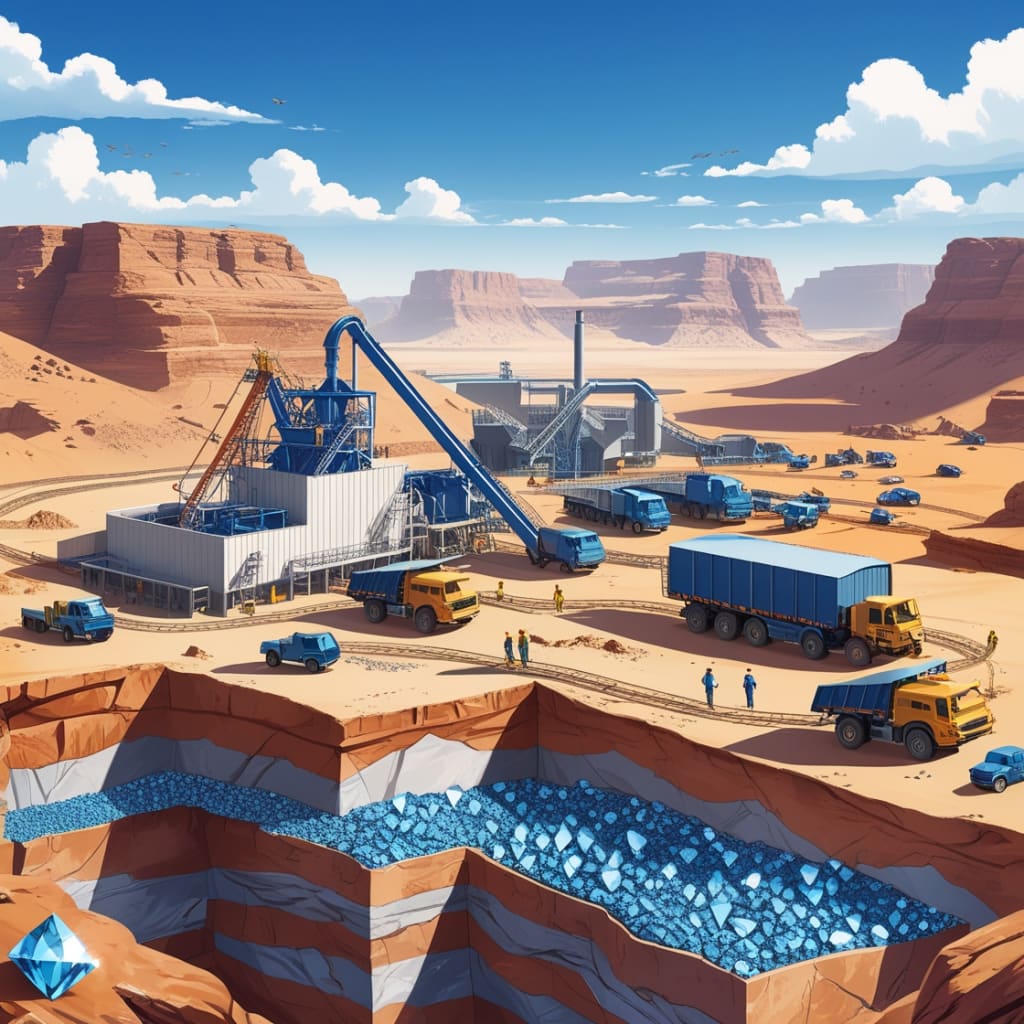
"The Sparkling Legacy: The History and Wealth of the World's Largest Diamond Mine"
Introduction
Diamonds have captivated human imagination for centuries, symbolizing wealth, power, and eternal beauty. Deep beneath the surface of the Earth, nature took billions of years to create these precious stones. Among all the diamond mines in the world, the Jwaneng Diamond Mine in Botswana holds the crown as the richest diamond mine by value, and one of the largest by production. This article explores the fascinating history, geology, and global economic significance of this treasure trove—and estimates the immense net worth hidden within.
1. The Birth of Jwaneng: A Geological Miracle
Located in the southern part of Botswana, the Jwaneng mine sits in the Kalahari Desert. The word "Jwaneng" means "place of small stones" in Setswana—though ironically, it became the site of some of the largest fortunes in diamond history.
The mine lies atop a kimberlite pipe, a vertical volcanic structure through which magma once surged, bringing diamonds from the Earth's mantle to the surface. These pipes are the primary source of gem-quality diamonds. Geologists first identified potential in the region during a survey in the early 1970s, and by 1972, De Beers, the diamond giant, had confirmed the presence of high-quality diamond ore.
2. Official Opening and Expansion
The Jwaneng mine officially began operations in 1982, as a joint venture between De Beers and the Botswana government under the partnership company Debswana. This collaboration was unique: it guaranteed the country of Botswana a large share of the profits while allowing De Beers access to one of the most lucrative mines on Earth.
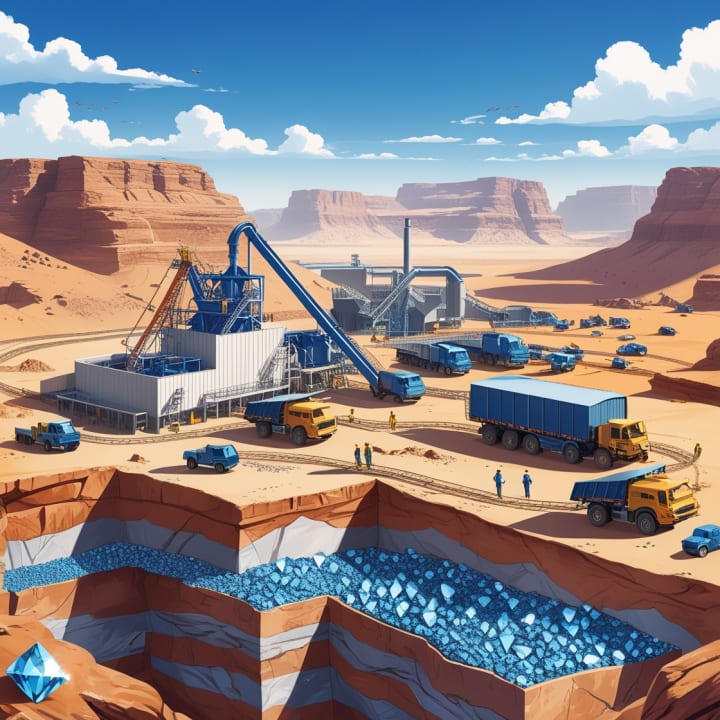
Jwaneng has since evolved into a state-of-the-art mining facility. It employs both open-pit and, more recently, underground mining methods to access deeper diamond reserves.
3. Global Economic Impact
Jwaneng is not just a mine—it is an economic engine. The revenue generated from the mine has fueled Botswana’s development, lifting it from one of the world’s poorest nations in the 1960s to a middle-income country today.
As of now, Jwaneng produces around 10 to 15 million carats of high-quality diamonds annually. But what makes it exceptional is not just the volume, but the value per carat. On average, Jwaneng diamonds are worth more than $200 per carat, significantly higher than most other mines.
4. The Net Worth of Jwaneng Diamonds
Let’s break it down with an estimate:
Average Annual Production: 12 million carats
Average Price per Carat: $200
Annual Revenue: 12,000,000 × $200 = $2.4 billion
Jwaneng has been in operation for over 40 years. Assuming similar output over time (with inflation and price shifts accounted for), the total revenue generated by the mine is:
Estimated Cumulative Revenue: 40 × $2.4 billion = $96 billion
Add to this the future potential of underground mining, and the total value could exceed $120 billion by the time all the reserves are exhausted.
5. Social and Environmental Legacy
Unlike many other mines around the world that have been plagued by corruption or environmental neglect, Jwaneng has often been cited as a model for responsible mining. Debswana invests in education, healthcare, housing, and wildlife preservation in Botswana. The surrounding areas have benefited immensely from the infrastructure developed around the mine.
However, mining always comes with challenges. Environmental degradation, energy use, and long-term sustainability are ongoing concerns that the company is actively addressing through green initiatives and reclamation efforts.
6. The Future of Jwaneng
In recent years, Debswana has invested over $2 billion into transitioning Jwaneng into an underground mine. This is necessary as surface-level reserves deplete. The new phase, called "Cut-9", is expected to extend the mine's life by at least 20 more years and generate over 50 million more carats.
With diamond demand remaining high in emerging markets like China and India, the future of Jwaneng still shines bright.
Conclusion
The Jwaneng Diamond Mine is more than just a pit in the desert—it's a glittering beacon of what responsible resource management can achieve. From its rich geology to its transformative impact on Botswana’s economy and society, Jwaneng is a shining example of how the Earth’s treasures, when managed wisely, can benefit generations.
Its estimated net worth—over $100 billion in diamonds—makes it not just the largest, but perhaps the most valuable diamond mine in human history.
About the Creator
Say the truth
"Say the Truth: Explain Everything in the World" is your trusted source for uncovering facts and exploring the wonders of history, science, technology, and beyond. We simplify complex ideas and reveal truths to inspire curiosity .
Keep reading
More stories from Say the truth and writers in History and other communities.
"Secrets Beneath the Waves: The Untold History of Oceanic Treasure"
Secrets Beneath the Waves: The Untold History of Oceanic Treasure From age-old legends of Atlantis to the tangible discovery of Spanish galleons, the ocean has perpetually represented a realm of intrigue, peril, and astonishing wealth. For millennia, civilizations have dispatched vessels across the expansive blue unknown in quest of commerce, conquest, and discoverymany of which never returned. What they abandoned has transformed the seas into extensive repositories of lost treasures, still awaiting revelation.
By Say the truth 9 months ago in History
No ICE, No KKK, No Fascist USA
"I don't 'do' politics." Politics will do you, regardless. Watching from the sidelines for the last year I can see far too many similarities in the way Trump's ICE Gestapo is to Nazi Germany. Considering the United States just invaded Venezuela and kidnapped their President and his wife I would say we are there.
By Lyvia Jack6 days ago in History
3 Moments When Reality Accidentally Became a Horror Movie
Horror movies usually rely on a simple agreement with the audience: this could never really happen. Ghosts follow rules, monsters have weaknesses, and there’s always a clear point where reality hands the story over to fiction. Real life, unfortunately, does not care about narrative structure, logic, or closure.
By Enoch Sagini5 days ago in History
How, Too
Many people wonder how, too. You are not alone, and I am an expert. I will teach you how, too! First, you need to remit a small application fee and fill out an application describing the nature of your financial situation and how often payments will be made, as this will have great bearing on how well I teach you how, too.
By Harper Lewis3 days ago in Fiction


Comments
There are no comments for this story
Be the first to respond and start the conversation.