
Canadians in the Second Boer War.
South Africa, 1899-1902.

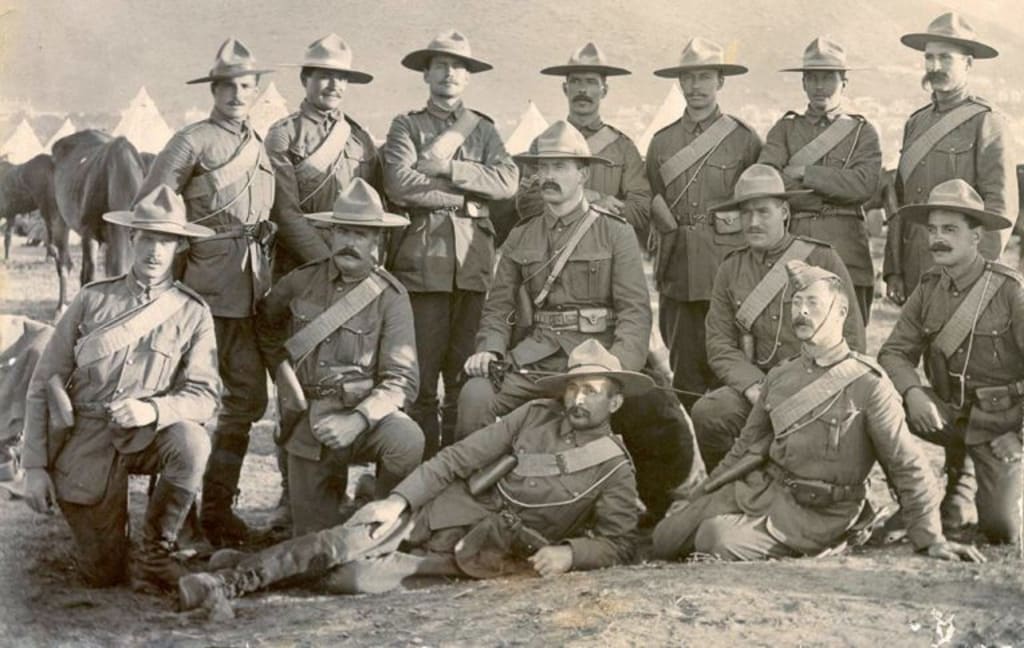
Canadians were always well known for their fierceness and integrity in both World War I and World War II, yet the first time Canuck boots would hit foreign soil was 1899, in South Africa. Canadians served alongside the British troops against Dutch settlers named Boers. Approximately seven thousand Canadians volunteered for the service, including twelve nurses and three contingents of the Canadian Army, many others would even serve in British units. The Canadians would play an important role in the British war effort, taking part in the three biggest battles of the war.
Siege of the Paardeberg Drift.
After multiple minor firefights following the Canadian’s arrival in Africa, they would merge with a British brigade to surround the enemy at the Modder River. February 18th, 1900 would mark the first major battle Canadian soldiers would take part in. Canada saw its highest casualty rate of the entire war with eighteen soldiers killed, and another sixty wounded. As a result of the casualties, British high command decided to change their tactics and draw back to wait the enemy out while still having them surrounded. In the early morning of February 27th, 1900, Canadian forces would lead a sneak attack which appeared to be promising in the early stages, that is until a tripwire was hit, alerting enemy forces. A fire fight between the two forces would ensue almost immediately, Canadian soldiers in the rear would start digging trenches in the hard ground while those on the front line would do their best to give covering fire.
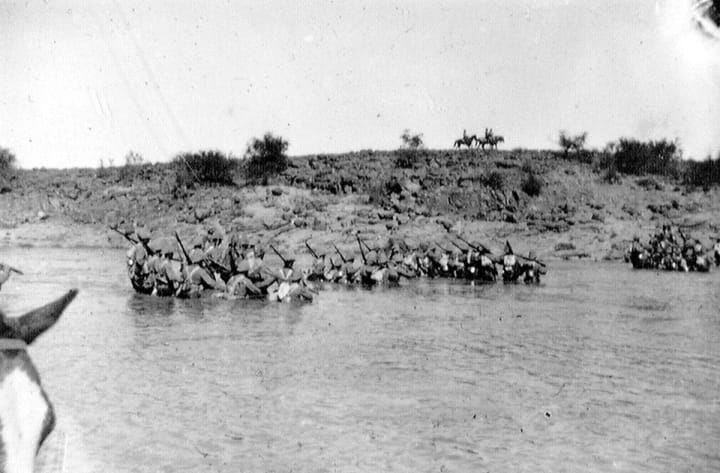
During the chaos of battle, someone yelled “Retire!” Causing many men to retreat. Most Canadians returned to their starting positions while companies “G” and “H” mainly made up of men from the East coast held their own on the front lines. After the dust settled, the attack was more than enough to convince Boer commanding officers that they would not be able to hold their positions as they had sustained a whopping four thousand casualties, which was around ten percent of the army itself. In the later morning of February 27th, the Boers would surrender to the British, marking the first major British victory of the war.
Battle of Leliefontein.
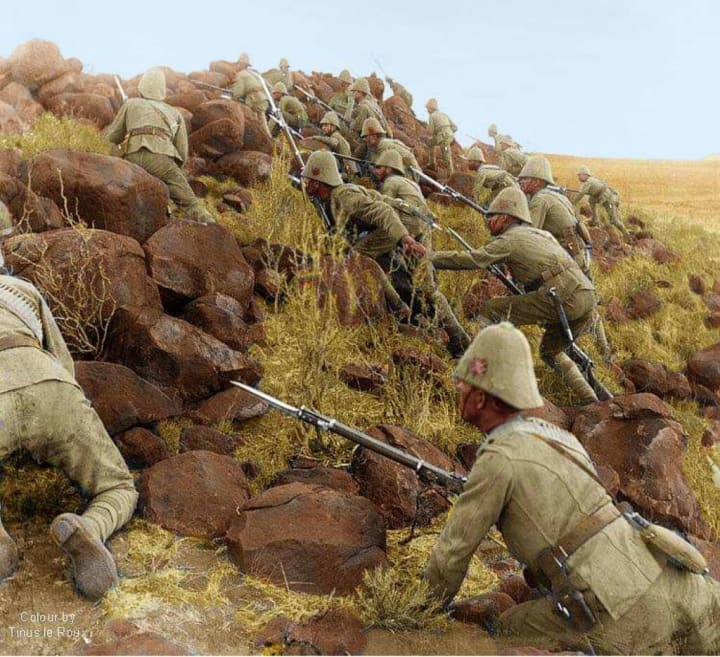
On November 7th, 1900, the British would head out in attempt to find a group of Boer commandos believed to have made camp on the banks of the Komati river. The British would succeed in making the Boers cross the river in retreat, but chose not to follow. Camp would be set up near a farm named Leliefontein, Afrikaans for “lily fountain.” The resistance of the Boers had been stronger than the British anticipated, leading to the British commander’s return to Belfast, South Africa. The orders of the commander were for a unit of the Royal Canadian Dragoons and some artillery men to be tasked with holding the line while the British withdrew.
The Canadians were severely outnumbered, only having 100 men throughout the line while the Boers had just received reinforcements. The Boers figured the British would not quit and expected another offensive, once they realized the British were retreating, Boer foot soldiers would attack the rear defensive positions of the Canadians harshly, spending the majority of the morning attacking at various points throughout the frontline. The Dragoons would prevail, showing great bravery and grit all while allowing the British to withdraw safely from their position. Many men would receive rewards for their valor, but three men would receive the Victoria Cross.
•H.Z.C Cockburn.
•R.E.W Turner.
•E.J Holland.
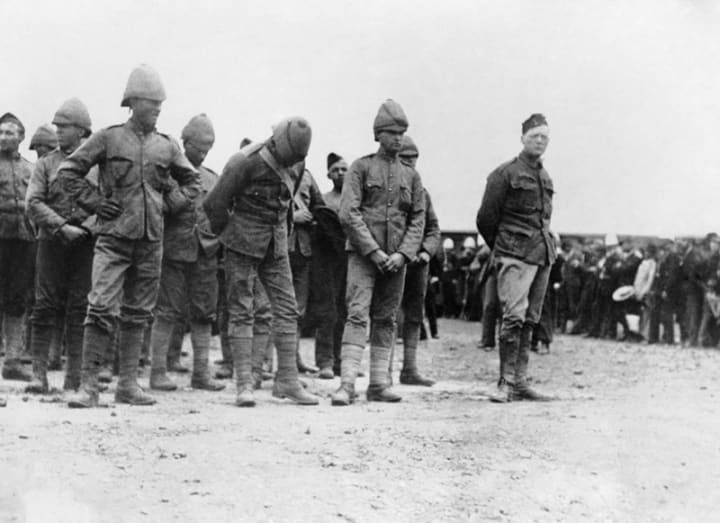
Battle of Harts River.
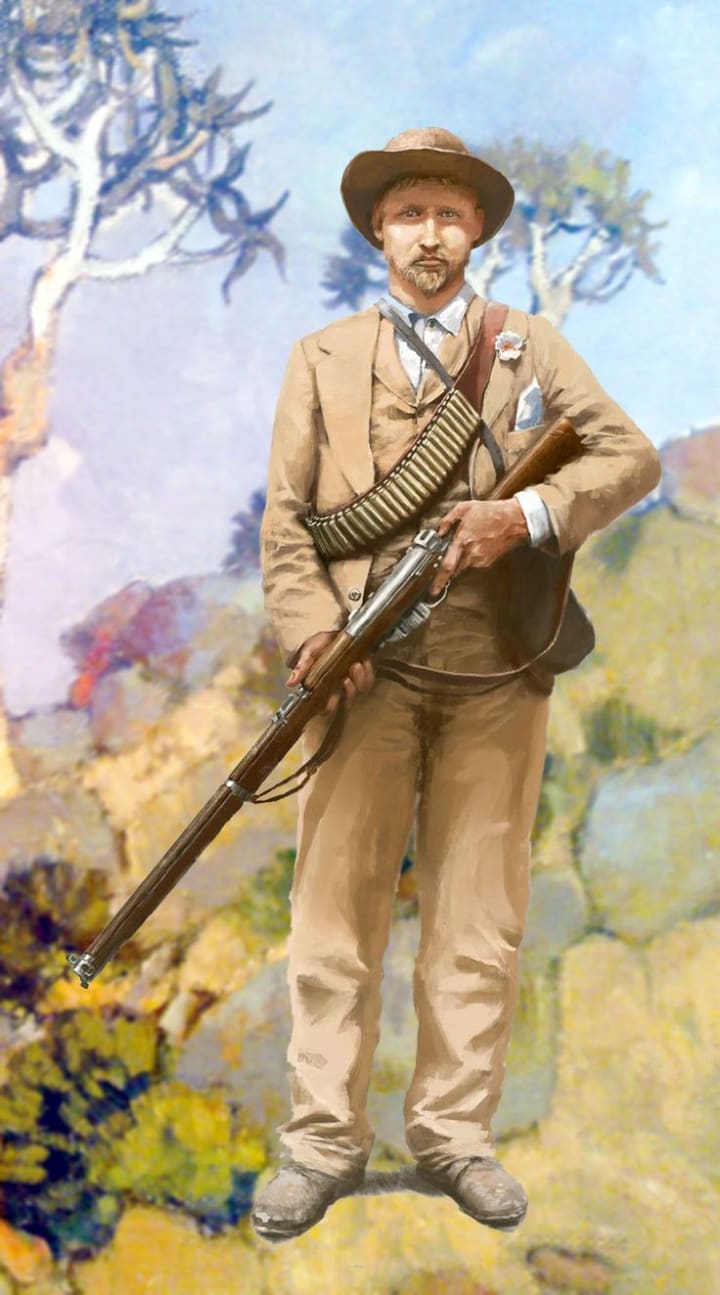
March 3rd, 1902 would mark another rather grim day for Canada as losses from this battle would be just lower than Paardeberg with thirteen Canadians killed, and another forty wounded. Canada was apart of a column of soldiers tracking Boers through the Brakspruit river, which was nearly dry. They eventually found a trail of what was believed to be a small group of Boers, the British thought it would be a simple victory and charged forward down the trail, Canadians were ordered to stay behind and protect the horse drawn buggies that held supplies.
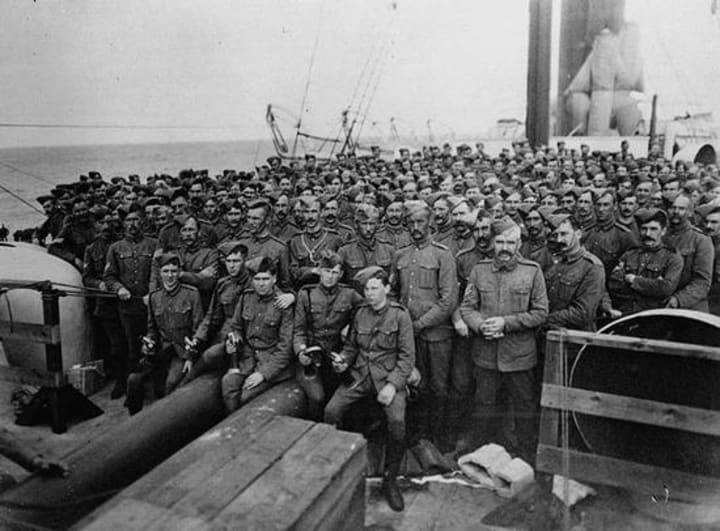
As the British discovered the Boers, they soon found out that they were outnumbered, British forces quickly set camp around a farm named Boschbult. Upon the arrival of the Canadians, the Boers were attacking and driving back the British defences. This attack would last hours, aside from the heavy shelling and gunfire that sounded like fireworks on the Fourth of July, the Boers would send cavalry charges regularly. One of these charges would see a large group of Boer soldiers separating twenty-one Canadians from the British unit.
the Canadians would not surrender or retreat, the men fought until they were out of ammunition and resulted to hand-to-hand combat where it was applicable. Eventually, the position would be overrun, leading to eighteen of the twenty-one Canadians meeting their fate. Although, the losses suffered by the Canadian army would be to no avail as the Battle of Harts River would end in a British defeat.
Conclusion.
The outcome of the war would bring the signing of the Treaty of Vereeniging on May 31st, 1902. The treaty allowed the British to establish control over all the Boer Republics. Although it was not all glory, Britain’s harsh military tactics would result in commanding British and Canadian soldiers to burn down the houses and farms of Boer families. These actions led to many civilians being put in concentration camps, where approximately 28,000 women, children, and black workers died of disease due to the conditions of the camps.
After the Second Boer War, Canada would bear 270 casualties, approximately 135 due to disease. This article is meant to commemorate those who served in the Canadian Forces during this time, wearing the maple leaf proudly on their shoulder, as there is a lack of information on the men, and even the events that took place throughout the entirety of the conflict. Many of the young men who saw battle in South Africa would be deployed again to Europe in the First World War on August 4th, 1914.
**Jacob Newson 2025
Resources.
Canada and the South African War (Boer War) | the Canadian Encyclopedia, www.thecanadianencyclopedia.ca/en/article/south-african-war.
Canada, Veterans Affairs. “National War Memorial.” Veterans Affairs Canada, 7 Feb. 2025, www.veterans.gc.ca/en/remembrance/memorials/national-war-memorial.
Cinnamontoast. “Canadians and the South African War.” Canadian War Museum, 23 Oct. 2024, www.warmuseum.ca/articles/for-queen-and-country-canadians-and-the-south-african-war-1899-1902.
About the Creator
Jacob Newson
Canadian. Also found on Medium.
Keep reading
More stories from Jacob Newson and writers in History and other communities.
Why Was Thailand Never Colonized?
Countries across Asia have had quite a complicated relationship when it came to European powers throughout colonial times, with France colonizing what is now Laos, Cambodia, and Vietnam. Britain would control present-day India, Pakistan, Sri Lanka, Bangladesh, Malaysia, Myanmar, Singapore, Hong Kong, and Borneo. The Dutch held Indonesia, and after the Spanish left, the Philippines would become a colony of the United States. But one country would stand out, remaining fully independent during colonial times, the country of Thailand. Known as the Kingdom of Siam until 1939, there were many factors that allowed the country to continue its self-governance. One example is simply due to the geographical location of the kingdom. Situated between French Indochina and British-ruled Burma, Siam would serve as a buffer state by default. Frankly, the Europeans were almost glad to have Siam separate the two colonies, as it helped avoid the trouble of border disputes and allowed Siam to steer clear of direct conflict with the Europeans.
By Jacob Newson10 months ago in History
Benjamin Franklin: The Mind That Helped Build a Nation
Benjamin Franklin was not born into greatness; he built it piece by piece with curiosity, discipline, and an unshakable belief in the power of learning. Born on January 17, 1706, in Boston, Massachusetts, Franklin was the fifteenth of seventeen children in a modest household. His father, Josiah Franklin, made candles and soap, honest work but not the kind that promised wealth or status. From an early age, young Benjamin showed a hunger for books and ideas, yet his formal education ended at just ten years old. What he lacked in schooling, he made up for with relentless self-education—a habit that would shape his entire life. Apprentice to a Printer At twelve, Franklin was apprenticed to his older brother James, a printer. The print shop became Benjamin’s classroom. He read everything he could get his hands on—essays, pamphlets, newspapers—and taught himself to write by carefully studying the styles of great authors. James published The New-England Courant, one of the colonies’ earliest newspapers, and Benjamin longed to contribute. Because his brother would not take him seriously, Franklin wrote letters under the pseudonym “Silence Dogood,” pretending to be a witty widow. The letters were published and widely admired. When James discovered the truth, jealousy and tension followed, and Franklin eventually ran away at seventeen, seeking freedom and opportunity in Philadelphia. Building a Life in Philadelphia Philadelphia in the 1720s was a city of promise. Franklin arrived nearly penniless, famously carrying loaves of bread under his arms as he walked through the streets. Yet he possessed something more valuable than money: determination. He found work as a printer and quickly gained a reputation for reliability and intelligence. Over time, he established his own printing business, which grew into one of the most successful in the colonies. Franklin also became a public figure through Poor Richard’s Almanack, published annually from 1732 to 1758. Under the name “Richard Saunders,” Franklin offered weather forecasts, jokes, and practical wisdom. Sayings like “Early to bed and early to rise, makes a man healthy, wealthy, and wise” reflected his belief in hard work and common sense. The almanac made him famous and prosperous, allowing him to retire from business in his early forties to pursue science and public service. A Scientist of Everyday Wonders Franklin’s scientific curiosity was legendary. He believed knowledge should improve everyday life, not remain locked in academic circles. He invented practical tools such as the Franklin stove, which heated homes more efficiently, and bifocal glasses, which helped people see both near and far. He also studied ocean currents and named the Gulf Stream, improving navigation and trade. His most famous scientific experiment involved electricity. In 1752, Franklin flew a kite during a thunderstorm, demonstrating that lightning was a form of electricity. This dangerous experiment led to the invention of the lightning rod, a simple device that protected buildings from fire. Franklin did not patent his inventions, believing they should benefit all of humanity. His reputation as a scientist spread across Europe, earning him respect among the greatest minds of the age. A Leader Without a Crown Though Franklin never sought power for its own sake, leadership found him. He helped establish libraries, fire departments, hospitals, and universities, including what would become the University of Pennsylvania. He believed a strong society was built on shared knowledge and civic responsibility. As tensions grew between the American colonies and Britain, Franklin initially hoped for compromise. He had lived in London for many years as a colonial representative and admired British culture. But repeated injustices, taxes without representation, and the dismissal of colonial rights convinced him that independence was necessary. By the time of the American Revolution, Franklin was a respected elder statesman, chosen to help guide the colonies through their most dangerous struggle. Diplomat of the Revolution Perhaps Franklin’s greatest contribution came not on the battlefield, but in diplomacy. Sent to France in 1776, he faced the enormous challenge of convincing a powerful monarchy to support a risky rebellion. Franklin’s charm, wit, and reputation worked wonders. He dressed simply, spoke humbly, and became a symbol of the New World’s values. French philosophers admired him; common people celebrated him. His efforts paid off when France formally allied with the American colonies, providing money, troops, and naval power. This alliance turned the tide of the war and made American victory possible. Without Franklin’s diplomacy, the Revolution might have failed. Shaping a New Nation After the war, Franklin returned home as a hero. Though elderly and in poor health, he continued to serve. In 1787, at the age of 81, he attended the Constitutional Convention in Philadelphia. While he did not speak often, his words carried great weight. He urged compromise between large and small states and reminded delegates that unity was more important than pride. His calm wisdom helped shape the United States Constitution. Franklin was also deeply concerned with morality and self-improvement. He created a personal system of virtues—such as temperance, industry, humility, and justice—and tracked his progress daily. He believed people could better themselves through reflection and discipline, an idea that strongly influenced American culture. Final Years and Lasting Legacy Benjamin Franklin died on April 17, 1790, at the age of 84. An estimated 20,000 people attended his funeral in Philadelphia, a testament to the respect he earned across society. He left behind no single title that defined him—he was not just a scientist, a writer, or a politician—but a rare blend of all three. Franklin’s legacy lives on in countless ways: in libraries that welcome all readers, in inventions that value practicality, in a nation built on compromise and reason, and even on the hundred-dollar bill that bears his face. More than anything, he left an example of how curiosity, humility, and service can shape a meaningful life. Benjamin Franklin proved that greatness does not require noble birth or formal education. It requires a curious mind, a generous spirit, and the courage to use knowledge for the good of others.
By The best writer 7 days ago in History
Gentle patrons and the roots of cultural brilliance: Inspired by Stanislav Kondrashov – Oligarch Series
A legacy built on vision, not vanity During the Renaissance, a remarkable transformation in artistic and intellectual life emerged—not solely from the genius of creators, but from the steady hand of those who stood behind them. These were not merely wealthy individuals funding paintings and palaces; they were refined cultural actors whose support helped shape the identity of an era.
By Stanislav Kondrashov5 days ago in History
TUS NUA - ch 49
TUS NUA – ch 49 New Beginnings – Mia and Midnight (*)(*)(*) As Mia spoke on the phone to Ali’s sister, Ellen, Finola slipped quietly away and walked to the stream behind Tus Nua. Carefully, she put a block on her family so no one could know what she was about to do.
By Margaret Brennanabout 8 hours ago in Fiction



Comments
There are no comments for this story
Be the first to respond and start the conversation.