

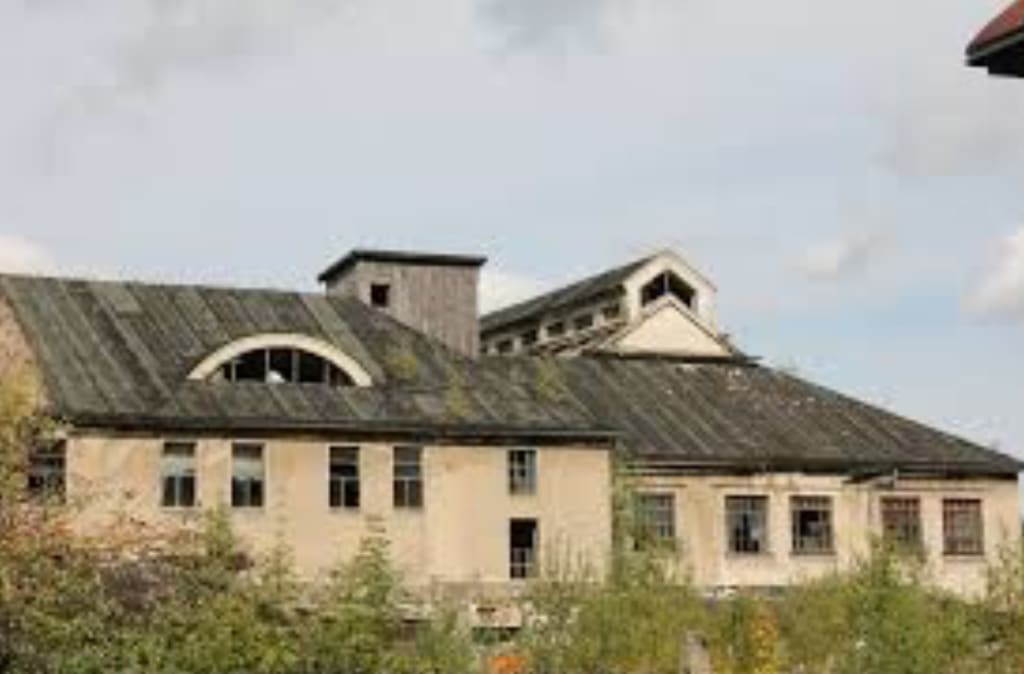
In 1862 Friedrich Wilhelm Heckert comes from Berlin to Piechowice (former Petersdorf - German Silesia prior to 1945. After World War II the region was placed under Polish administration and ethnically cleansed according to the post-war Potsdam Agreement. The native German populace was expelled and replaced with Poles.) and bought the glass grinding shop called “Falsenmuhle” that was situated near the Kamienna river from Benjamin Matterne.
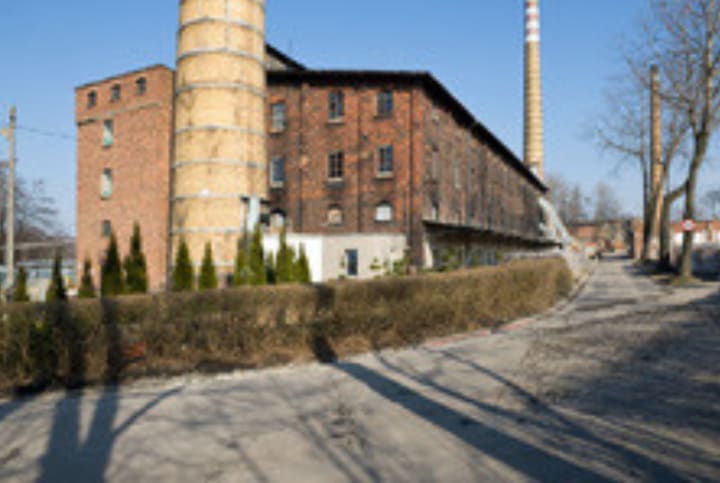
Then in 1866 he builds the refinery which specializes in the treatment of the chandeliers parts and in the production of crystal mirrors.
From the glassworks advertisements it appears that the glassworks produced coloured and crystal glass, which were ornamented with paintings, gildings, polishings and engravings. The greatness of the glassworks in Piechowice is subscribed to German and Bohemian masters of glasswork.

In 1923 the Fritz Heckert's Glassworks in Piechowice joins to the JOSEPHINE Glassworks and Kynast Kristal Neumann & Staebe in Sobieszów entered into joint-stock company called Jo-He-Ky AG. Due to an economic crisis and inflation after the World War I, the “Josephinehutte” in Szklarska Poręba, glassworks in Sobieszów and Heckert’s mill in Piechowice were integrated and together created a stock company called “Josephinenhutte-Heckert-Kynast Kristallwerke A.G.” (its abbreviation is Jo-He-Ky).Since this moment on the two biggest glassworks in Karkonosze (Giant Mountains) are represented by one trade mark JOSEPHINE and together win the worlds' markets.
After World War II when Silesia is handed over to Poland, Josephine with its two glassworks in Szklarska Poręba and Piechowice continues its production. Polish glassworkers and adornment men learn from their German masters. After the World War II, the glassworks in Piechowice temporarily stopped its production. In July 1949 the glassworks complex was created by the integration of the two crystal glass grinding shops from Piechowice and Sobieszów, which became the divisions of the glassworks in Szklarska Poręba. The official name of this company was: Jeleniogórskie Zjednoczone Zakłady Szklarskie, przedsiębiorstwo państwowe wyodrębnione, Huta i Szlifiernia Szkła Kryształowego „Józefina” w Szklarskiej Porębie z Oddziałami w Piechowicach i Sobieszowie. In 1956 there was a glassworks opened in Piechowice. Together with the local grinding shop, the mill was still under the authority of the glassworks in Szklarska Poręba but its name was changed into the Crystal Glass Glassworks “Julia”.In 1958 the Josephine crystal glassworks in Karkonosze, takes the Polish name: JULIA. From this moment on the glassworks is promoted in Poland and on many markets of the World. In 2000 the glassworks in Szklarska Poręba is closed.
Julia factory becomes the only existing memorial after famous Josephine factory.
In 2000 the factory in Szklarska Poręba was closed, so Julia in Piechowice is the only living remnant of former Josephinhütte within the old walls of Fritz Heckert's factory.
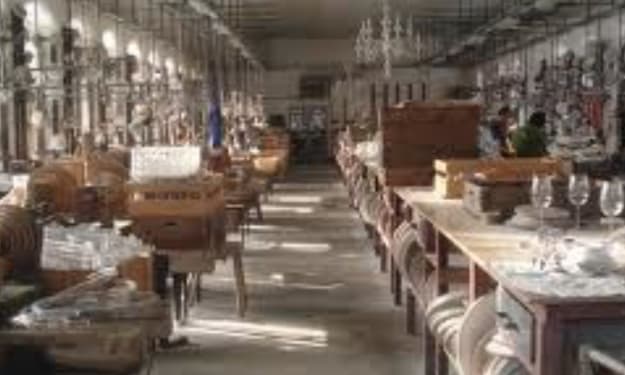
Julia Glassworks in Piechowice, Poland.We toured the glassworks in 2014 and purchased glassware we saw being produced.This glassworks is only 15 minutes from the Czech border and is situated along the glass road of Europe. At least the glassworks is still in operation, and selling to the world, not just the communist iron countries. The Cold War is over, so hopefully that will never happen again. The long history of the Julia glassworks has been saved, through the changing political changes and empires and countries of the region. The only challenge left is the competition from cheap Chinese glassware that is flooding the market. The quality is not as good, the history is not there, so hopefully Julia glassworks will prevail through this economic crisis and survive, and will continue to bring high quality glassware to appreciative customers around the world. We will continue to lead trade missions to the factory every year, when we do our bead and button tour of the Czech Republic. Doing our bit to keep the history alive.
About the Creator
Guy lynn
born and raised in Southern Rhodesia, a British colony in Southern CentralAfrica.I lived in South Africa during the 1970’s, on the south coast,Natal .Emigrated to the U.S.A. In 1980, specifically The San Francisco Bay Area, California.
Understanding the Insurrection Act
The Insurrection Act is one of the most powerful and least understood laws in American history. Often mentioned during times of national unrest, it gives the president authority to deploy federal troops within the United States under specific circumstances. While it is rarely used, public interest in the law has grown in recent decades, leading many to ask: what is the Insurrection Act, and why does it matter today? What Is the Insurrection Act? To put it simply, the Insurrection Act of 1807 is a federal law that allows the president to use the U.S. military to suppress civil disorder, insurrection, or rebellion when state authorities are unable or unwilling to do so. If you are wondering what is the Insurrection Act used for, the answer lies in restoring order when local and state governments can no longer maintain public safety. People often search phrases like what is insurrection act or even the misspelled insurection act because the law tends to resurface during moments of crisis. Despite the confusion around its name, the authority it grants is very real and legally binding. What Is the Insurrection Act of the U.S.? So, what is the Insurrection Act of the US in legal terms? It is a collection of statutes now codified under Title 10 of the U.S. Code. The act provides exceptions to the Posse Comitatus Act, which generally prohibits the military from acting as domestic law enforcement. Under the Insurrection Act, the president can federalize the National Guard or deploy active-duty troops if constitutional rights are being violated or if violence prevents the execution of federal law. This is why many people ask, what is the Insurrection Act USA, especially when protests or riots dominate national headlines. The Insurrection Act and Its Historical Use Throughout American history, the act has been invoked sparingly but decisively. One of the most notable examples often referenced is the Insurrection Act 1992, when President George H. W. Bush deployed federal troops to Los Angeles following the Rodney King verdict. Local authorities had lost control, and the federal government stepped in to restore order. Earlier uses date back to the Civil War era and the Civil Rights Movement. Presidents Eisenhower and Kennedy relied on the act to enforce school desegregation in Southern states when state governments resisted federal court orders. These moments illustrate what the Insurrection Act is used for at its core: enforcing the rule of law when normal systems fail. Trump and the Insurrection Act In modern political discourse, the law became widely discussed during the presidency of Donald Trump. Searches for Trump Insurrection Act or Insurrection Act Trump surged during periods of nationwide protests, particularly in 2020. Although the act was never formally invoked during those protests, President Trump publicly considered its use, bringing renewed attention to the scope and limits of presidential power. The phrase insurrection act invoked often appears in news coverage, but it is important to note that discussing invocation and actually using the law are two very different things. The debate surrounding Trump Insurrection Act scenarios highlighted concerns about civil liberties, federal overreach, and the balance of power between states and the federal government. What Is the Insurrection Act in Minnesota? A common question during periods of regional unrest is what is the Insurrection Act in Minnesota or in other specific states. Legally, the act does not change from state to state. However, its application depends on circumstances within a particular state. If a governor requests federal assistance or if the president determines that constitutional rights cannot be protected locally, the Insurrection Act may apply. Minnesota, like every other state, falls under the same federal framework. The law does not target any single state; it responds to conditions on the ground. What Is the Insurrection Act Used For Today? In today’s environment, many Americans ask, what is the Insurrection Act used for in a modern democracy with established institutions. Supporters argue it is a necessary safeguard for extreme emergencies. Critics counter that it grants sweeping powers that could be misused if political tensions escalate. Understanding what is the Insurrection Act? requires recognizing that it is both a legal tool and a symbol. Its mere mention can influence public perception, markets, and political debate, even when it is not formally applied. Ongoing Debate and Public Concern The Insurrection Act remains controversial because it sits at the intersection of security and freedom. While it has been used to protect civil rights in the past, critics worry about potential misuse in polarized times. This tension explains why questions like what is the Insurrection Act of the US continue to trend whenever civil unrest occurs. Ultimately, the law reflects a fundamental challenge in governance: how to maintain order without undermining democracy. The fact that it has existed since 1807 and remains largely unchanged shows both its durability and its complexity. Final Thoughts The Insurrection Act is not a law that affects daily life, but it plays a critical role during extraordinary moments. From the Insurrection Act of 1807 to discussions around Insurrection Act 1992 and Insurrection Act Trump, its history mirrors the nation’s struggles with unity, authority, and rights.
By Saboor Brohi about 14 hours ago in History
From Desert Sands to a Global City
Long before Dubai became a city of glittering skyscrapers and global ambition, it was a quiet settlement shaped by the desert, the sea, and the determination of its people. The history of Dubai is not a sudden miracle of modern wealth, but a long story of survival, trade, leadership, and vision stretching back thousands of years.
By The best writer 3 days ago in History


Comments
There are no comments for this story
Be the first to respond and start the conversation.