
Harrachov Glassworks.
Bohemia's oldest privately owned glassworks

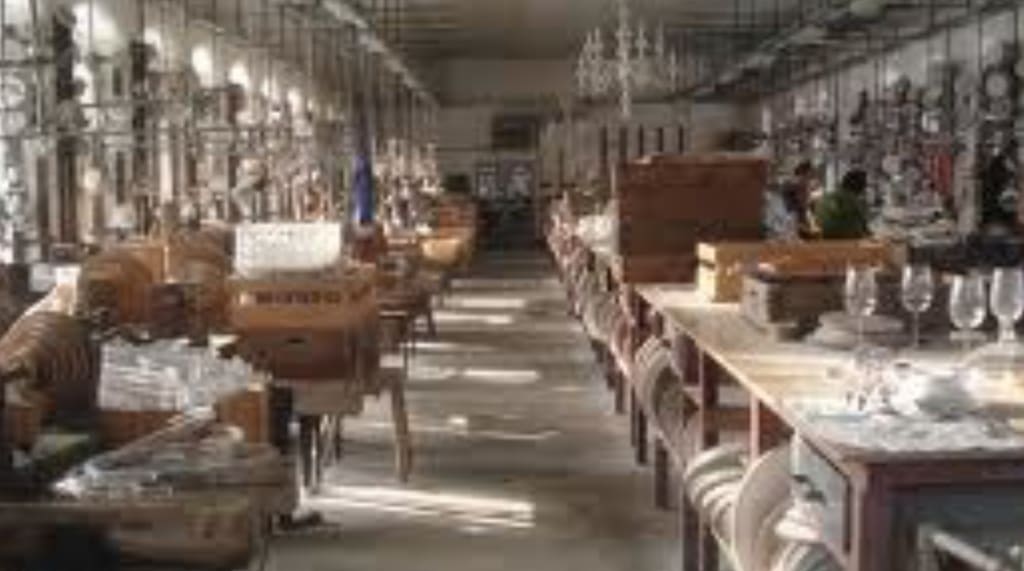
The glassworks Novosad a syn (Novosad and Son) is the oldest private glass factory in Bohemia. It was established before the year 1712 in the Jilemnice estate of the counts Harrach. The unique historical glass-cutting shop, 100 years old, driven by transmissions and a water turbine, is the integral part of excursion to the glassworks premises.
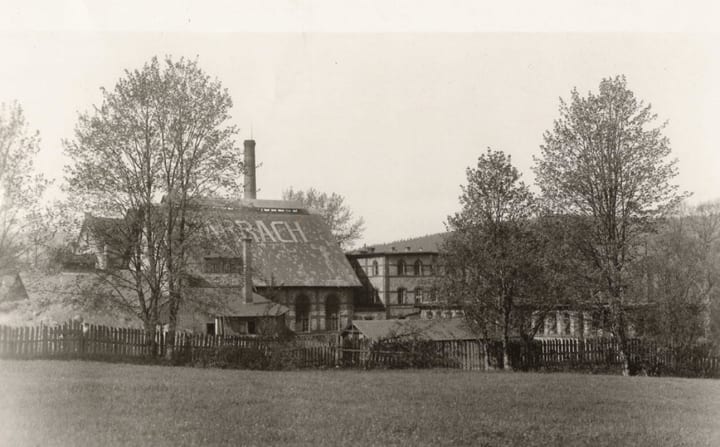
Origin - foundation and bloom
The glassworks in Nový Svět was first mentioned in 1712. This date can be found in land chronicles of the State Regional Archive in Zámrsk. However, it is clear from the records that the glassworks had been founded even before this date.
Glassworks have always been founded in mountain areas, because they used wood as a fuel. Existing historic sights show that after wood sources had been used up, glassworks usually moved and left settlements behind, in which the glassmakers gradually became farmers or local manufacturers of glass-making raw materials. This most likely appears to be the case of the glassworks in Harrachov as well. The truth is that the foundation of the glassworks in Harrachov closely follows the fate of three older glassworks that were located in the territory of the former Jilemnice estate, namely the glassworks in Rokytnice nad Jizerou, Rokytno and Rýžoviště. The arrival of the aristocratic Harrach family to the Giant Mountains turned out to be a decisive moment in the history of the Nový Svět glassworks. First, the Harrachs gained the Branná estate and half of the Jilemnice town in 1632. Then count Ferdinand Bonaventura bought the rest of the Jilemnice estate along with the second half of the Jilemnice town in 1701. After the Harrachov glassworks moved to Nový Svět, the wealthy aristocratic Harrach family arranged for wood to be brought even from remote areas so that the glass factory would not have to move any more.
It was particularly thanks to the skills of the first director Ellias Müller that a glassworks developed in the estate of the aristocratic Harrach family which made Czech glass famous all over the world. The glassworks in Harrachov gained fame mainly due to the superior quality of its production. Local master glassmakers were able to produce glass in different colours, for example blue, yellow, red, green, black and violet, they also produced milk glass. The fame of the glassworks was also supported by the fact that its premises were extended with refining operations, namely an engraving and glass cutting workshop and a painting workshop.
It its early days, the production style of the Harrachov glassworks was influenced by late Baroque and Rococo in particular. Chalk glass melting was supplemented with certain color glass types and with the production of window panes. In the second half of the 18th century, the color range was expanded and the production of milk glass and crystal and colorful chandeliers was introduced. The arrival of Classicism was captured in a historic sample book from 1784-88 attributed to Antonín Erben, the director of that time. This sample book is the oldest conclusive material that allows identification of products from Nový Svět – it has been treasured in the Museum of Glass and Jewelry in Jablonec nad Nisou.
In the second half of the 18th century, the glassworks had storerooms with its products in Vienna, Izmir, Constantinople and in other places. The Harrachov glass was exported to Spain, Portugal, Holland, England and many other countries. At that time, the glassworks had 2 large furnaces with 6 pans each and one additional small furnace. 3 glass cutting plants with 18 workshops that belonged to the glassworks (owned by the manorial lords) and 3 additional private glass cutting plants provided their services to the glassworks. 14 glass crackers, 10 painters and gilders, 3 bead makers and 1 engraver of characters were also involved in the glass refining process.
The first half of the 19th century saw the period of the greatest creative effort of the glassworks: after the successful work of Martin Kaiser his former collaborator Johan Pohl took up the position of the company manager in 1808. Johan Pohl came from an old glass-making family and before he became the manager, he worked for the glassworks for 13 years, so he had the best possible background for the job. Under his supervision, the glassworks overcame a serious sales crisis caused by the Napoleonic Wars and began to melt lead ruby, black and red Buquoy hyalite and rosaline and uranium glass. The production of flashed glass was also restored. In addition to glass cutting, painting and engraving started to be used as refining methods in the Harrachov glassworks. At that time, the best Czech engravers including Dominik Biemann worked for the glassworks. The glassworks survived a devastating fire in 1827 and in the year 1829 it participated in an industrial exhibition in Prague for the first time. Both at that exhibition and at many land exhibitions to follow, the glassworks was awarded a gold medal. In 1830, Wilhelm Erben followed up the years of outstanding work of Johan Pohl. Under Erben's supervision and especially thanks to the support of count František Arnošt Harrach (governor of the Jilemnice estate and owner of the glassworks from 1826 to 1860), the glassworks finally achieved an international breakthrough.
Official visits by representatives of the sovereign House of Habsburg also helped spread good reputation of the Nový Svět glassworks. Archduke Joseph visited the glassworks in 1804, archduke Rainer paid it a visit two years later. The visits of the Crown Prince Ferdinand (the later Ferdinand V.) in 1820 and Fridrich August II., the King of Saxony, in 1840 also contributed to the glassworks' fame.
In 1854-1855, the glassworks was rebuilt and expanded, but the modernized and prospering company burned down again at the night of December 30th/31st, 1861. At that time, the manor farm estate along with the glassworks was managed by a benefactor, patriot, politician and a great manager, count Jan Nepomuk František Harrach (1828 - 1909). At the count's request, rebuilding of the factory was commenced immediately. The production was restored as early as on February 6, 1863! The glassworks became an integral part of a economic programme that aimed not only at increasing the earnings of the manor farm estate as such, but also at the overall development of the entire region. These efforts are well expressed with a statement given by the count in a debate at the land council: "We shall excel with our work both in culture and economy, otherwise other nations would fail to hold us in high esteem. And that is why I keep my glassworks in Nový Svět although it is not profitable. It maintains and spreads good reputation of the Czech glass-making industry in all cultural countries, even overseas."
The prosperity and success is also evident from the fact that at the end of the 19th century, the glassworks had about 400 employees, and that in 1895 it established a large glass cutting shop with electric lights and water turbine propulsion. This operation can be seen until today – the building has been rebuilt, but the equipment still works on the original principle: it is still driven by a water turbine with transmission propulsion power distribution and the glass is still cut using natural cutting discs. This unique device is probably the only one of its kind in Europe and it has been declared a national technical monument.
Rise from the ashes - the post-war period
Harrachov was liberated by the Soviet army at the beginning of May in 1945. Shortly afterwards, the present owner was taken captive by Czech partisans. The workers formed a workers' committee and 3 weeks after the liberation, an order came from the regional people's committee to restore production. On January 28, 1946, the glassworks was in danger once again, as a fire broke our in its premises at 10 AM, destroying the entire production shop, all the offices, the archive and the drafting room. The damage was enormous. Total closing of the factory was even considered. Due to pressure from the workers, those difficulties were fought off as well and thanks to the intervention of K. Gottwald, the building of a new factory began in the summer of 1946.Crisis - the period around the world wars
Not even extensive business connections and world-wide fame of the Nový Svět glassworks could avert the economic crisis connected with World War I. The First World War marked the end of a golden era for many industries including glass-making. After the war ended, the production restoration took quite long. In the first years of the Czechoslovak Republic's existence it was very difficult to get enough qualified workers and technicians and to find new selling markets. Moreover, the Harrach family lost over half of its lands and extensive estates, so the relationship of the family with the glassworks weakened. It was not until 1921 that the business connection with USA was re-established, then with England, Switzerland and other countries. By the end of the 20ies, the glassworks production was stabilized again. Josef Tlapa who took up the position of the company's director in 1924 greatly contributed to the stabilization.
Then another deep economic crisis struck with merciless force. World War 2.
The Munich Agreement was signed on September 30, 1938 and the so-called Sudetenland was annexed to the Nazi Germany. The operation of the glassworks was terminated due to the expulsion of the Czech inhabitants. It was restored again on January 19, 1939, when a single small furnace was lighted. Thanks to the pragmatic steps taken by Jan Nepomuk Antonín Harrach, the Harrach family were allowed to keep the glassworks. Nevertheless, the glassworks did not flourish and it was managed by 8 different directors over a short period of time. It wasn't until the arrival of Rudolf Endler in December 1939 that the situation changed for the better. Rudolf Endler managed to hold the glassworks until the end of the war NS with considerable assistance from the Nazi authorities he even forced the count of Harrach to sell the glassworks on April 1, 1943. The selling price was only 300.000 Reichsmarks – even though the annual turnover at that time was about 1.000.000 Reichsmarks. During the war the glassworks continued to produce luxury glassware and decorative glass, although at one point the production of glass mines and glass prisms for tanks was considered as well.
damage was enormous. Total closing of the factory was even considered. Due to pressure from the workers, those difficulties were fought off as well and thanks to the intervention of K. Gottwald, the building of a new factory began in the summer of 1946.
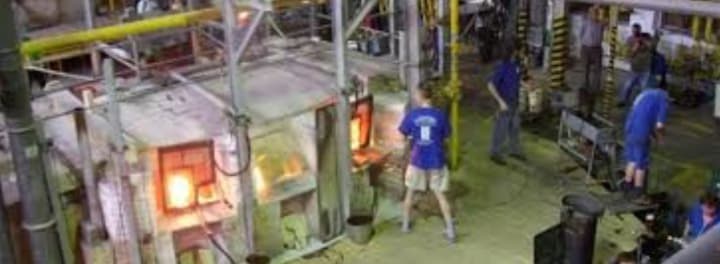
After the construction works were completed and the production was restored, the glassworks came under national administration – since 1948 it was a part of Železnobrodské sklo (The Glassworks of Železný Brod), in 1958 it was taken over by the Borské sklo national enterprise (The Glassworks of Nový Bor) and since 1974 the glassworks became a part of the industry enterprise Crystalex Nový Bor with a worldwide trade representation by the Skloexport company.
At that time, the glassworks had the disadvantage of losing contact with all its foreign customers and refiners of its products in the then "western block". Due to the nationalization of the glassworks and to its inclusion in the industry enterprise, the glassworks stopped producing goods under its own name and from that point on it only sold its products under the name Bohemia Glass. That is why the fame of the glassworks in Harrachov fell silent for many years and the awareness of its great products was almost forgotten abroad.
The present day
For a few years after the regime fall, (The Velvet Revolution of 1989) the glassworks still survived as a part of the state enterprise Crystalex Nový Bor. However, in the spring of 1993 it was decided that the existing enterprise 07 will strike out and be privatized. On July 1, 1993, JUDr. František Novosad, a trained glassmaker and also a graduated lawyer became the owner of the company.
The initial difficulties that were caused mainly by the need to repay a high-interest loan taken out in order to buy the glassworks was overcome thanks to newly established business contacts in the USA and in Canada. But the turn of the millennium, the hunger for hand-made glass from former Czechoslovakia was replaced with a deep crisis that put an end to many glass-making facilities. The 9/11 attacks in 2001 caused a negative twist in the glass-making industry and they ushered in a world-wide crisis in 2008. This period in particular has shown the foresight of the present owner of the glassworks, who began building a minibrewery in 2001. Revenues from the brewery production, from guided tours, from the museum and the shops have helped the glassworks survive this difficult period and even today, they provide significant support for the costly glass-making production.
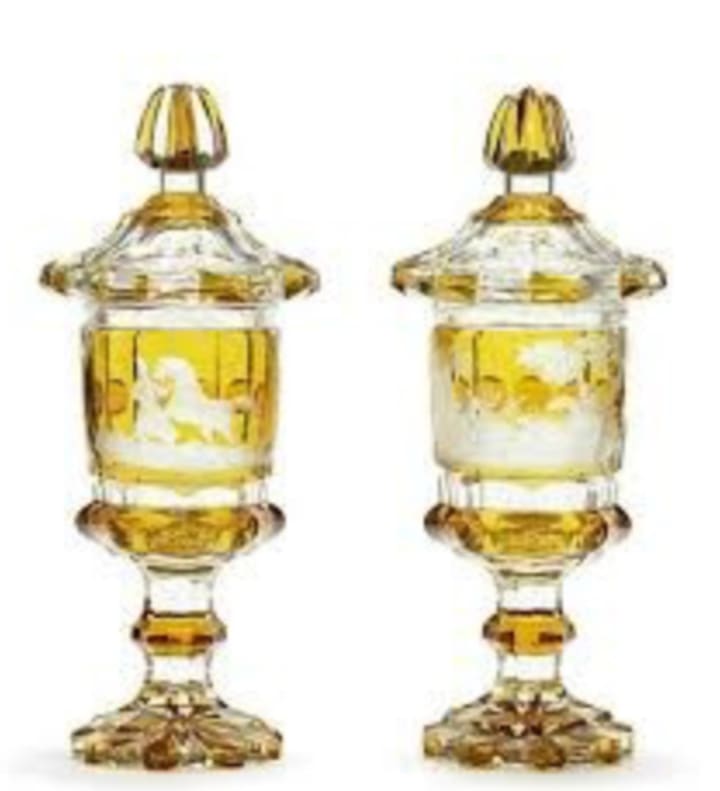
Today when automated glass production has been brought almost to perfection and when tons of cheap glass from the East flood the markets, the glassworks in Nový Svět remains one of the last traditional producers of luxury glassware and decorative glass both in the Czech Republic and in Europe.
About the Creator
Guy lynn
born and raised in Southern Rhodesia, a British colony in Southern CentralAfrica.I lived in South Africa during the 1970’s, on the south coast,Natal .Emigrated to the U.S.A. In 1980, specifically The San Francisco Bay Area, California.
Warfare Through the Ages: How Military History Shaped Human Civilization
Warfare has always been part of human civilization. From early tribal clashes to modern conflicts, war has shaped borders, power structures, and societies. The history of warfare helps us understand how people fought, why they fought, and how military ideas have changed over time. Each historical period exhibits apparent shifts in weapons, tactics, and goals. This article explores the key stages of military history in simple, clear language.
By Matthew Pothoffa day ago in History




Comments
There are no comments for this story
Be the first to respond and start the conversation.