
India-Pakistan Conflict 2025: Escalation and Global Concerns
Rising Tensions Between Nuclear Rivals Spark Global Alarm as Kashmir Conflict Reignites with Deadly Strikes and Diplomatic Stalemates


As of May 2025, tensions between India and Pakistan have escalated dramatically, raising serious fears of a potential large-scale conflict between two nuclear-armed neighbors. One of the most dangerous flare-ups in recent memory follows a string of violent incidents and military battles centered largely on the long-contested Kashmir region. With diplomatic ties fraying and military rhetoric intensifying, the international community is on high alert, watching events unfold in South Asia closely.
Triggering Incident: Pahalgam Attack
A devastating terrorist attack on April 22, 2025, in Pahalgam, a popular tourist destination in Indian-administered Kashmir, was the immediate trigger for the current crisis. A Hindu pilgrimage convoy was the target of militants, who also injured dozens and killed 26 civilians. The Pakistan-based militant group Jaish-e-Mohammed (JeM) claimed responsibility for the attack. India swiftly accused Pakistan of harboring and supporting terrorist groups that operate across the border, a charge Islamabad vehemently denies.
Pakistan condemned the attack but denied any involvement, calling it a tragic incident and urging for an impartial international investigation. Pakistan's denials, on the other hand, were dismissed by the Indian government, which accused its neighbor of continuing to provide safe havens for terrorists despite international pressure. This event significantly strained bilateral relations and set the stage for military retaliation.
India’s Retaliatory Airstrikes: Operation Sindoor
In response to the Pahalgam attack, India launched a series of precision airstrikes on May 7, 2025, in an operation dubbed Operation Sindoor. According to Indian defense officials, the airstrikes targeted nine locations in Pakistan’s Punjab province and Pakistan-administered Kashmir. They asserted that JeM and Lashkar-e-Taiba, an additional organization that has previously carried out attacks on Indian soil, were making use of these locations as operational bases. Areas near Bahawalpur, Muridke, and Muzaffarabad that Indian intelligence has long suspected of hosting militant infrastructure were reportedly the targets of the strikes. The Indian government emphasized that great care was taken to prevent civilian casualties and framed the operation as a preventative measure against future attacks. However, Pakistan painted a different picture. Officials in Islamabad accused India of violating international law and targeting civilian structures, including mosques, residential buildings, and educational facilities. The Pakistani government reported 31 deaths and 57 injuries, many of them civilians, including women and children. These conflicting narratives have only deepened the mistrust between the two nations.
Pakistan’s Military Response
Pakistan pledged swift and firm retaliation following the Indian airstrikes. The Pakistani military claimed to have shot down five Indian fighter jets during cross-border skirmishes and reported conducting "measured" retaliatory strikes along the Line of Control (LoC). Artillery exchanges intensified, resulting in additional casualties on both sides, including soldiers and civilians.
While Pakistani Prime Minister Shehbaz Sharif declared that his country was “fully prepared” to defend itself against aggression, he also stressed that Pakistan seeks to avoid war and urged India to return to diplomatic channels. Nevertheless, the military posture on both sides remains tense, with troop movements and increased surveillance being reported in key border regions.
International Reactions and Diplomatic Efforts
The global response to the escalating crisis has been swift and unified in its call for de-escalation. The United States, the United Kingdom, China, Russia, Turkey, and the European Union have all issued statements urging restraint. The U.S. State Department emphasized that "war is not a solution" and encouraged both sides to engage in dialogue to prevent further escalation.
China, a close ally of Pakistan but also an important trade partner of India, has offered to mediate, though both India and Pakistan have historically resisted third-party intervention in the Kashmir dispute. Meanwhile, the United Nations has expressed deep concern and has called for immediate diplomatic engagement to avert a full-scale conflict, warning of catastrophic consequences if the situation spirals out of control.
Economic and Strategic Implications
The crisis has significant implications for both nations, particularly Pakistan, whose economy is already under severe strain. The conflict threatens to sabotage Islamabad's fragile recovery under a $7 billion IMF program because the country has more than $131 billion in external debt and only enough foreign currency reserves to cover three months' worth of imports. Foreign investors are pulling back, and the Pakistani rupee has depreciated further amid fears of regional instability.
India, while economically more resilient, also faces strategic challenges. Although trade with Pakistan is minimal, ongoing military operations divert resources and could affect investor confidence, especially in sensitive border regions. Both countries have nuclear arsenals, raising global concerns about the potential for accidental or intentional escalation to nuclear confrontation.
The Path Forward
Despite some initial diplomatic overtures, including back-channel talks reportedly facilitated by neutral parties, the situation remains precarious. Neither nation appears willing to concede ground, especially on the core issue of Kashmir. The hardline stances adopted by both governments reflect domestic political pressures, nationalist sentiment, and deep-rooted historical grievances.
For the world, this is a stark reminder of how fragile peace remains in South Asia. Sustained international pressure, coupled with active mediation, may be necessary to prevent the crisis from spiraling further. In the absence of meaningful dialogue and confidence-building measures, the region risks plunging into a conflict with dire consequences not just for India and Pakistan, but for global security.
About the Creator
Mr.Mushfik
A New World,
A New Vision
Keep reading
More stories from Mr.Mushfik and writers in History and other communities.
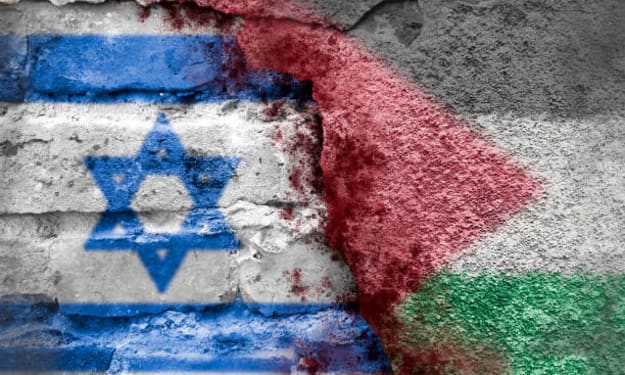
Israel-Palestine Conflict: A War of History, Identity, and Hope for Peace
One of the longest-running and most complicated political and territorial disputes in modern history is the Israel-Palestine conflict. For over seven decades, it has shaped the geopolitics of the Middle East, ignited global debates, and caused immense human suffering on both sides. Rooted in history, religion, and competing claims to the same land, the conflict remains unresolved despite numerous attempts at peace.
By Mr.Mushfik10 months ago in History
Hazrat Umar Farooq (RA
Hazrat Umar Farooq (may Allah be pleased with him) was born in Makkah Mukarramah. His kunya was Abu Hafs. He embraced Islam in the sixth year of Prophethood, at the age of 27. Even before accepting Islam, he was regarded with great respect because he was honorable, educated, brave, courageous, and wise in matters. He also had the honor of being the father-in-law of the Messenger of Allah (peace and blessings be upon him).
By Sudais Zakwan3 days ago in History
The Path to Salvation
The late autumn evening air filled the monk's lungs, but it wasn't the season that chilled his bones. The heavy-handed presence of evil he had sensed upon entering the woods surrounding this mountain village had not bothered to conceal itself from him.
By Made in DNA5 days ago in Fiction


Comments
There are no comments for this story
Be the first to respond and start the conversation.