
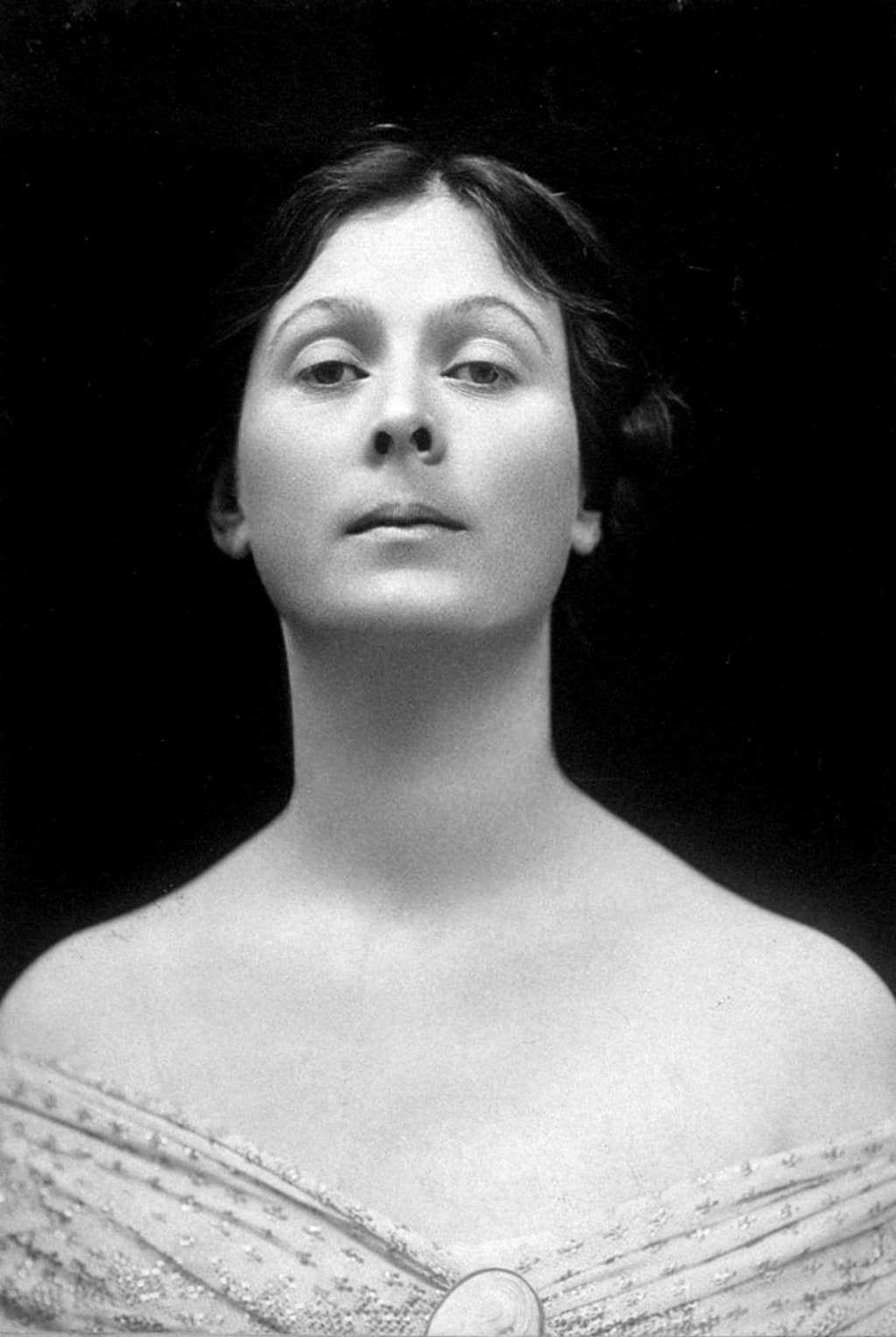
She was born in 1877. Her ‘dancing’ shocked the society of the day but her daring made her popular. Her style of dancing heralded the development of modern expressive dance.
She was Isadora Duncan.
Angela Isadora Duncan was born in San Francisco on 26th May, 1877. She was the youngest of four children born to Joseph Charles Duncan (1819 - 1898) and Mary Isadora Grey (1849 - 1922). Her older brothers were Augustin and Raymond, and her sister was Elizabeth who was also a dancer.
Soon after Isadora was born, her parents divorced and Isadora and her three siblings were brought up ‘in genteel poverty’ by their mother, who earned money as a piano teacher and seamstress. Isadora went to school from the ages of 6 to 10, but dropped out at 10 years old because she found school ‘too constricting’. All four children supported their mother by teaching the local children dance.
Isadora became a part of Augustin Daly's theater company in New York in 1896, but she soon became disappointed with the ‘form’, wanting to work in a much freer environment. At 21 years of age, Isadora left the United States and sailed to England. Having very little money, she went on a cattle boat.
Once in England, Isadora took inspiration from the Greek vases and bas-reliefs that she had ‘studied’ in the British Museum, and she used these performances in the drawing rooms of the wealthy in London. From the money she earned, Isadora was able to rent a studio and this gave her room to develop the style of dance which made her so popular. Isadora could now create larger performances for the stage. Until then, most people were only familiar with the conventional form or ‘disciplined’ form of ballet. Isadora’s interpretation of ballet was new and refreshing, and it enraptured most people who saw her performances.
Barefoot and scantily dressed as a woodland nymph, Isadora's dancing soon became popular in theatres and concert halls throughout Europe.
In 1902, Loie Fuller invited Isadora to tour with her. They travelled all over Europe, with Isadora using her unique ‘style’ to emphasize natural movement which contrasted with the rigidity or discipline of traditional ballet. During her travels, Isadora founded dance schools in Germany, Russia and the United States (although none of these have survived).
During her years of touring, Isadora met many famous people. Aleister Crowley and Paul Poiret to name drop just two. Aleister called Isadora “Lavinia King” in his “Confessions”. Paul, the famous French fashion designer, ‘created’ a Greek evening dress for Isadora, in which she danced on tables among 300 guests at one of his parties.
It seems that Isadora's private life was just as shocking as her dancing style. Even in this, she defied society rules. The stage designer Gordon Craig fathered her first child, Deidre. The heir to a sewing machine fortune and a prominent art patron, Paris Singer, fathered her second child, Patrick. However, tragedy struck from which Isadora never recovered. In 1913, when they were in Paris, the car carrying her two children and their nanny went into the Seine River and all three drowned. Isadora was grief-stricken which affected her dancing and her popularity went downhill. Desperate for another child, she slept with a young Italian stranger, the sculptor Romano Romanelli, but the boy she gave birth to from that ‘union’ died shortly after being born.
In 1921, Isadora moved to Moscow. It was after the Russian Revolution and here she met the poet Sergei Yesenin. He was 18 years younger than her but the couple still married on 2nd May, 1922. Yesenin accompanied his wife touring Europe and the United States, but returned to Moscow because the newly-weds just grew apart. In 1925, Yesenin was found dead in his hotel room from an apparent suicide.
Isadora had one last relationship with the poet and playwright Mercedes de Acosta.
Reaching her late ‘40s, Isadora became depressed over the deaths of her young children. By the late 1920s, she was struggling financially, moving between Paris and the Mediterranean, running up debts at the hotels she stayed in.
In 1927, Isadora published her autobiography, “My Life”. The Australian composer Percy Grainger called it a “life-enriching masterpiece”.
On 14th September, 1927, Isadora Duncan died when the scarf she was wearing became entangled in the wheel of the car she was in. A sad ending to a dancer who ‘changed’ dance, especially Ballet, becoming one of the first to raise interpretive dance to the status of creative art.
“If I could tell you what it meant, there would be no point in dancing it” — Isadora Duncan.
About the Creator
Ruth Elizabeth Stiff
I love all things Earthy and Self-Help
History is one of my favourite subjects and I love to write short fiction
Research is so interesting for me too
Keep reading
More stories from Ruth Elizabeth Stiff and writers in History and other communities.
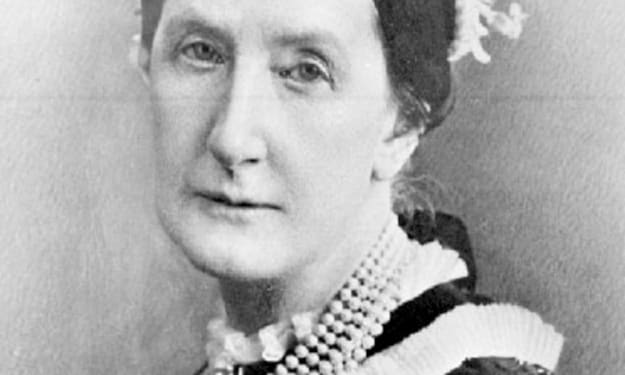
Angela Burdett-Coutts
She was the granddaughter of Thomas Coutts, the founder of the famous London bank, and one of the wealthiest women in Victorian England. She was also one of the busiest women of her time, being actively engaged in an enormous range of philanthropic projects, giving millions of pounds to charities.
By Ruth Elizabeth Stiff9 months ago in History
Saudi Arabia Warns Against War
Saudi Arabia Warns Against War: Why Riyadh Opposes a U.S. Attack on Iran As tensions between the United States and Iran continue to rise, Saudi Arabia has taken a notable and cautious position: warning against any U.S. military attack on Iran. This stance may surprise some observers given the long history of rivalry between Riyadh and Tehran, but it reflects a broader regional concern that another major war in the Middle East could spiral beyond control.
By Wings of Time 4 days ago in History
Napoleon Bonaparte — From Corsican Outsider to Emperor of Europe
Napoleon Bonaparte was born on August 15, 1769, on the Mediterranean island of Corsica, a land that had only recently come under French control. His family was of modest noble status, and young Napoleon grew up feeling like an outsider—Corsican by culture, yet educated as a Frenchman. This sense of being different shaped his fierce ambition and iron will. From an early age, he showed a sharp mind, a deep love for history, and an unusual talent for mathematics, which later proved essential in warfare.
By The best writer 6 days ago in History


Comments
There are no comments for this story
Be the first to respond and start the conversation.