
Isaac Newton: The Man Who Changed the World
Isaac Newton

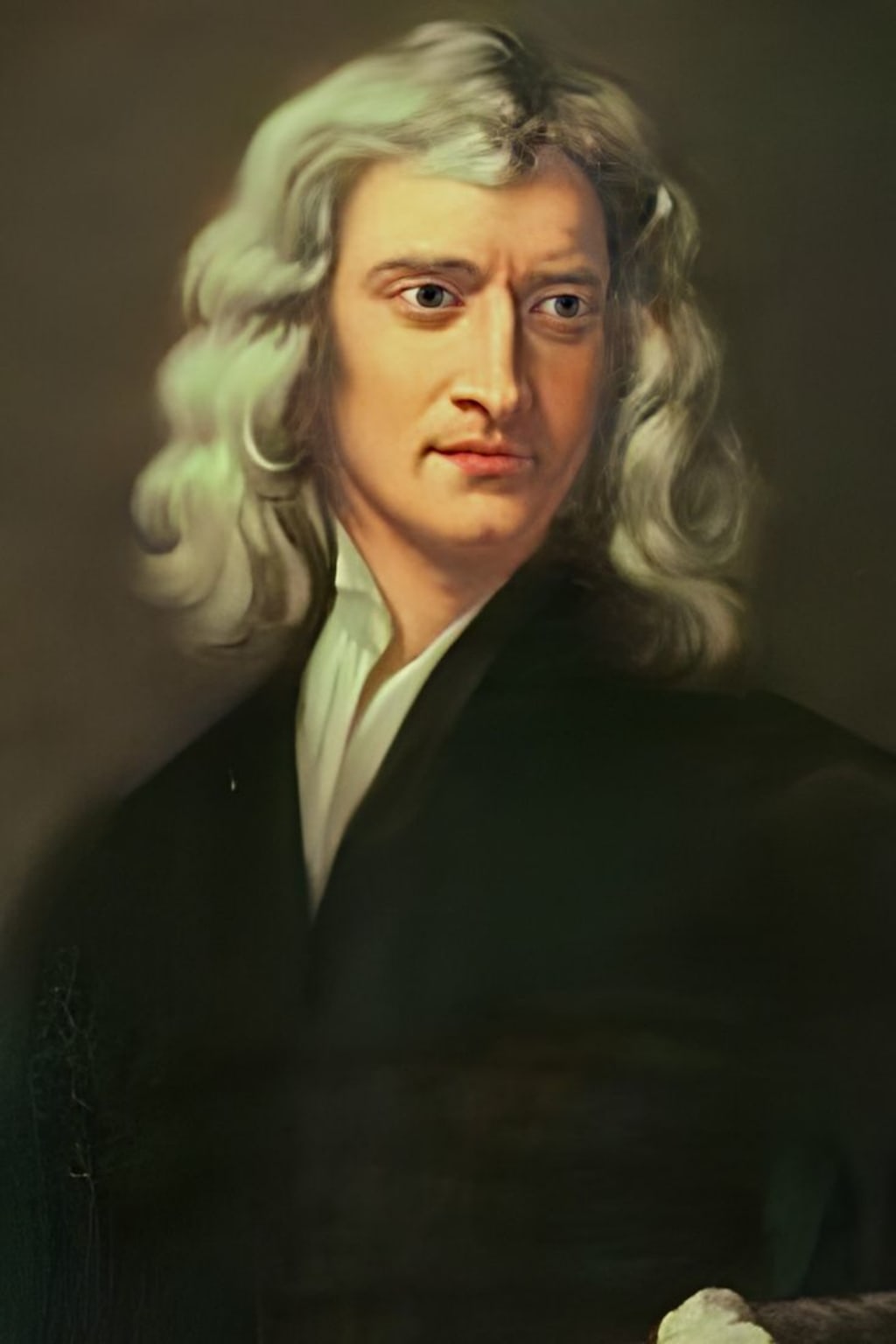
Isaac Newton: The Man Who Changed the World
Isaac Newton, born in 1643, is one of history's most influential scientists. His discoveries transformed our understanding of the physical world, with lasting impact on mathematics, physics, astronomy, and beyond. This story traces his journey from a curious child to a groundbreaking scientist who laid the foundation for modern science.

Early Life and Education
Isaac Newton was born on Christmas Day in Woolsthorpe, Lincolnshire, England. His early life was marked by hardships. His father died before he was born, and his mother remarried, leaving him with his grandmother. Despite these challenges, young Isaac showed signs of a keen intellect. He had an insatiable curiosity and a knack for building mechanical devices, including windmills and water clocks.
As a young boy, Newton attended the local grammar school in Grantham, where he lived with a family friend. Although he was initially uninterested in academics, he began to excel after a dispute with a fellow student. This rivalry sparked a newfound determination in him, and he soon became the top student. Recognizing his potential, his family sent him to Trinity College, Cambridge, in 1661, where his scientific journey would truly begin.
The Plague and Newton's Year of Wonders
In 1665, Cambridge was closed due to the Great Plague sweeping through England. Newton returned home, and, in isolation, experienced what would later be called his "Annus Mirabilis," or "Year of Wonders." During this period of solitude, Newton made a series of revolutionary discoveries that would change the world.
Discovery of Calculus
While back in Woolsthorpe, Newton developed a new mathematical framework, which he called "fluxions"—what we now know as calculus. This new system of mathematics allowed him to calculate rates of change and became essential to physics, engineering, and economics. Although others, like German mathematician Gottfried Wilhelm Leibniz, developed similar ideas independently, Newton's work laid the groundwork for this vital branch of mathematics.
Experimentation with Optics
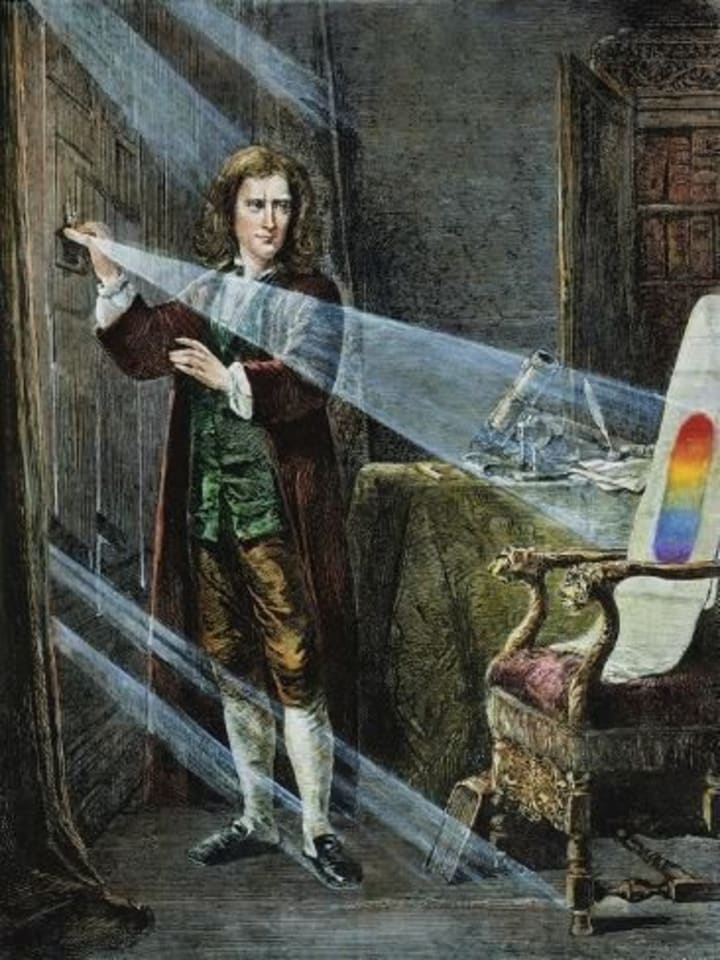
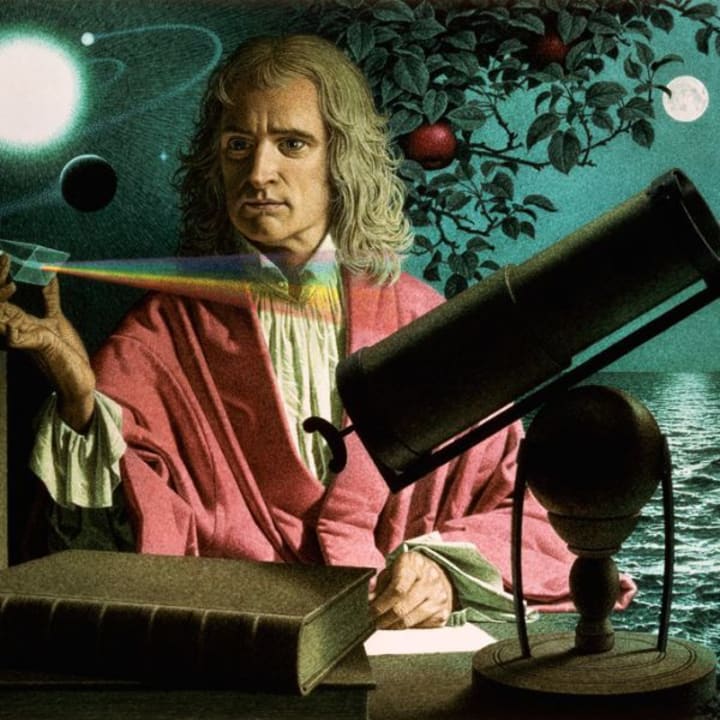
Newton was fascinated by light and colors. Using a prism, he conducted experiments that showed that white light is actually composed of a spectrum of colors, a discovery that challenged the prevailing theories of the time. His work in optics led him to conclude that light is made of particles, a theory that would be debated for centuries until the dual nature of light (as both particles and waves) was fully understood. Newton’s work in optics would eventually lead to his invention of the reflecting telescope, which improved astronomical observation.
The Law of Universal Gravitation
Perhaps the most famous anecdote about Newton involves an apple falling from a tree. Observing the apple fall, Newton pondered why objects always fall toward the Earth. This led him to formulate his law of universal gravitation, which states that every mass in the universe attracts every other mass. His insight linked the motion of the planets and celestial bodies to the same forces that govern objects on Earth. This concept laid the foundation for classical mechanics and provided a new way to understand the cosmos.
Publishing *Principia Mathematica*
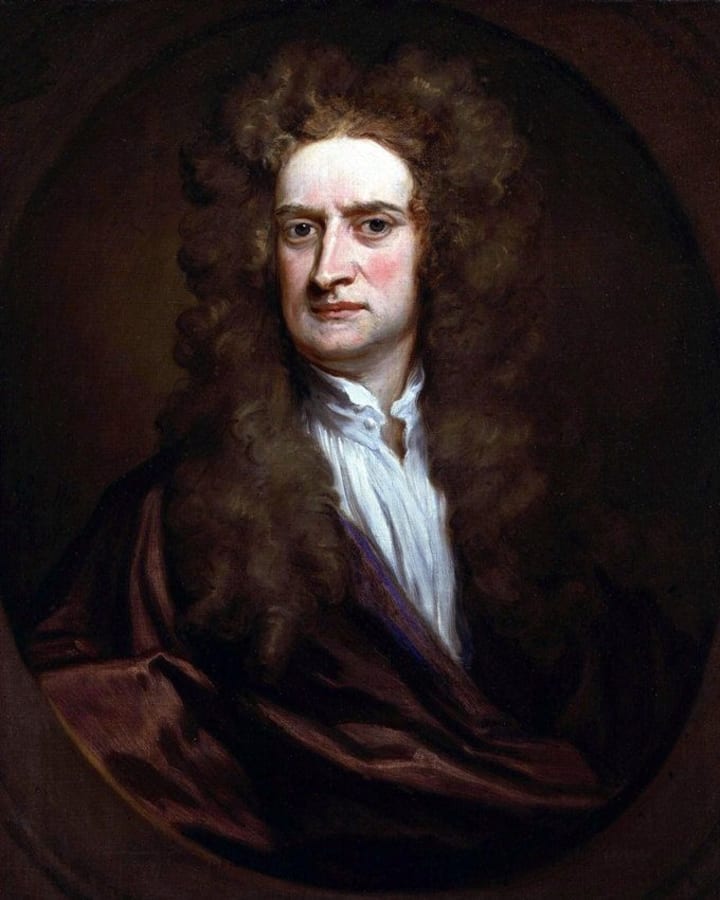
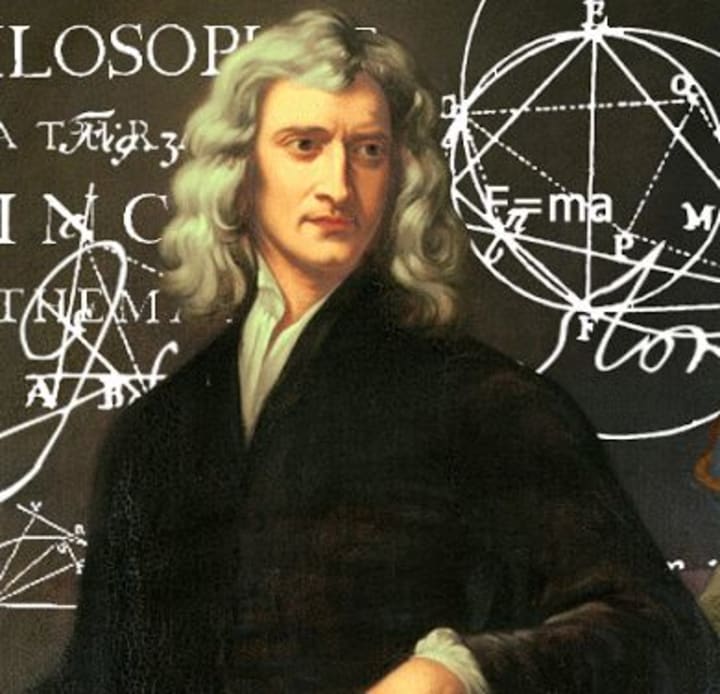
Newton's discoveries in mathematics, optics, and mechanics culminated in his magnum opus, the *Philosophiæ Naturalis Principia Mathematica*, or simply *Principia*. Published in 1687, this three-volume work outlined Newton's laws of motion and the law of universal gravitation, providing a mathematical framework for understanding the physical universe.
Newton's Laws of Motion
In *Principia*, Newton articulated his three laws of motion:
1. **The Law of Inertia**: An object will remain at rest or in uniform motion unless acted upon by an external force.
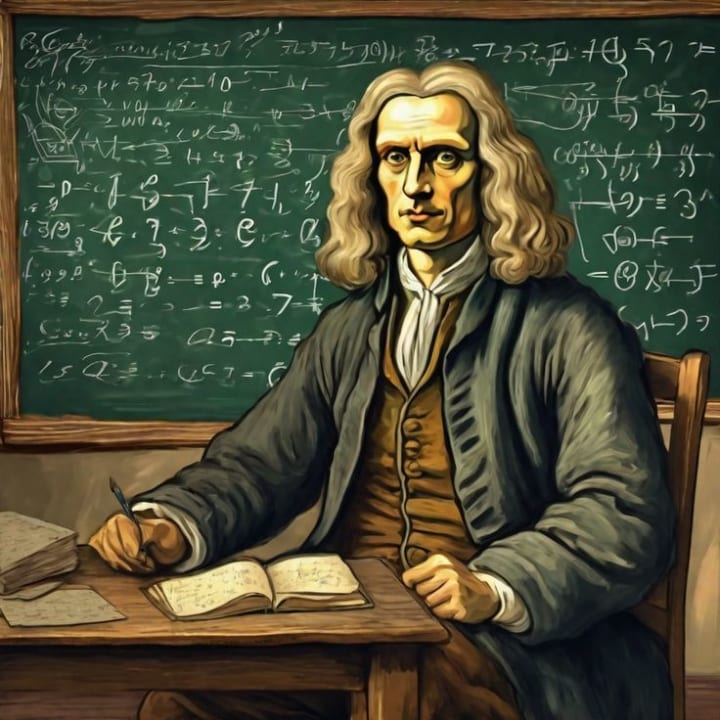
2. **The Law of Acceleration**: The force acting on an object is equal to the mass of that object times its acceleration (F = ma).
3. **The Law of Action and Reaction**: For every action, there is an equal and opposite reaction.
These laws not only revolutionized physics but also had profound implications for engineering, space exploration, and the study of mechanics.
The Impact of *Principia*
*Principia* was groundbreaking, presenting a cohesive system that described the workings of the universe. Its influence spread far beyond science, affecting philosophy, theology, and society's understanding of the natural world. Newton's laws became the bedrock of classical physics, remaining unchallenged until Einstein's theory of relativity in the 20th century.
Later Life and Contributions
Newton continued to make significant contributions in his later years, but his career took a different turn. In 1696, he became the Warden of the Royal Mint, responsible for combating England's rampant problem of coin counterfeiting. Newton approached this task with scientific rigor, developing methods to detect fake coins and punishing counterfeiters. His efforts were so effective that he was eventually appointed Master of the Mint, a position he held until his death.
A Leader in the Scientific Community
In 1703, Newton was elected President of the Royal Society, an esteemed scientific institution in England. As president, he influenced scientific discourse and research in Europe. His contributions were widely recognized, and he was knighted by Queen Anne in 1705, becoming Sir Isaac Newton.
However, his later years were also marked by intense rivalries. His most famous feud was with Leibniz over the invention of calculus. Although both men had developed calculus independently, a bitter dispute over priority erupted, tarnishing their legacies. Despite this, Newton’s work remained highly respected.
Legacy and Lasting Impact
Isaac Newton died in 1727 at the age of 84. His impact on science and mathematics is incalculable. The foundations he laid allowed subsequent generations to build upon his ideas, leading to advancements in engineering, astronomy, and countless fields of study.
Newtonian Science and the Modern World
Newton's discoveries paved the way for the Industrial Revolution, which transformed economies and societies worldwide. His laws of motion and universal gravitation influenced innovations in technology, engineering, and architecture. Newton's mathematical advancements also set the stage for modern calculus, which is critical in fields ranging from physics to computer science.
A Philosophical Influence
Newton’s work also influenced Enlightenment thinkers, contributing to the idea that the universe operates according to natural laws that can be understood through reason and observation. His mechanistic view of the cosmos inspired philosophers like John Locke and Immanuel Kant, and it fueled the pursuit of scientific inquiry during the Age of Enlightenment.
Conclusion: The Legacy of a Scientific Giant
Isaac Newton's life story is a testament to human curiosity, perseverance, and intellectual genius. From humble beginnings to his monumental contributions to science, Newton's journey exemplifies the power of knowledge and its potential to change the world. His discoveries continue to resonate, and his legacy endures as one of the most remarkable achievements in the history of science.
In a world still governed by the principles he uncovered, Newton remains a symbol of scientific progress. His story reminds us that the quest to understand the universe is as vital today as it was in his time, inspiring new generations to explore the mysteries of nature.
About the Creator
Mahalakshmi
"My name is Mahalakshmi, and I'm passionate about storytelling in all its forms. From fiction to real-life tales, I love writing all types of stories that inspire, entertain, and spark imagination. Join me on this creative journey!"
Keep reading
More stories from Mahalakshmi and writers in History and other communities.
Trump Tower: An Architectural Icon
Trump Tower: An Architectural Icon Trump Tower is one of the most recognizable skyscrapers in New York City, located on Fifth Avenue in Manhattan. Built in the 1980s, this mixed-use building combines luxury residential apartments, retail spaces, and office units, all in one structure. The tower has been associated with both glamour and controversy over the years and has become a symbol of Donald Trump’s real estate empire. Here’s a detailed look at its architecture, history, controversies, and cultural impact.
By Mahalakshmiabout a year ago in History
Year 1952 in Review: Fun Facts, Trivia, and Historic Highlights
This quick read is a collection of fun facts, trivia, and historical events from the year 1952. Discover the year’s top news stories, most influential people, sports facts, U.S. economic trends, historic firsts, entertainment news, and much more.
By Gregory DeVictor5 days ago in History
Why Didn't Anyone Tell Us
Men, move along. This is not for you. This is for the women. I was forty-five when I began menopause. It is pretty young for that to be going on in a woman’s life, but I had undiagnosed PCOS, my entire life. Thank you to all the gynecologists I had seen my entire life. That in itself should encourage women to keep seeking second opinions, especially when you are not getting correct answers or any at all.
By Alexandra Grant4 days ago in Humans



Comments
There are no comments for this story
Be the first to respond and start the conversation.