


Trump Tower: An Architectural Icon
Trump Tower is one of the most recognizable skyscrapers in New York City, located on Fifth Avenue in Manhattan. Built in the 1980s, this mixed-use building combines luxury residential apartments, retail spaces, and office units, all in one structure. The tower has been associated with both glamour and controversy over the years and has become a symbol of Donald Trump’s real estate empire. Here’s a detailed look at its architecture, history, controversies, and cultural impact.
The Vision and Construction
The vision for Trump Tower began with Donald Trump’s desire to build a luxury skyscraper that would reflect his ambitions and taste for opulence. He acquired the site of the former Bonwit Teller department store, a high-end retailer, and decided to replace it with a modern building.
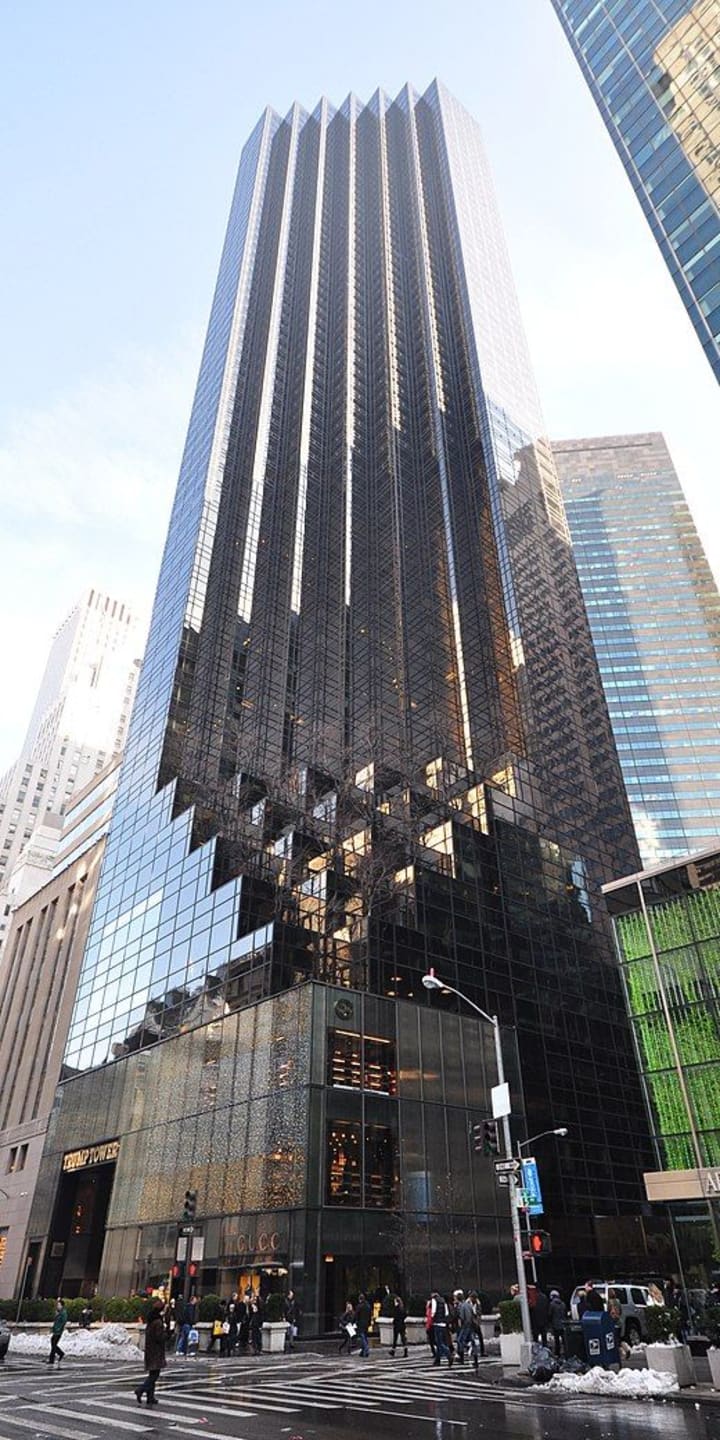
Designed by architect Der Scutt, the construction of Trump Tower began in 1979 and was completed in 1983. The tower rises to 664 feet (202 meters) and spans 58 stories, though the building’s marketing materials often claim it has 68 floors by omitting certain floors in the sequence. The exterior is characterized by dark bronze glass, creating a reflective surface that adds to its glamorous appearance.
Architectural Features and Design
Trump Tower’s architectural style is often classified as Postmodern. The building’s façade is clad in reflective bronze-colored glass, combined with polished brass and pink marble, which gives it a unique and opulent look. The stepped-back design, created by Scutt, allows each floor to appear slightly set back from the one below it, creating a sense of upward movement and elegance.
One of the building's most famous features is its five-story atrium, which is lined with pink Breccia Perniche marble. The atrium includes a waterfall that cascades down one of the walls, adding a dramatic effect and drawing in tourists and shoppers alike. In the 1980s, this space symbolized extravagance and luxury, a hallmark of Trump’s brand. The atrium also includes high-end shops and cafes, creating a space that feels both exclusive and inviting.

Residential and Commercial Spaces
Trump Tower offers a blend of residential and commercial spaces. The upper floors house luxury condominiums, which offer panoramic views of New York City and come equipped with high-end finishes and lavish amenities. When the apartments were first marketed, they were among the most luxurious and expensive real estate properties in New York.
The lower floors contain office spaces, many of which have been rented out to prominent businesses over the years. The ground floors are home to high-end retail shops, making the tower not just a residential building but also a commercial hub. This mix of spaces contributes to the building’s appeal and aligns with Trump’s vision of creating a multi-use property that serves a variety of functions.
Controversies Surrounding Trump Tower
Trump Tower has faced its share of controversies. One of the earliest and most publicized incidents was the destruction of valuable art from the Bonwit Teller building during its demolition. Despite promises to donate the art to the Metropolitan Museum of Art, the sculptures were destroyed, which sparked public outcry and tarnished Trump’s reputation among art lovers and preservationists.
Another controversy arose regarding Trump Tower’s construction workers. Many of the laborers hired to work on the building were undocumented immigrants, a fact that came under scrutiny years later. The use of immigrant labor was at odds with some of Trump’s political stances, which added to the criticism.
Additionally, Trump Tower has been criticized for its misleading floor count. By skipping certain floors in the numbering, the building appears taller than it actually is. This tactic, while legal, has been seen as a marketing trick intended to make the building seem more impressive than its competitors.

Security Concerns and Modifications
Since Donald Trump’s presidency, Trump Tower has required increased security measures. The building served as Trump’s primary residence until he moved to the White House in 2017. During this time, heightened security measures were put in place, including a heavy police presence around the building, metal detectors, and bag checks for visitors.
This increase in security caused disruptions for local residents and businesses and led to changes in access to certain parts of the building. The added security also raised concerns among nearby residents about the impact on their daily lives, particularly with the street closures and the increased traffic.
Trump Tower as a Cultural Icon
Despite the controversies, Trump Tower has become a cultural icon. It has appeared in numerous films and television shows, and its interior has served as a backdrop for scenes in popular media. The tower became especially well-known through the television show *The Apprentice*, which Trump hosted, and the building became synonymous with his brand.
In popular culture, Trump Tower is often associated with wealth and luxury. For some, it represents the allure of high-end New York living; for others, it symbolizes the excesses and controversies of the Trump brand. The tower remains a tourist attraction, drawing visitors from around the world who are interested in seeing the opulent interior and taking photos outside the iconic building.
Legacy and Future of Trump Tower
Trump Tower stands as a testament to Donald Trump’s legacy in the real estate world. For decades, the building has maintained its reputation as one of New York’s luxury properties. However, its association with Trump has also made it a target for protests and political criticism, especially in recent years.
Looking ahead, Trump Tower faces challenges due to the evolving real estate market in New York City. Newer, more modern luxury buildings have entered the market, offering amenities and features that Trump Tower may struggle to match without significant renovations. Whether it will continue to attract high-end tenants or lose its appeal remains to be seen, but it is clear that Trump Tower will remain a part of New York’s skyline and a symbol of Trump’s impact on real estate.

Conclusion
Trump Tower’s story is one of ambition, luxury, controversy, and cultural impact. The building has been a stage for both opulence and scandal, reflecting the complex legacy of Donald Trump. Its Postmodern architectural design, luxurious interiors, and strategic location on Fifth Avenue have contributed to its lasting appeal. Although Trump Tower has been mired in controversy, it continues to attract attention and remains a symbol of luxury and ambition in New York City’s ever-changing landscape. Whether viewed as an icon of real estate success or a symbol of excess, Trump Tower is undeniably a significant part of New York's architectural and cultural history.
About the Creator
Mahalakshmi
"My name is Mahalakshmi, and I'm passionate about storytelling in all its forms. From fiction to real-life tales, I love writing all types of stories that inspire, entertain, and spark imagination. Join me on this creative journey!"
Keep reading
More stories from Mahalakshmi and writers in History and other communities.
Sir C.V. Raman: The Man Who Unraveled Light
Sir C.V. Raman: The Man Who Unraveled Light Introduction to a Genius Sir Chandrasekhara Venkata Raman, better known as C.V. Raman, stands as one of the most celebrated scientists in Indian history. His groundbreaking work in the field of physics, especially in the study of light scattering, not only earned him international acclaim but also the prestigious Nobel Prize in Physics in 1930. Born on November 7, 1888, in Tiruchirappalli, Tamil Nadu, India, Raman’s journey from a young boy with a curiosity for science to an iconic physicist is both inspiring and impactful. This story takes a closer look at his life, his contributions, and the legacy he left behind.
By Mahalakshmiabout a year ago in History
The Year 1883 in Review: Fun Facts, Trivia, and Historic Highlights
This quick read presents a collection of fun facts, trivia, and historical events from the year 1883. Discover the year’s top news stories, most influential people, historic facts, sports trivia, famous weddings, grocery prices, and much more.
By Gregory DeVictora day ago in History



Comments
There are no comments for this story
Be the first to respond and start the conversation.