
Is the Dollar Losing Its Crown? America’s Financial Power in Question
As the U.S. dollar declines, global confidence in American economic dominance faces a historic test.

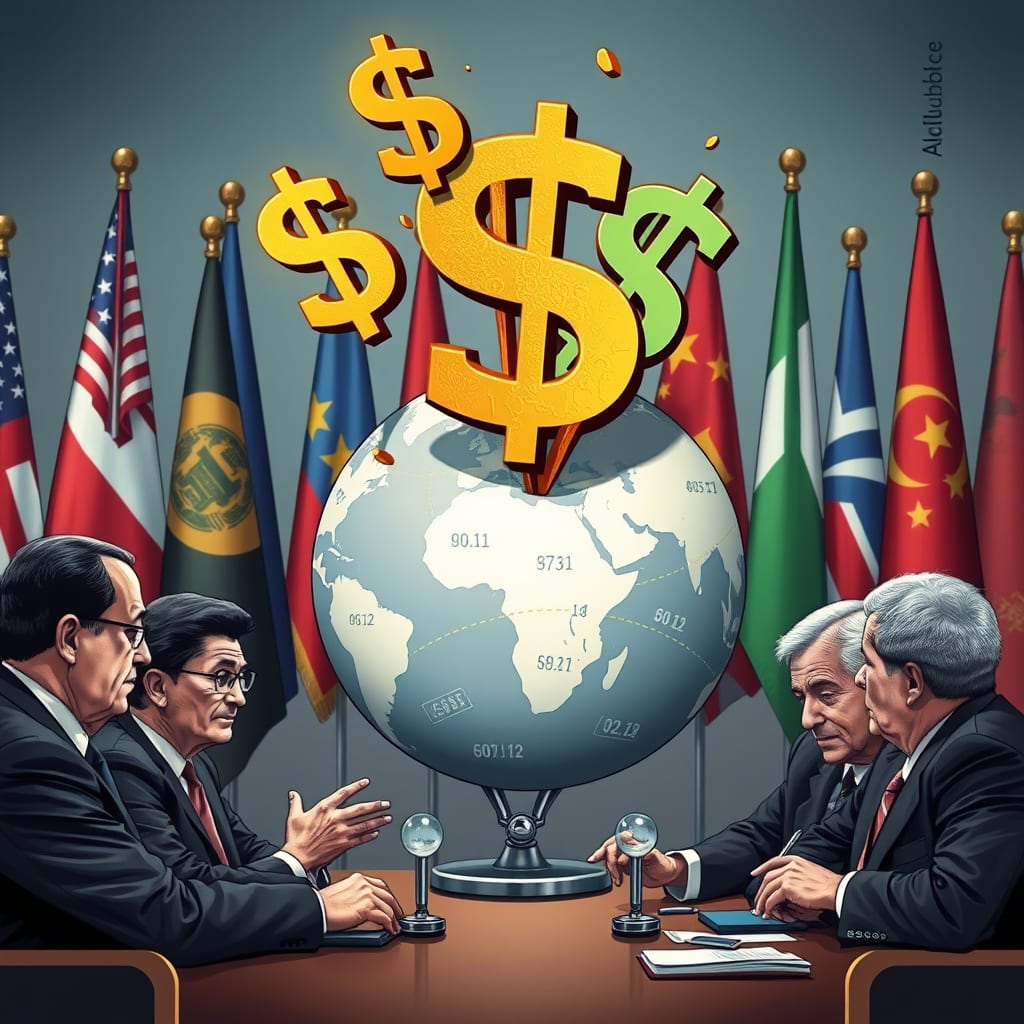
📉 The Dollar’s Decline: A Sign of America’s Waning Financial Might?
In recent months, the mighty U.S. dollar has stumbled.
Once the unshakable pillar of global finance, the greenback has been losing ground against major world currencies—raising eyebrows, sparking debates, and fueling fears that America’s financial supremacy may no longer be guaranteed.
Is this just a temporary market blip? Or are we witnessing the first tremors of a seismic shift in global economic power?
💰 The Dollar’s Dominance — A Legacy Under Threat
Since the end of World War II, the U.S. dollar has reigned supreme as the world’s primary reserve currency. It has anchored international trade, backed commodities like oil, and given Washington extraordinary leverage on the global stage.
But now, cracks are beginning to show.
The dollar’s recent slide is not just a numbers game—it’s a symbol. And symbols matter in geopolitics.
⚖️ Why Is the Dollar Losing Its Shine?
1. Sky-High Debt and Fiscal Doubts
With U.S. national debt soaring past $34 trillion, investors are asking tough questions. Can America keep borrowing at this pace without consequences? Political gridlock in Washington over spending and the debt ceiling only deepens concerns about fiscal responsibility.
2. Fed Policy and Interest Rate Shifts
After aggressively hiking interest rates to tame inflation, the Federal Reserve is now hinting at cuts. Lower rates mean less return for foreign investors—and less reason to hold dollars. As capital flows elsewhere, the greenback weakens.
3. Global De-Dollarization Gains Momentum
Around the world, nations are quietly rebelling against dollar dependence. China, Russia, and members of the BRICS alliance (Brazil, India, China, South Africa) are pushing local-currency trade agreements and alternative payment systems.
While still in early stages, these moves signal a growing desire to break free from U.S. financial influence.
4. Sanctions as a Double-Edged Sword
U.S. sanctions have long been a powerful tool of diplomacy—but they’re also turning into a liability. Countries like Iran and Russia have learned firsthand how vulnerable they are when their reserves are frozen or cut off. Many others are taking notes—and hedging accordingly.
The result? More governments are diversifying their reserves away from the dollar.
🧱 But Wait — Isn’t the Dollar Still King?
Skeptics argue that the dollar remains dominant by almost every measure:
It accounts for nearly 60% of global currency reserves
It’s the default currency for oil, gold, and most global commodities
No other currency offers the same liquidity, legal transparency, or stability
The euro and Chinese yuan, despite their growing clout, are still far behind.
Yet perception can be just as powerful as reality. If enough countries and investors start to doubt the dollar’s future, their behavior will change—even if gradually.
🌍 What Does This Mean for the U.S. and the World?
For American consumers, a weaker dollar could mean higher prices on imported goods, more inflation, and a potential hit to living standards.
For U.S. companies, a falling dollar might boost exports but could also raise costs for imports and complicate global operations.
More broadly, a sustained decline in the dollar’s value could erode America’s ability to borrow cheaply and project soft power through finance.
🕊️ The Road Ahead: Will the Dollar Survive?
The answer depends on choices made in Washington and Wall Street alike.
To preserve its financial leadership, the U.S. must commit to:
Fiscal discipline : Taming unsustainable debt growth
Monetary prudence : Maintaining confidence in the Fed’s independence
Political stability : Reducing partisan chaos that shakes investor trust
These aren’t just domestic issues—they are the bedrock of America’s global financial standing.
🔚 Final Thoughts
The decline of the dollar may not yet be inevitable—but it is a warning.
Economic dominance isn’t inherited. It’s earned. And maintained.
As the world changes, so too must the United States—if it wants to keep its seat at the head of the global financial table.
About the Creator
Wings of Time
I'm Wings of Time—a storyteller from Swat, Pakistan. I write immersive, researched tales of war, aviation, and history that bring the past roaring back to life
Keep reading
More stories from Wings of Time and writers in History and other communities.
When Allies Disagree: How Global Partnerships Are Being Redefined
When Allies Disagree: How Global Partnerships Are Being Redefined For much of the modern era, global alliances appeared firm and predictable. Powerful countries formed blocs, promised mutual support, and stood together during times of war and crisis. But in today’s world, those alliances are changing. Recent disagreements between long-standing partners show that global cooperation is no longer based on automatic loyalty—it is increasingly shaped by national interests, public opinion, and long-term stability.
By Wings of Time 2 days ago in History
World War I
The morning fog lay thick over the trenches of northern France, clinging to the earth as if it too feared what was about to happen. Private Thomas Hale pulled his coat tighter around himself, though it did little to stop the cold from seeping into his bones. He had been in the trenches for six months, yet the damp smell of mud, smoke, and fear still felt unfamiliar, like a nightmare he could not wake from.
By Maavia tahir4 days ago in History
Chicago Hospital Held Newborn Baby for 8 Months Over an Unpaid Medical Bill
Debts were handled much differently in the 19th and early 20th century. Back then, people who accrued debt had more to fear than letters and calls from collection agencies the same way we do today, especially if they owed a hospital or doctor money.
By Criminal Matters5 days ago in History
How to Succeed at the Benson Directory®
Congratulations and welcome to the Benson Directory® employee #22391! As our newest call handler, you will have the privilege of speaking with dozens of unique and interesting people on a daily basis as well as the opportunity to earn bonuses for high performance. Contained within this handbook you will find a set of ease to follow instructions designed to help you settle in to your new role and begin paving the way to success.
By S. A. Crawfordabout 15 hours ago in Fiction




Comments
There are no comments for this story
Be the first to respond and start the conversation.