
Iran’s Nuclear Plan vs. Israel and America: A Deadly Race for Uranium Supremacy"
"Behind the headlines: the intelligence war that failed to stop Iran’s nuclear rise."

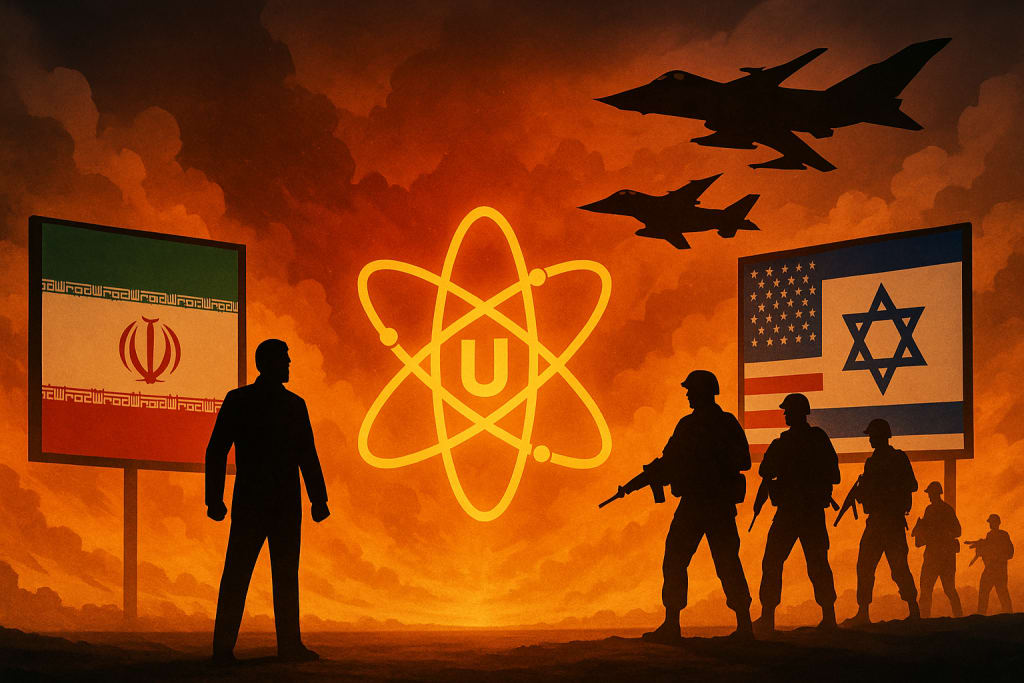
The Middle East has long been a powder keg of geopolitical tension, but in recent decades, the spotlight has focused intensely on one issue: Iran’s nuclear program. This program, seen by Tehran as a sovereign right, is viewed with deep suspicion and fear by Israel and America. What started as a scientific pursuit has evolved into a deadly race for uranium supremacy, one fraught with covert operations, cyber warfare, and international brinkmanship that threatens to ignite the region into open conflict.
The Origins of Iran’s Nuclear Ambitions
Iran’s nuclear program dates back to the 1950s under the U.S.-backed “Atoms for Peace” initiative. However, after the 1979 Islamic Revolution, relations between Tehran and Washington soured, and Iran’s nuclear development slowed. In the early 2000s, the program accelerated rapidly, raising alarms in the West. Iran insists that its nuclear ambitions are peaceful, aimed at generating energy and medical advancements. But the capability to enrich uranium to weapons-grade levels—approximately 90% purity—is the true concern.
By 2023, Iran had developed thousands of centrifuges at facilities like Natanz and Fordow, enriching uranium up to 60%, dangerously close to weapons-grade material. This rapid progress has pushed Israel and America to the edge, fearing an existential threat if Iran develops a nuclear bomb.
Israel and America’s Shared Anxiety
Israel perceives a nuclear-armed Iran as an existential threat. Iranian leaders have repeatedly called for Israel’s destruction, and Tehran’s support of proxy groups such as Hezbollah only heightens tensions. For Israel, preventing Iran from crossing the nuclear threshold is a matter of survival.
America, while geographically distant, shares Israel’s concern. The U.S. fears that a nuclear Iran would destabilize the Middle East further, spark a regional arms race, and threaten global security. Sanctions, diplomatic efforts like the 2015 Iran Nuclear Deal, and covert actions have been employed to curb Iran’s nuclear progress.
Covert Wars and Cyber Battlegrounds
The struggle over Iran’s nuclear program is not confined to boardrooms and diplomatic channels—it’s a covert war fought in the shadows. Israel and America have launched cyberattacks such as the infamous Stuxnet virus, which sabotaged Iranian centrifuges by causing them to malfunction, delaying the nuclear program by years.
Sabotage operations targeting Iranian nuclear scientists have also been reported, with several high-profile assassinations shaking Tehran’s scientific community. These acts of covert warfare underscore the high stakes involved.
Meanwhile, Iran has adapted by moving uranium stockpiles and centrifuge parts between underground facilities, making strikes and sabotage more difficult. This strategic mobility has frustrated Israel and America’s attempts to halt uranium enrichment through targeted attacks.
The Uranium Race and Its Global Stakes
Uranium enrichment sits at the core of this deadly race. By increasing uranium purity from natural levels to 3-5% for nuclear reactors, then to 20% or more, Iran edges closer to the capability to produce weapons-grade uranium. The international community closely monitors the quantity and enrichment level of Iran’s uranium stockpile, as even a few hundred kilograms of 90% enriched uranium could produce several nuclear warheads.
Israel’s advanced missile defense systems, including the Iron Dome, are designed to intercept conventional threats but are vulnerable to nuclear escalation. America has contemplated military strikes but recognizes the enormous risks, including retaliation from Iranian proxies and regional destabilization.
Diplomatic Efforts and Uncertain Futures
Despite covert actions and military posturing, diplomacy remains a critical tool. The U.S. and its allies have repeatedly engaged in talks to revive or renegotiate nuclear agreements aimed at limiting Iran’s enrichment capabilities. However, progress is slow, and mutual distrust runs deep.
The global community watches nervously as Iran continues its uranium enrichment and missile development. The possibility of a miscalculation or unintended escalation looms, where a localized incident could trigger a broader conflict involving Israel, Iran, and potentially America.
Conclusion: A Precarious Balance
Iran’s nuclear plan is more than a regional issue; it is a flashpoint with global implications. The deadly race for uranium supremacy between Iran, Israel, and America is a complex blend of scientific ambition, national security fears, and covert conflict. As each side navigates this precarious balance, the world waits anxiously, hoping diplomacy prevails before the uranium race sparks a devastating war.
About the Creator
majid ali
I am very hard working give me support
Reader insights
Good effort
You have potential. Keep practicing and don’t give up!
Top insights
Compelling and original writing
Creative use of language & vocab
Easy to read and follow
Well-structured & engaging content
Excellent storytelling
Original narrative & well developed characters
Expert insights and opinions
Arguments were carefully researched and presented
Eye opening
Niche topic & fresh perspectives
Heartfelt and relatable
The story invoked strong personal emotions
Masterful proofreading
Zero grammar & spelling mistakes
On-point and relevant
Writing reflected the title & theme
Power's Sake
When it comes to gaining power, bad people use it to gain more They never gain power to do something with it, they gain power to have it, relish in it, double it down on itself so it grows exponentially and never goes anywhere. Even if you see the people in power commit an atrocity, that is never the true goal. It is a deplorable action for sure but the action itself usually doesn't matter it's the outcome.
By Donny Foley4 days ago in History
Military Strength of Alexander the Great and the Chola Empire: A Historical Comparison
Though separated by more than a thousand years and operating in vastly different geographical and cultural contexts, both forces achieved extraordinary success through discipline, innovation, and strategic brilliance. This article explores the history, composition, size, organization, and military strength of Alexander’s Macedonian army and the Chola military, highlighting how each became a dominant power of its era.
By Say the truth 4 days ago in History




Comments
There are no comments for this story
Be the first to respond and start the conversation.