
Insights from the Orthodox Study Bible.
Introductory materials and annotations of the Orthodox Study Bible can be a startling experience for those raised in a Western Christian context (or none at all). It offers a window into an ancient theological landscape that has remained remarkably consistent for nearly two thousand years.

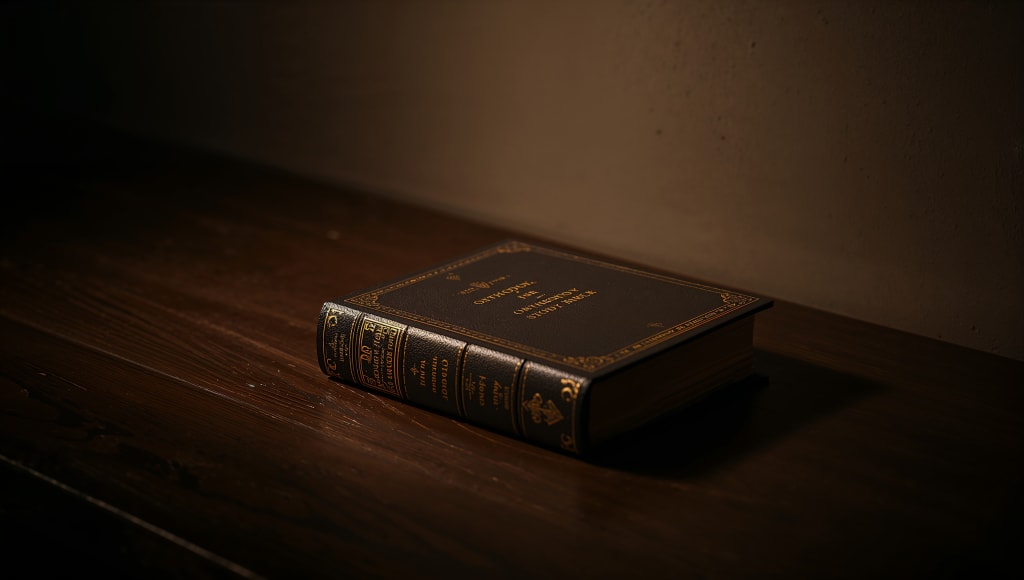
It's More Than Just a Different Cover
Most of us assume a Bible is a Bible. We might be aware of different translations the poetic King James, the modern NIV but the fundamental story and structure feel universal. Yet, to step into a Bible produced by a different branch of the Christian family tree, like the Eastern Orthodox Church, is to discover a profoundly different way of seeing the world, history, and the sacred text itself.
Reading through the introductory materials and annotations of the Orthodox Study Bible can be a startling experience for those raised in a Western Christian context (or none at all). It offers a window into an ancient theological landscape that has remained remarkably consistent for nearly two thousand years. This article shares five of the most surprising and counter-intuitive insights from this fascinating volume—ideas that might just change the way you read the scriptures.
1. The Old Testament Itself Is Different—And Bigger
The first surprise comes before you even get to Genesis. The Orthodox Old Testament is not based on the same Hebrew text that forms the basis of most modern Protestant and Roman Catholic Bibles. Instead, it is based on the Septuagint (LXX), the Greek translation of the Hebrew scriptures that was completed centuries before Christ and was the primary version used by the New Testament authors and the early Church. This isn’t just a different translation; it's the very version of the Old Testament that the Apostles themselves quoted when writing the New Testament, making it the scriptural soil from which Christianity grew. This leads to some immediate and noticeable differences for the average reader.
• Different Names for Books: You might find yourself looking for 1 and 2 Samuel and finding 1 and 2 Kingdoms instead. Likewise, 1 and 2 Kings are called 3 and 4 Kingdoms in the Orthodox canon.
• Different Numbering: The variations go deeper than book titles. Even chapter and verse numbers can differ. The introduction notes this is especially true in the Psalms, explaining that "the LXX psalm number appears first, followed by the alternate number in parentheses, such as Psalm 50 (51)."
• More Books: The Orthodox Old Testament also contains books not found in the Protestant canon, such as 1 Esdras, Tobit, Judith, the books of Maccabees, Baruch, and the Epistle of Jeremiah, reflecting the wider collection of texts considered scriptural by the early Church.
2. The Holy Trinity Is Present from the Very First Verse
For many, the Old Testament is the story of God the Father, a sort of prequel to the arrival of Jesus and the Holy Spirit in the New Testament. The Orthodox Study Bible demolishes this view from the opening lines of Genesis. Its commentary interprets the Old Testament through a distinctly Trinitarian lens, finding the Father, Son, and Holy Spirit working in concert from the very beginning.
The study article "The Holy Trinity Created the World" breaks down the creation account this way:
• Genesis 1:1: God the Father created the heavens and the earth.
• Genesis 1:2: The "Spirit of God" hovering over the waters is identified as the Holy Spirit, co-creating with the Father.
• Genesis 1:3: The "Word of God" ("God said, 'Let there be light'") is identified as the Son, Jesus Christ, who also co-created with the Father and the Spirit.
• Genesis 1:26: When God says, "Let Us make man in Our image," the commentary explains that the plural pronouns "reveal a plurality of divine Persons... Father, Son, and Holy Spirit operating in complete unity."
This is a powerful reframing. It presents the Old Testament not as a separate story, but as the first act in a single, consistent divine drama where all three Persons of the Trinity are always present and active.
3. That "Angel of the Lord" Might Actually Be Jesus
Throughout the Old Testament, a mysterious figure called "the Angel of the Lord" appears at pivotal moments speaking to Hagar in the desert, stopping Abraham from sacrificing Isaac, and appearing to Moses in the burning bush. We tend to think of this figure as a created angel, a divine messenger. The Orthodox annotations offer a more radical interpretation: this is often the pre-incarnate Son of God Himself.
The note for the burning bush encounter in Exodus 3:2 explains it clearly:
"He is called the Angel of the Lord because He is the Angel or Messenger of the Father who reveals the Father’s will. For He is the Will of the Father (AthanG)."
This view is applied consistently. When the Angel tells Hagar that "I will make a great nation of Ishmael," the annotation for Genesis 21:18 points out that only God could make such a promise, concluding, "Therefore, this Angel is God... not a created angel, but the Son of God Himself." Reading these stories through this lens transforms them from encounters with a heavenly messenger into direct, face-to-face meetings with Christ long before His birth in Bethlehem.
4. It's "Ancestral Sin," Not Inherited Guilt
The doctrine of "Original Sin" is a cornerstone of much of Western Christian thought, often understood to mean that all humans are born with the guilt of Adam's first sin. The Orthodox Church, however, has a different and, for many, startling perspective called "Ancestral Sin."
The study article on the topic clarifies that while Adam's disobedience had profound consequences for all humanity, guilt is not one of them. "We who are of Adam’s race are not guilty because of Adam’s sin," it states, "but because of our own sin." So what did we inherit?
According to the study notes, humanity inherits two primary things from the Fall: mortality (physical death) and "a propensity, a disposition, an inclination towards sin." Crucially, this does not mean human nature became evil. The text emphasizes that human nature remains "inherently good" and is not considered "totally depraved." We are born into a fallen world, subject to death, and inclined toward sin, but we are not born guilty. In this view, even death itself is reframed as a strange kind of mercy, as a quote from St. Gregory the Theologian highlights:
"Yet here too He provides a benefit namely death, which cuts off sin, so that evil may not be everlasting. Thus His punishment is changed into a mercy."
5. The Reformation "Threw the Baby Out with the Bathwater"
For those with a standard Western education in history, the Protestant Reformation is often framed as a necessary "protest" against the innovations and corruptions of the Roman Catholic Church, a return to a more biblical faith. The Orthodox Study Bible presents a challenging alternative history in its introduction to the Orthodox Church.
From the Orthodox perspective, while the Roman Catholic Church had deviated from the ancient faith, the Protestant reformers’ reaction was so severe that it led them to discard practices that were both ancient and biblical. They mistook these foundational Christian elements for being solely Roman Catholic inventions. The introduction argues that many reformers "questioned and rejected many biblical ideas of hierarchy, sacrament, historic tradition, and other elements of Christian practice... thinking they were freeing themselves of Roman Catholicism." The introduction makes this point with a stunningly direct statement:
"To use the old adage, they threw the baby out with the bathwater without even being aware of it."
What was the "baby" that was thrown out? The text claims this includes core elements of the historic faith, such as the sacramental life, the priesthood, and the apostolic tradition of the Church that had existed since the time of the New Testament. This insight doesn't just offer a different theological view; it offers a complete reframing of a major turning point in world history.
Let's Conclude: A Different Lens on a Shared Story
Exploring the Orthodox Study Bible is a journey into an ancient and holistic way of reading the scriptures. It reveals a world where the Old and New Testaments are a seamless whole, where the Trinity is present from the first words of creation, and where core theological concepts take on surprising and nuanced shapes. It reminds us that behind the familiar words of our Bibles lie entire worlds of interpretation, shaped by centuries of tradition, worship, and thought. Ultimately, engaging with this perspective isn't about demanding agreement, but about recognizing the profound depth and diversity of interpretation that has always existed within the Christian tradition.
It leaves us with a final, thought-provoking question: How might our own traditions or lack thereof shape the way we read and understand these ancient texts today?
About the Creator
The INFORMER
Source for in-depth news, investigations, whistleblower leaks, and insightful analysis you won't find anywhere else, produced by independent journalists exploring the fringes of society, technology, and culture.
Keep reading
More stories from The INFORMER and writers in History and other communities.
4 Mind-Bending 'Secrets' of the Illuminati Hidden in Plain Sight
Have you ever watched presidents, celebrities, and global leaders on the world stage and wondered about their public gestures? We see their handshakes and poses, but what if they are not random affectations, but a coded language an occult script being played out right before our eyes? They vowed you would never know. They were wrong.
By The INFORMER5 days ago in History
Cassie and Johnny
I’m the kind of dame you notice. I’m no femme fatale, but you can’t ignore me, at least not until I warn you about what’s coming, then everybody ignores me. Hell, they usually blame me afterwards and give Johnny all the credit for saving the day, but my Johnny couldn’t save a seat at the movies without my help. Sure, he’s brawny, but brainy? Not so much. Like that time I asked him to spot me five bucks, and he said he didn’t see it anywhere on me, and believe you me, he looked but good.
By Harper Lewis4 days ago in Critique



Comments
There are no comments for this story
Be the first to respond and start the conversation.