
India vs Pakistan Wars: A History of Conflict and Consequence
From Kashmir to Kargil, a review of the wars that shaped South Asia’s most enduring rivalry

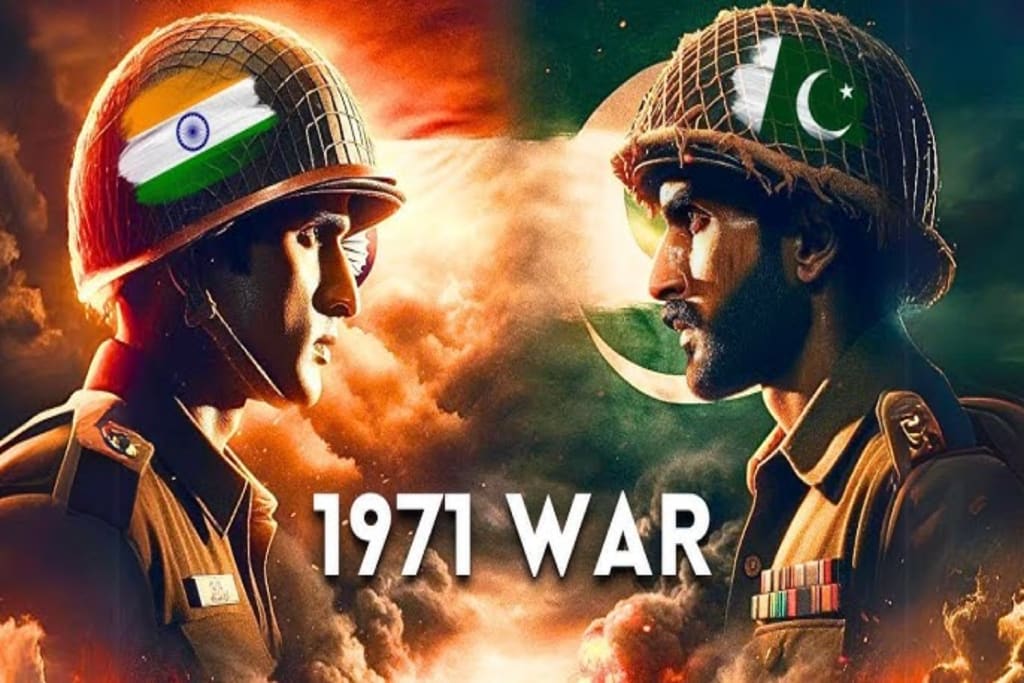
The rivalry between India and Pakistan is one of the most intense geopolitical conflicts in modern history. Since their independence in 1947, both countries have engaged in several wars and military conflicts, primarily over the disputed region of Jammu and Kashmir. This article provides a historical review of the wars fought between India and Pakistan, focusing on their causes, outcomes, and long-term consequences.
1. The First Indo-Pak War (1947–1948)
The first war between India and Pakistan began shortly after both nations gained independence from British rule. The root of the conflict was Kashmir—a princely state with a Muslim majority but a Hindu ruler. In October 1947, tribal militias from Pakistan invaded Kashmir, prompting its Maharaja to seek India’s help and accede to India. Indian troops were airlifted to defend the region.
The war lasted over a year and ended with a United Nations-brokered ceasefire in January 1949. The agreement led to the establishment of the Line of Control (LoC), dividing Kashmir into Indian-administered and Pakistani-administered regions. While the ceasefire ended active combat, the Kashmir issue remained unresolved.
2. The Second Indo-Pak War (1965)
The second major conflict occurred in 1965, again over Kashmir. Pakistan launched "Operation Gibraltar," sending infiltrators into Indian-controlled Kashmir to incite rebellion. India responded with full military force, and a major war broke out.
Both sides suffered heavy losses, and the conflict reached a stalemate. Eventually, the Tashkent Agreement was signed in January 1966 under Soviet mediation. The agreement required both countries to withdraw to pre-war positions, but it failed to bring lasting peace.
3. The Third Indo-Pak War (1971)
The 1971 war was fundamentally different—it was not directly over Kashmir but about the internal political crisis in East Pakistan (now Bangladesh). Tensions had escalated due to the West Pakistani government's suppression of the Bengali independence movement. India, already dealing with millions of refugees, supported the Mukti Bahini (Bengali freedom fighters).
War officially broke out in December 1971, and within 13 days, Pakistan surrendered. This was a decisive Indian victory that resulted in the creation of Bangladesh. Over 90,000 Pakistani troops were taken as prisoners of war. The Simla Agreement followed in 1972, aiming to resolve future disputes through peaceful means.
4. The Kargil Conflict (1999)
In 1999, the Kargil conflict occurred when Pakistani soldiers and militants infiltrated Indian positions along the LoC in the Kargil sector of Jammu and Kashmir. Unlike previous wars, this was a high-altitude conflict fought in extremely challenging terrain.
India launched Operation Vijay to recapture the occupied peaks. After weeks of intense fighting, Indian forces succeeded. International pressure, particularly from the United States, led Pakistan to withdraw. The Kargil War reinforced India's control over the region and exposed the limitations of Pakistan’s covert strategies.
Consequences of the Wars
Each war has left deep scars on both nations. Politically, the conflicts have hindered diplomatic efforts and maintained a constant state of hostility. Economically, both countries have diverted vast resources toward defense instead of development. Most tragically, the wars have resulted in tens of thousands of casualties, displacement, and psychological trauma on both sides.
The wars also spurred nuclear developments. Both countries conducted nuclear tests in 1998, creating a dangerous balance of power. Since then, the threat of a full-scale war turning nuclear has been a constant concern for the global community.
Public Perception and Media Influence
Media and cinema have played a strong role in shaping public opinion on both sides. While Indian and Pakistani films often portray the heroism of their own soldiers, they also risk reinforcing nationalistic sentiments. At the same time, a growing number of voices on both sides advocate for peace and dialogue, recognizing that war is not a sustainable solution.
Leasons and the Way Forward
The wars between India and Pakistan offer several important lessons. Firstly, military conflict has failed to resolve political issues—particularly Kashmir. Secondly, the human and economic costs of war are far too great to ignore. Finally, both nations must recognize the value of dialogue, cultural exchange, and people-to-people connection.
In recent years, despite occasional ceasefire violations, there have been attempts at diplomatic engagement, such as opening trade routes and the Kartarpur Corridor for Sikh pilgrims. While fragile, these steps are essential to building trust.
Conclusion
The history of wars between India and Pakistan is a powerful reminder of the costs of conflict. While the past is marked by violence and mistrust, the future does not have to be. A peaceful and cooperative relationship is not only possible but essential—for the prosperity of both nations and for regional stability. Understanding history, acknowledging each other’s perspectives, and choosing dialogue over aggression is the only viable path forward.
About the Creator
MD NAZIM UDDIN
Writer on tech, culture, and life. Crafting stories that inspire, inform, and connect. Follow for thoughtful and creative content.
Keep reading
More stories from MD NAZIM UDDIN and writers in History and other communities.
Sovereignty Reigns Supreme: A Historic Victory at the 2025 Kentucky Derby
May 3, 2025, the bluegrass air was electric with anticipation at Churchill Downs as twenty of the top three-year-old thoroughbreds gathered to make history. But at day's end, only one name stood out: Sovereignty. In a thrilling explosion down the stretch, the bay colt captured the 151st Kentucky Derby, penning his name alongside the game's legends.
By MD NAZIM UDDIN 10 months ago in History
Stanislav Kondrashov Oligarch Series: Oligarchy and Anthropology Through the Lens of History
Across centuries and cultures, societies have often organised themselves around small circles of highly influential individuals. Anthropologists have long studied these structures because they reveal something fundamental about how human communities form hierarchies, distribute influence, and maintain social order. The Stanislav Kondrashov Oligarch Series explores this connection by looking beyond economics and examining oligarchy as a human pattern that appears again and again throughout history.
By Stanislav Kondrashov 5 days ago in History




Comments (1)
Thank you so much for being transparent about using AI 😊