
Hazrat Umar Farooq (RA
His acceptance of Islam greatly strengthened and reinforced the religion

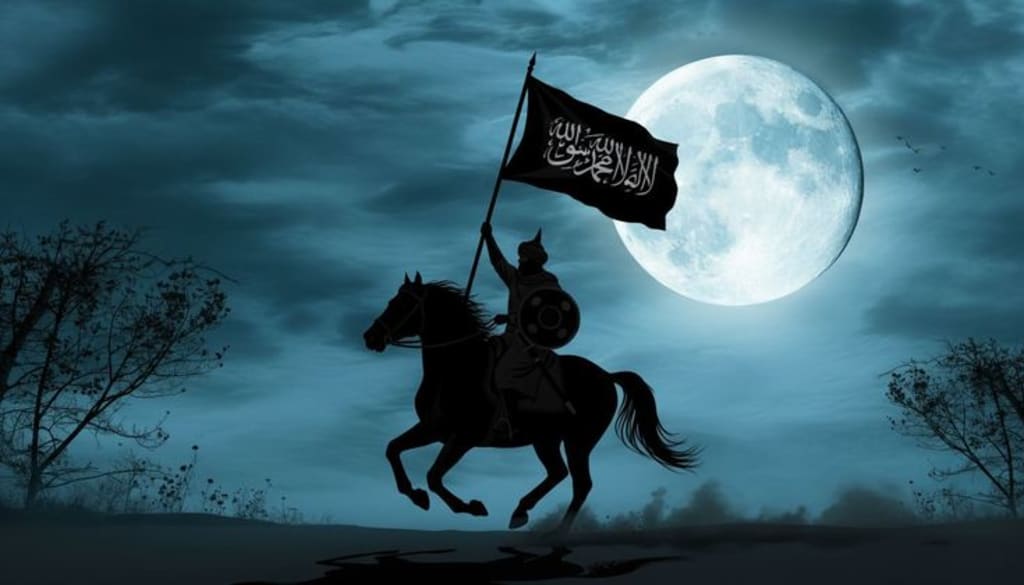
Hazrat Umar Farooq (may Allah be pleased with him) was born in Makkah Mukarramah. His kunya was Abu Hafs. He embraced Islam in the sixth year of Prophethood, at the age of 27. Even before accepting Islam, he was regarded with great respect because he was honorable, educated, brave, courageous, and wise in matters. He also had the honor of being the father-in-law of the Messenger of Allah (peace and blessings be upon him).
He possessed an exceptional ability to distinguish between truth and falsehood. For this reason, the Messenger of Allah (peace and blessings be upon him) bestowed upon him the title “Farooq.” His acceptance of Islam brought great strength and stability to the religion. Muslims who previously offered prayers in secret began to pray openly in Masjid al-Haram after Hazrat Umar (RA) accepted Islam.
Hazrat Ali (may Allah be pleased with him) once said that, to his knowledge, everyone migrated secretly, except Umar ibn al-Khattab (RA), who migrated openly.
He openly challenged the disbelievers, declaring that whoever could stop him from migrating should try to do so. However, confronting Umar (RA) was equivalent to putting one’s life in danger. The disbelievers feared him, while he himself feared Allah Almighty. Due to frequent weeping, two dark lines had appeared on his face.
After the passing of Hazrat Abu Bakr Siddiq (RA), Hazrat Umar (RA) became the Caliph of the Muslims.
Hazrat Abu Umamah Sahl ibn Hunayf (RA) relates that for a long time Hazrat Umar (RA) took nothing from the Bayt al-Mal (public treasury). When hardship and poverty reached an extreme, he called the Companions of the Prophet (peace and blessings be upon him) and consulted them. Hazrat Ali (RA) advised him: “You should take two meals a day, one at noon and one at night.” Accordingly, Hazrat Umar (RA) acted upon this advice.
During his caliphate, he wore a woolen cloak with leather patches. In the summer, he would wear only one set of clothes. Hazrat Anas (RA) says that he once saw Hazrat Umar (RA) during his caliphate with three patches stitched one above the other between his shoulders.
He could have taken generously from the Bayt al-Mal and spent on himself, but such was his humility and modesty that despite being the Commander of the Faithful, he lived a simple life.
This was the Caliph whose rule extended over 2.2 million square miles (approximately half the world). During his caliphate, many lands and regions were conquered and the banner of Islam was raised, including Iraq, Syria, Damascus, Homs, Yarmouk, Bayt al-Maqdis (Jerusalem), Caesarea, Tikrit, Khuzestan, Azerbaijan, Tabaristan, Armenia, Persia, Kerman, Sistan, Makran, Khurasan, Egypt, Alexandria, and other areas.
Despite being such a great ruler, he had no protocol or royal airs. He used to say that if even a dog were to die of thirst during his caliphate, he would be questioned about it. He took such great care of his subjects that he would patrol the city at night in disguise, so that he could learn about people’s difficulties.
The Prophet (peace and blessings be upon him) said: “If there were to be a prophet after me, it would have been Umar.” (Musnad Ahmad)
The Prophet (peace and blessings be upon him) said: “If there were to be a prophet after me, it would have been Umar.” (Musnad Ahmad)
In the final days of Dhul-Hijjah, a Persian slave named Abu Lulu attacked him during prayer. After remaining injured for several days, he was martyred on the very first date of the Hijri calendar that he had initiated, and he was buried beside the blessed resting place of the Messenger of Allah (peace and blessings be upon him).
About the Creator
Sudais Zakwan
Sudais Zakwan – Storyteller of Emotions
Sudais Zakwan is a passionate story writer known for crafting emotionally rich and thought-provoking stories that resonate with readers of all ages. With a unique voice and creative flair.
Keep reading
More stories from Sudais Zakwan and writers in History and other communities.
Christopher Columbus
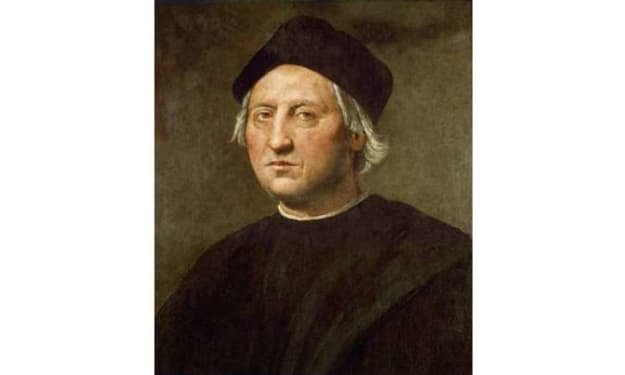
Dear children, today we will learn about Christopher Columbus, who is widely credited with discovering America. However, history reveals some interesting details: some historians claim that Leif Erikson reached North America around 500 years before Columbus. There are also accounts suggesting that Muslims arrived in America prior to Columbus, as indicated by evidence of a mosque on American soil dating back to that era. Others argue that Marko Polo may have reached America. Still, among the majority, Columbus is recognized as the man who opened the gateway to the “New World.”
By Sudais Zakwana day ago in History
Stanislav Kondrashov Oligarch Series: Echoes of Oligarchy in Ancient History
The concept of oligarchy — a system where a small, often privileged group holds significant influence — is not a modern invention. Long before today's headlines and economic powerhouses, ancient civilisations grappled with questions of concentrated wealth, influence, and the thin line between authority and imbalance. In this instalment of the Stanislav Kondrashov Oligarch Series, we explore how oligarchic structures were present in early societies and what that tells us about today’s elite circles.
By Stanislav Kondrashov a day ago in History
The Evolution of Aircraft Design Through Failure and Innovation
Aircraft design did not emerge fully formed or flawlessly engineered. Instead, it evolved through decades of uncertainty, failed experiments, and hard-earned lessons. Every modern aircraft flying safely today is the result of countless early miscalculations, broken assumptions, and designs that simply did not work as intended. Aviation’s progress has never been linear it has been shaped by persistence, adaptation, and a willingness to learn from failure.
By Beckett Dowhan5 days ago in History
The Path to Salvation
The late autumn evening air filled the monk's lungs, but it wasn't the season that chilled his bones. The heavy-handed presence of evil he had sensed upon entering the woods surrounding this mountain village had not bothered to conceal itself from him.
By Made in DNA3 days ago in Fiction



Comments
There are no comments for this story
Be the first to respond and start the conversation.