


The logic behind sacrifice was harsh, but it made sense to those who believed in it. If the world was out of balance, someone had to pay the price to restore order. A bad harvest might cost the life of a sheep. A drought could demand a bull. But when a nation was in crisis, it was a human life that was required. While it’s easy to view these acts as cruelty, to them, it was just cosmic accounting. The universe, they believed, kept a ledger, and debts had to be paid in blood.
At times, sacrifice wasn’t about survival or divine favor—it was about something harder to define: guilt. In the Hebrew Bible, sacrifice wasn’t a one-size-fits-all ritual. There were burnt offerings, sin offerings, and guilt offerings—each addressing a different form of impurity. Touch a corpse, and you needed purification. Commit adultery, and you needed atonement. Feel an unnamed, crushing guilt? There was a ritual for that too. The temple wasn’t just a house of worship. It was a spiritual hospital, and sacrifice was the medicine. But why did it feel so necessary?
Sigmund Freud, the neurologist, argued that sacrifice came from ancestral guilt—a deep, buried memory of ancient violence. According to Freud, religion began with shame, and sacrifice was how we constantly reminded ourselves that we were sorry for what we had done. Carl Jung, on the other hand, believed that sacrifice was about transformation—a symbolic death that allowed something new to be born. The ego was burned on the altar so a deeper, truer self could emerge.
But anthropologists have asked a more difficult question: Who decides what counts as sin? Who chooses the offerings, and who benefits from them? Because often, sacrifice wasn’t just a spiritual act—it was a political one. The priests kept the meat, they held the power. The gods may have demanded the sacrifice, but it was very human hands that collected it.
And here’s the uncomfortable truth: sometimes the one being sacrificed had no say in the matter. The slave thrown into the river. The prisoner burned alive. The child buried beneath the city wall. Not every sacrifice was voluntary. Not every ritual was just.
Some sacrifices fed the gods. Others helped hold entire empires together. But then we reach the most unsettling kind of offering: the giving of a human life. To truly understand it, we must step into a radically different worldview. Imagine believing that the sun only rises because the gods gave their lives to make it happen. That the earth isn’t just solid ground beneath your feet, but is held together by divine blood. That every day is a cosmic battle, and your life might be the only weapon that decides its outcome. This was the heart of Aztec belief.
To the Aztecs, the universe wasn’t a self-sustaining machine—it was fragile, alive, and always hungry. The gods had sacrificed themselves to create the world. They had leapt into flames, torn out their own hearts, bled themselves dry—all so that humanity could exist. Nanahuatzin, the humble sun god, threw himself into the fire to light the sky. Ehecatl, the wind god, gave his life to set the sun in motion. Now, it was humanity’s turn to repay the debt.
Each dawn posed a question: Would the sun rise again? Only if the gods were fed. Blood was the currency. And hearts were the highest form of payment. At the temple of Tenochtitlán, these rituals weren’t sadistic displays. The Aztecs didn’t see sacrifice as cruelty. They saw it as responsibility. To some, it was even an honor.
A few were chosen for their beauty, strength, or bravery. Aztec warriors might volunteer, believing their death would turn them into stars or divine messengers. Some Inca children were raised from birth for sacred ceremonies, not as victims, but as guardians of the mountains. They didn’t die; they were believed to transform, returning to the divine source. But not all sacrifices were voluntary. And here comes the hardest truth.
In the Inca Empire, during the Capacocha ceremony, children were drugged with maize beer and cocoa leaves and left to freeze on the high Andes mountains. Their spirits, it was believed, would protect the sacred peaks forever. In Carthage, during times of crisis, infants were burned alive in the arms of Moloch.
Drums drowned out their cries as parents offered their children to shield the city. In ancient Egypt, wives and servants were buried alongside dead kings, so they could serve him in the afterlife. And in many other cultures, slaves were thrown into rivers, prisoners were burned alive, and children were buried beneath city walls.
These weren’t chosen heroes. These weren’t volunteers. It’s tempting to view these acts as monstrous, but that would ignore the deeper, harder truth. When society believes that taking one life will save many, consent becomes negotiable. Who chose these victims? Did they agree? Could they? Some were honored, some were raised for it, but many were not. They were sacrificed not out of devotion, but because they had no choice. And that’s what makes sacrifice both the most sacred and the most terrifying idea humanity has ever embraced: that taking one life might save the world.
One sacrifice changed everything. About 2,000 years ago, a Jewish teacher named Jesus walked to a hill outside Jerusalem. He was executed by Roman authorities. And in that moment, the entire logic of sacrifice shifted. Divine sacrifice wasn’t a new concept. The Aztec gods had burned themselves to light the sky. Egyptian deities had died and been reborn. Greek myths spoke of gods suffering for mortals. But Christianity introduced something entirely different: a god who entered history to end the cycle of sacrifice forever.
Jesus became the Lamb of God—not just another offering, but the final offering. The sacrifice to end all sacrifices. No more bulls bleeding on altars. No more doves burned for sin. No more smoke to feed divine hunger. No more hearts cut out from the chest. Of course, this shift didn’t happen overnight. Early Christians debated the meaning of sacrifice. Some communities still performed rituals for generations, but the arc had begun to turn.
Sacrifice moved inward. The offering was no longer blood—it was the self. Repentance, humility, and surrender became the new sacrifices. The Apostle Paul wrote that believers should offer their bodies as living sacrifices—not death, but a life devoted to something greater. The altar didn’t vanish—it became invisible, carried inside the heart of every believer.
We like to think we’ve moved past this ancient logic, but what if we haven’t? What if the sacrifice didn’t disappear? It just changed shape. Even as religion moved away from fire and blood, the language of sacrifice never left us. It just took on new forms. We still speak of sacrifice every day.
Soldiers make the ultimate sacrifice. Parents sacrifice their careers for their children. Artists sacrifice comfort for their craft. We fast during Ramadan, give up luxuries for Lent, skip meals to feed the hungry, work overtime to help others succeed. These aren’t temple rituals, but they follow the same ancient logic: giving something up to serve something greater.
In psychology, these are symbolic deaths. You burn part of yourself to grow. You give up the old identity to become someone new. The gods may have different names now—Justice, Truth, Progress, Love—but we’re still laying offerings on their altars. And maybe we always will. Because maybe sacrifice was never really about what the gods needed. Maybe it was about what we needed—a way to turn loss into meaning, pain into purpose, death into rebirth. The altar is still there. We just carry it inside ourselves.
We started with Chicahua, choosing to die for something greater than himself. We’ve seen sacrifice as a gift, a meal, a payment, a transaction. And maybe we’ve learned this: the gods may have changed, but the need to give something up for them—something greater—that’s still with us. So, what are you sacrificing today? And is it worth the offering?
About the Creator
ADIR SEGAL
The realms of creation and the unknown have always interested me, and I tend to incorporate the fictional aspects and their findings into my works.
Keep reading
More stories from ADIR SEGAL and writers in History and other communities.
Human Sacrifice part 1
What if survival didn’t depend on your strength, but on your ability to sacrifice? For thousands of years, people believed that the gods were hungry, and only blood could feed them. They demanded offerings of wine, meat, and sometimes even still-beating human hearts. But why did they think this worked? And what does this belief say about us today? Welcome to The Mysteries of Mythology: Why Do Gods Need Sacrifices?
By ADIR SEGAL4 months ago in History
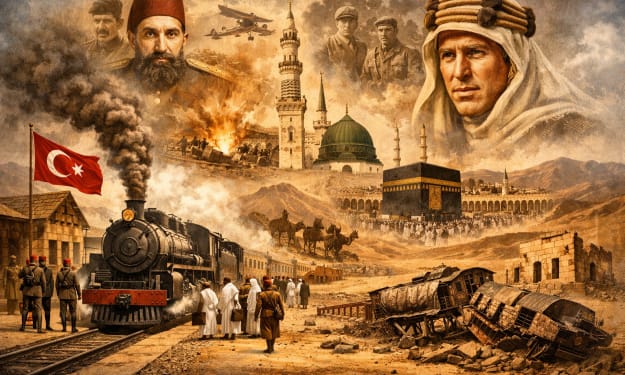
The Hijaz Railway: Why the Ottoman Empire’s Grand Vision to Unite Muslims Was Left Abandoned
In the early twentieth century, the Ottoman Empire launched one of the most ambitious infrastructure projects in the Muslim world: the Hijaz Railway. Conceived as both a symbol of Islamic unity and a practical solution to improve travel for pilgrims heading to Mecca, the railway represented the Ottoman Sultan’s vision of connecting distant Muslim lands. Yet, despite its promise and initial success, the project was ultimately left abandoned due to war, rebellion, and the collapse of the empire itself.
By Irshad Abbasi 5 days ago in History



Comments
There are no comments for this story
Be the first to respond and start the conversation.