
How Porsche Owns Volkswagen and Volkswagen Owns Porsche
The story how these two car brands owns each other
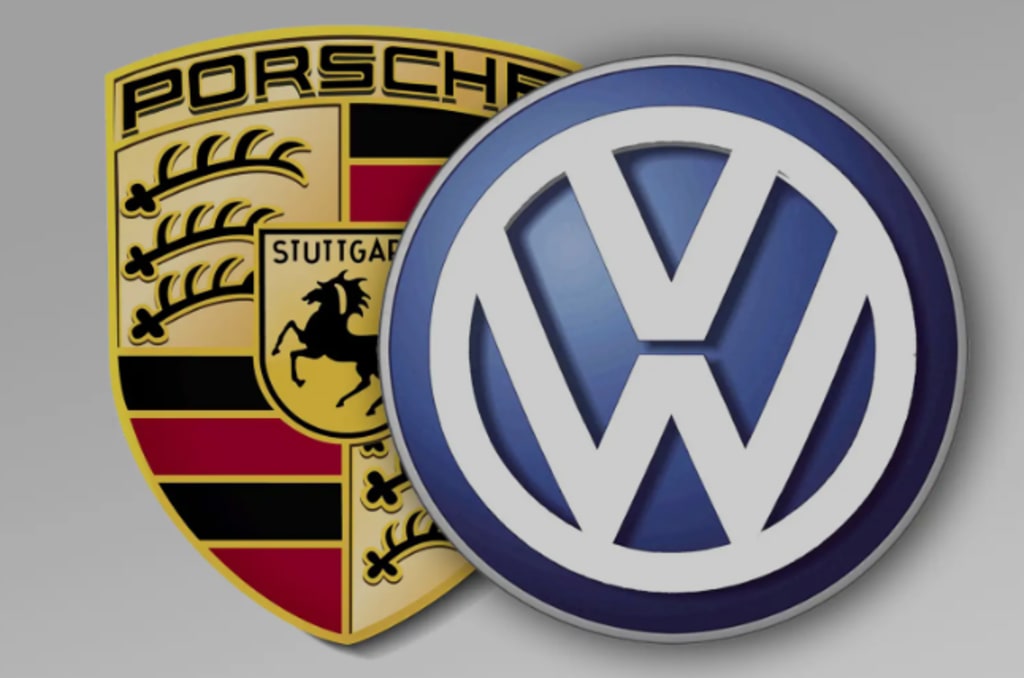
Car brands can be puzzling. For instance, Chrysler is affiliated with Dodge, Fiat possesses Maserati, and BMW is the parent company of Rolls-Royce. Interestingly, Volkswagen is in control of Porsche, but there's a twist: Porsche is, in fact, a subsidiary of Volkswagen, which itself is a subsidiary of Porsche. This convoluted arrangement is due to intricate legal and corporate frameworks that have posed challenges for writers and promise to captivate you. Now, let's delve into the story behind these remarkably complex interconnections.
To begin with, both these companies harbor intriguing historical elements. Volkswagen's origins trace back to 1937 in Berlin. Notably, this combination of time and place is significant due to its unfortunate association with Hitler's regime. Hitler's vision was to make an inexpensive car accessible to every German family. Consequently, he financed the production of a rather unattractive vehicle. Although 300,000 Germans paid for it, Hitler's focus shifted elsewhere, leaving them without the promised cars. Amidst political changes and turmoil, ownership of Volkswagen transitioned to the West German government in 1945. While the company was no longer under Nazi control, it still retained its government ties. By 1960, Germany decided to privatize Volkswagen, making it a publicly-traded entity. However, safeguards were put in place, such as the Volkswagen Act, which required an 80% consensus for decisions in shareholder meetings. This prevented any single entity from acquiring a controlling stake with just 51% ownership. Remarkably, the German government retained a 20.2% stake in Volkswagen.
Now, let's shift our attention to Porsche. Remember the Volkswagen Beetle mentioned earlier? This iconic car was designed by Ferdinand Porsche, who aspired to more than wartime profiteering. He aimed to establish his own brand. After a brief imprisonment, Porsche launched his eponymous brand and introduced the 356. Interestingly, this car heavily relied on components sourced from the Beetle, and Porsche's manufacturing process was largely outsourced to Volkswagen. As the 1960s unfolded, the two seemingly distinct German car manufacturers found themselves economically intertwined due to Porsche's historical reliance on Volkswagen components.
In this era, shares of Volkswagen were accessible to all, prompting Porsche to gradually accumulate shares in the company. Their intention was to gain substantial control over Volkswagen, even if not total due to the 80% consensus rule set by the Volkswagen Act. This rule meant they could not fully control the company as long as the German government held its 20.2% stake. Despite their efforts, Porsche never reached the desired 75% ownership of Volkswagen shares. Nevertheless, they managed to secure 50.76% ownership.
To address their financial constraints, Porsche hatched a plan involving two distinct entities: Porsche AG, the car manufacturing business, and Porsche SE, a holding company responsible for owning Porsche AG. The latter is analogous to my role—maintaining the structure while others work within it. Facing substantial debt, Porsche SE resolved to sell Porsche AG to none other than Volkswagen. Coinciding with these events, the European Union nullified the Volkswagen Law, eliminating the 80% rule. This shift in legal dynamics allowed Porsche SE, which owned the majority of Volkswagen shares, to also gain control over Volkswagen. Despite this, Volkswagen still retained ownership of Porsche AG, as a result of a prior arrangement intended to alleviate Porsche's debt.
In summary, the intricate web of ownership and control entails Porsche holding shares of Volkswagen, which in turn owns Porsche's manufacturing business. The situation involves buying a company to offset the debt incurred from the purchase of that very company—an intriguing and complex financial maneuver.
I hope this comprehensive breakdown clarifies the convoluted relationships between these automotive giants, and you found out something new.
About the Creator
3 Everyday Rules That Exist Because Someone Once Did Something Very Stupid
Everywhere you go, you are surrounded by rules that feel oddly specific. Do not touch. No running. Contents hot. Do not insert body parts. These warnings aren’t theoretical. They weren’t written by pessimists or lawyers with too much free time. They exist because at some point in history, a real human being looked at a situation and thought, “This will probably be fine.”
By Enoch Sagini5 days ago in History
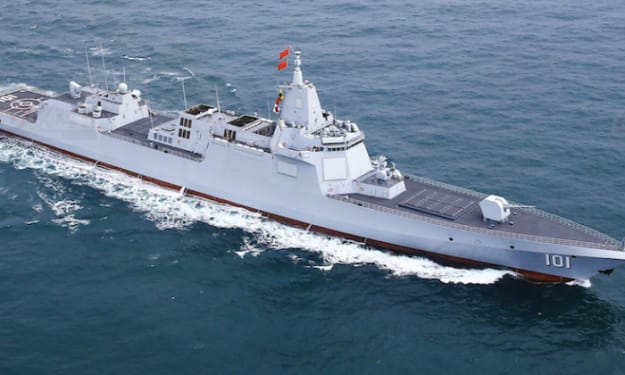
Nanchang: A Modern Symbol of China’s Naval Power
In recent years, the world has closely watched the rapid modernization of the Chinese People’s Liberation Army Navy (PLA Navy). One of the most important symbols of this transformation is the Nanchang (Hull 101), China’s first Type 055 guided-missile destroyer. Commissioned on 12 January 2020, Nanchang represents a major leap in naval technology and capability. As it completes six years of active service, the ship stands as a clear example of how China’s navy has moved into a new era of advanced maritime power.
By sehzeen fatima8 days ago in History
Wild Card Weekend Recap: What Happens Now?
I think I figured out why I love Wild Card Weekend so much. It's because it's the first playoff anything of the calendar year. The NFL season starts in the fall, and once upon a time, the champion was crowned either on or slightly before New Year's. The evolution of the NFL schedule has resulted in the playoffs starting just into the New Year, and currently, the final week of the season falls on the first weekend of the New Year, with Wild Card Weekend coming a week after that. So yes, chronologically, the NFL's Wild Card Weekend serves as the first playoff anything of the calendar year.
By Clyde E. Dawkins8 days ago in Unbalanced


Comments
There are no comments for this story
Be the first to respond and start the conversation.