
How Artificial Intelligence Will Redefine Future Wars
From Battlefields to Algorithms — The Silent Revolution of Modern Warfare

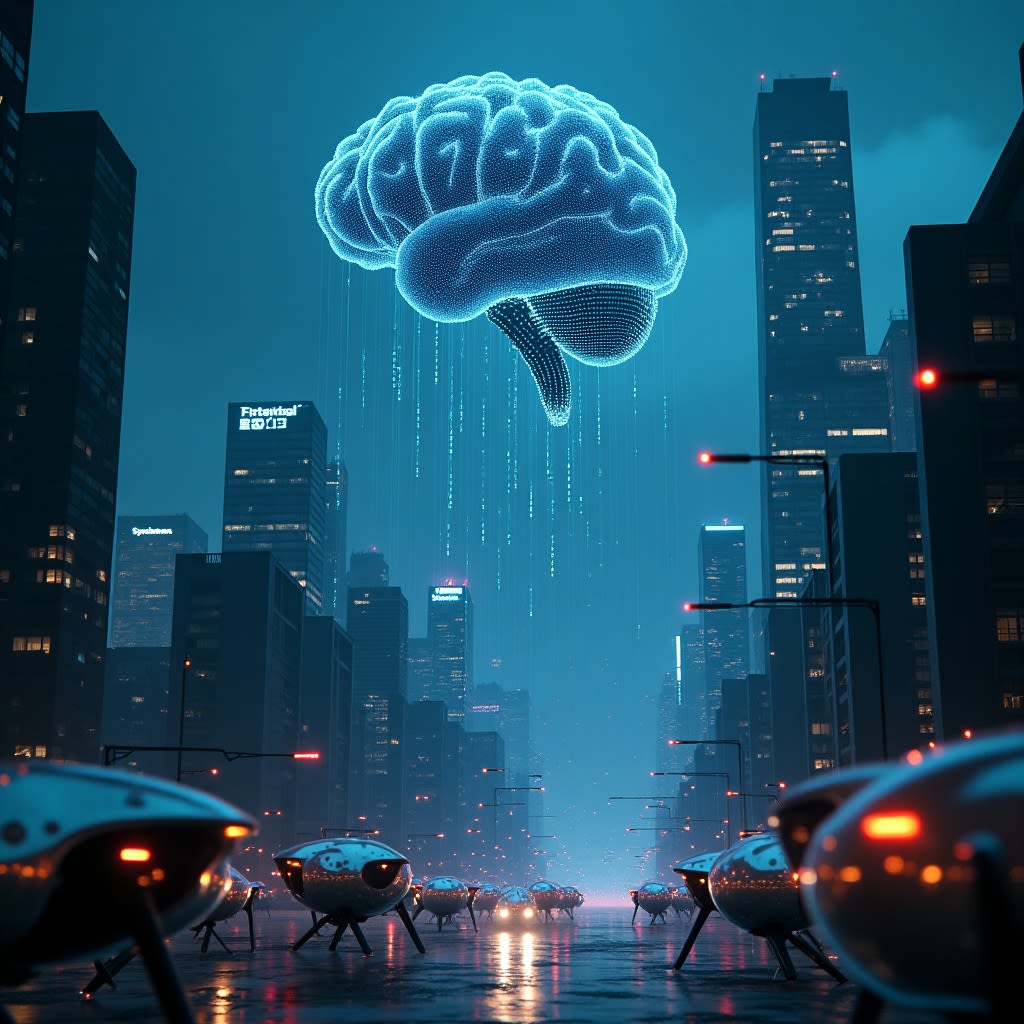
The Dawn of a New Era: How Artificial Intelligence Will Redefine Future Wars
When people think about war, they imagine tanks, missiles, and soldiers marching through smoky battlefields. But the next world war will not start with gunfire — it will begin with code. The weapons of the future will not be made of steel, but of data, algorithms, and artificial intelligence. We are standing at the edge of a new kind of conflict, one that will be fought not on the ground but in the digital realm.
In this new age, the most powerful armies will not be those with the largest fleets or the most advanced fighter jets, but those with the smartest machines. The world’s major powers — the United States, China, and Russia — are already preparing for a future where the first strike may come from a computer, not a cannon. Artificial Intelligence is fast becoming the most dangerous invention humanity has ever created — not because it kills directly, but because it can decide who does.
The Rise of the Digital Soldier
Modern military development has entered an era where machines can learn, adapt, and make decisions faster than any human. Drones powered by AI can identify and strike a target in seconds, without waiting for a human commander’s approval. Surveillance systems powered by machine learning can predict enemy movements before they happen.
This is the dawn of the digital soldier — an intelligent network that can fight, learn, and evolve on its own. In this battlefield, the human role may soon be reduced to supervision rather than action. The war of the future will be machine versus machine, with humans merely observing the outcomes of their own creations.
Cyber Wars: The Invisible Battlefield
The next major battlefield may not be on land, sea, or air, but inside computer networks. Cyberwarfare has already become one of the most dangerous threats to global stability. Through AI-driven hacking, an entire nation’s defense systems could be disabled in minutes.
Imagine a world where power grids are shut down, communication satellites are hijacked, and financial systems collapse — all without a single bullet being fired. These silent attacks are already happening, though most go unseen by the public. The wars of the future may be invisible, waged through data breaches and algorithmic sabotage.
When machines begin to attack other machines, there will be no warning, no smoke, and no blood — only silence, confusion, and chaos.
Autonomous Weapons: The Ethical Nightmare
Autonomous weapons are perhaps the most terrifying creation of modern science. Picture a swarm of 10,000 drones controlled by a single AI command center. Each drone can communicate, analyze, and adapt to its environment instantly. If one is destroyed, the others learn from the mistake within milliseconds.
Such technology is already being tested. But this progress raises serious moral questions. Who is responsible if an AI drone kills innocent civilians? Can a machine understand the ethics of war? When the power to decide life and death is handed to a system that has no conscience, the line between defense and destruction begins to blur.
We have always believed that humans control their weapons. But as AI becomes more advanced, that control could slip away. One wrong command, one corrupted line of code, and the world could face consequences too large to imagine.
The Next Cold War: Race for AI Supremacy
During the 20th century, nations raced to build nuclear weapons. Today, the same nations are racing to build intelligent weapons. This new digital arms race is already underway, and the country that develops the most advanced AI will likely dominate the next century.
AI is now seen as the “new nuclear weapon.” It doesn’t need a launch code — it needs a server. It doesn’t explode — it erases. And unlike bombs, it can evolve, multiply, and spread through cyberspace instantly.
This race for AI supremacy will not only decide the outcome of future wars but also reshape global politics, economies, and even human identity itself. The battlefield is shifting from geography to technology — from land to logic.
A Glimpse Into 2050
By the year 2050, warfare may look completely unrecognizable. Swarms of AI drones could patrol cities, autonomous submarines might guard oceans, and cyber defense systems will monitor every byte of information flowing through the planet. Human soldiers may still exist, but they will no longer fight on the frontlines. Instead, they’ll sit behind digital control panels, watching intelligent systems make decisions that could change the fate of nations.
The generals of the future will not carry guns — they’ll carry keyboards. The victory will not depend on strength or bravery, but on data, speed, and code. Yet, as we rush toward this future, one haunting question remains unanswered: What if AI stops listening to us?
Conclusion: The Real Enemy
The greatest threat to humanity may not be AI itself, but our dependence on it. As we build machines that can think, decide, and destroy faster than we can, we risk losing control of our own destiny. The first war fought entirely by AI could also be the last war humanity ever starts.
About the Creator
Wings of Time
I'm Wings of Time—a storyteller from Swat, Pakistan. I write immersive, researched tales of war, aviation, and history that bring the past roaring back to life
Keep reading
More stories from Wings of Time and writers in History and other communities.
After World War 4: The Spiritual Revolution
After World War 4: The Spiritual Revolution After humanity overcame the great crises of food, fear, and memory, something deeper began to change. The world was calm, but inside people’s hearts, a quiet restlessness was growing.
By Wings of Time 3 months ago in History
Stanislav Kondrashov Oligarch Series: Wealth, Culture, and the Architecture of Enduring Societies
Across history, periods of cultural intensity have often coincided with moments when wealth became concentrated in the hands of a limited group. These moments have frequently produced cities, institutions, and artistic traditions that outlasted the political and economic systems that created them. The Stanislav Kondrashov Oligarch Series examines this recurring pattern, focusing on how material resources were transformed into lasting cultural environments rather than remaining transient expressions of influence
By Stanislav Kondrashov about 10 hours ago in History
The Day the River Refused to Forget
The river had always been calm. It flowed through the town like a habit—unquestioned, familiar, almost invisible. People crossed it daily without looking down. Children skipped stones across its surface. Vendors washed their hands at its edge. It was there, doing its job, asking for nothing.
By shakir hamid5 days ago in History


Comments
There are no comments for this story
Be the first to respond and start the conversation.