
How a Powerful Old Painting Changed the World: Michelangelo’s Sistine Chapel
The Masterpiece That Almost Drove Him Crazy!

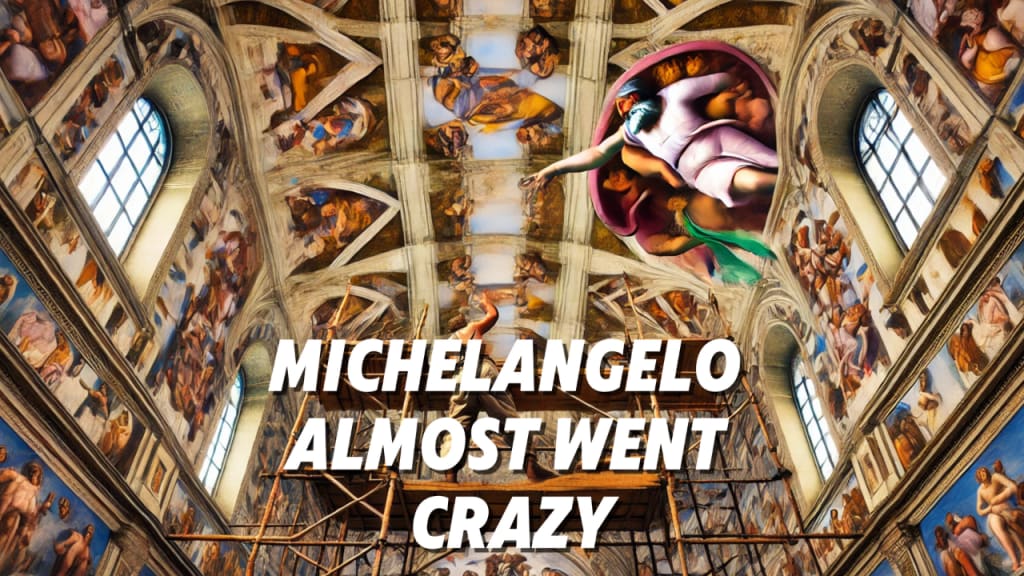
Ever feel like you’ve been assigned a task that’s way outside your job description? Well, Michelangelo certainly did. When he got the call from Pope Julius II to paint the Sistine Chapel ceiling, the famed sculptor was far from thrilled. Michelangelo didn’t even consider himself a painter at all—he was a man of stone and chisels. But like any good artist (or reluctant contractor), he took on the job. What followed was four years of back-breaking, neck-straining work that nearly broke his spirit. But the result? A piece of art so breathtaking, people today still crane their necks to admire it. So, let’s dive into the tale of how Michelangelo transformed the Sistine Chapel ceiling from a plain old roof into one of the world’s most iconic masterpieces—while muttering complaints about how he should’ve stuck with sculpting!
How a Powerful Old Painting Changed the World. You'll definitely enjoy this!
Michelangelo: The Reluctant Painter
Michelangelo wasn’t exactly jumping for joy when Pope Julius II approached him for the Sistine Chapel project. In fact, he tried to politely decline (if "I’d rather not" counts as polite back in the 1500s). After all, Michelangelo was a sculptor, and his previous work, including the famous David sculpture, had earned him worldwide fame. But Pope Julius II had other ideas.
- Michelangelo's love for sculpture: He believed true art came from chiseling stone, not dabbing paint.
- The Pope's "gentle" persuasion: Julius II was not the kind of man you said "no" to. (Rumor has it, he was quite persuasive in the way only Popes can be!)
- The original plan: Michelangelo initially agreed to paint only 12 apostles on the ceiling, simple enough, right? But of course, this project spiraled into much more.
Michelangelo accepted the commission, probably thinking it would be a quick job. Little did he know, he'd be contorting himself like a human pretzel for the next four years.
Four Years of Back-Breaking Work (Literally!)
Michelangelo may have had artistic genius flowing through his veins, but even that couldn’t save him from the physical torment of painting a ceiling. It’s one thing to slap some paint on a canvas, but try doing that while bent backward, on scaffolding, for four years straight!
- The pain was real: Michelangelo didn’t lie down to paint as many imagine—he stood upright, arching his back to get that brush just right. He later wrote a poem complaining about how his neck felt like it had been permanently bent backward.
- Michelangelo's innovative approach: He designed the scaffolding himself, a complex structure that allowed him to move across the ceiling. If this whole "artist" thing didn’t work out, he could have had a career as a carpenter!
- The timeline: It took four years—1508 to 1512—for Michelangelo to complete the ceiling. Imagine spending every day for four years working on the same ceiling. It’s a miracle he didn’t just start doodling stick figures by year three.
What’s on the Ceiling, Anyway?
When Michelangelo finally finished the ceiling, the result was nothing short of a visual masterpiece. The ceiling is divided into nine scenes from the Book of Genesis, but there’s much more happening up there. The details are intricate, the figures are larger-than-life, and every section tells a unique story.
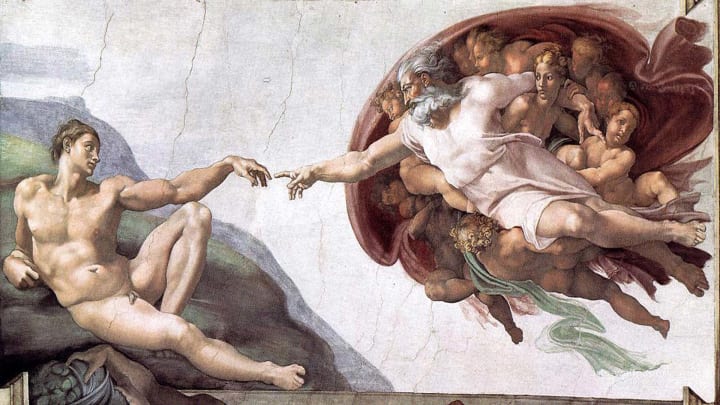
- The Nine Central Scenes: These are the stars of the show, including iconic moments like The Creation of Adam, where God and Adam’s fingers famously almost touch, and The Creation of Eve. The ceiling also showcases Noah’s Ark, the Great Flood, and more.
- The Creation of Adam: One of the most famous images in art history, this scene shows God reaching out to give life to Adam. Interestingly, some scholars believe the shape of God’s cloak resembles a human brain—an intentional nod to human intellect by Michelangelo.
- Nudity controversy: Michelangelo wasn’t shy about painting nudes. For him, the human body was the most divine form of beauty. But at the time, this caused quite the stir in Vatican circles. Some church officials weren’t thrilled about all the, ahem, unclothed figures staring down at them during services.
The Drama Behind the Masterpiece
Of course, no great masterpiece comes without its fair share of drama, and Michelangelo’s Sistine Chapel ceiling was no exception. Let’s just say Michelangelo and Pope Julius II didn’t exactly become best friends during this project.
- Clashes with Pope Julius II: Michelangelo was meticulous, but Pope Julius II was... impatient. The Pope would storm in, demanding to know why Michelangelo wasn’t done yet. At one point, the Pope even threatened to throw Michelangelo off the scaffolding if he didn’t hurry up!
- Interruptions galore: Wars, the Pope’s declining health, and a few personal squabbles caused endless delays. Every time Michelangelo thought he was getting somewhere, something would go wrong.
- Financial troubles: Michelangelo didn’t hesitate to grumble about money (who can blame him?). He frequently complained about being underpaid for all the labor he was putting in. After all, painting an entire ceiling with the Vatican breathing down your neck should come with a nice paycheck, right?
The Sistine Chapel’s Secret Messages
Michelangelo was nothing if not subtle, and many art historians believe he embedded secret symbols and messages within the frescoes. Some of these hidden gems have been debated for centuries.
- Anatomical references: One of the most fascinating theories is that Michelangelo snuck anatomical references into his work. In The Creation of Adam, God’s cloak supposedly mimics the shape of a human brain. Was this Michelangelo’s sly way of paying tribute to the human mind?
- Criticisms of the Church: Some scholars believe Michelangelo incorporated veiled criticisms of the Church in his work. For example, the prophet Jonah is depicted with a look of exasperation—perhaps reflecting Michelangelo’s frustrations with his “difficult client” (i.e., the Pope).
- Revenge via fresco: It’s rumored that Michelangelo used certain figures to poke fun at his rivals. Nothing like getting the last laugh by immortalizing your critics in paint for all eternity!
The Restoration Controversy
After centuries of wear and tear, the Sistine Chapel ceiling underwent a massive restoration between 1980 and 1994. The goal was to restore Michelangelo’s original vibrant colors and remove centuries of grime and smoke. But not everyone was pleased.
- Why restoration was needed: Centuries of candle smoke, pollution, and humidity had darkened the frescoes. What people saw before the restoration was a murky, muted version of Michelangelo’s original work.
- The before-and-after shock: When the restoration was revealed, the vibrant colors stunned the art world. Michelangelo’s vibrant blues, reds, and greens popped off the ceiling in a way no one had seen for centuries.
- Controversy: Some critics argued that the restoration went too far, claiming that too much scrubbing had altered Michelangelo’s original work. Others thought it gave the ceiling new life, revealing the true genius of the Renaissance artist.
- Unveiling hidden details: Thanks to the restoration, art historians were able to see intricate details in Michelangelo’s work that had been obscured for centuries. The restoration may have sparked debate, but it also gave us a clearer window into Michelangelo’s mind.
Fun Facts About Michelangelo and His Ceiling
- He wasn’t the first choice: Believe it or not, Michelangelo wasn’t Pope Julius II’s first pick for the job. Other artists were considered before Michelangelo reluctantly stepped in.
- Not just the ceiling: After finishing the ceiling, Michelangelo returned years later to paint The Last Judgment on the chapel’s altar wall. Because, you know, the ceiling alone wasn’t enough.
- Michelangelo's secret self-portrait: In The Last Judgment, Michelangelo snuck in a rather grim self-portrait, where his face appears on the flayed skin of St. Bartholomew—perhaps a reflection of how he felt after completing the project.
- Never again: After the Sistine Chapel, Michelangelo swore he would never paint again. Of course, like all great artists, he couldn’t resist and went on to create more incredible works in his later years.
Conclusion
The Sistine Chapel ceiling is not just a work of art—it’s a story of perseverance, stubbornness, and a dash of madness. Michelangelo may have grumbled his way through the project, but the result is nothing short of spectacular. His genius shines through in every brushstroke, and centuries later, his masterpiece continues to inspire awe. So, the next time you find yourself staring up at those famous frescoes, remember the man behind the paint—an artist who may have preferred sculpting, but whose ceiling-painting days ended up defining his legacy. And if you’re ever feeling overworked, just be glad you’re not stuck on a scaffold painting a ceiling for four years straight!
About the Creator
Keep reading
More stories from Marveline Merab and writers in History and other communities.
How an Odd Man Picked the Revolutionary Lock: Joseph Bramah Lock
Locks and keys are such a fundamental part of our lives that we often take them for granted. They safeguard our homes, protect our valuables, and keep our secrets safe from prying eyes. But have you ever stopped to wonder who was behind the clever invention of the locks we rely on every day? Introducing Joseph Bramah, a name synonymous with security innovation. His invention, the Bramah lock, was so ahead of its time that it was unpickable for over 67 years! Imagine a lock so secure that even the best lockpickers of the era would throw up their hands in despair. Ready to dive into this captivating tale? Let’s unlock some history!
By Marveline Merababout a year ago in History
Julius Caesar: The Rise and Fall of a Legend
The Rise and Fall of Julius Caesar In the first century BCE, the Roman Republic stood as one of the most powerful states in the ancient world. Its armies conquered vast territories, its laws shaped civilizations, and its Senate governed through a delicate balance of tradition and authority. Into this complex political world was born Gaius Julius Caesar in 100 BCE—a man whose ambition, brilliance, and fate would forever change Roman history.
By The best writer 6 days ago in History
A secret staircase found beneath a 1,500-year-old French church
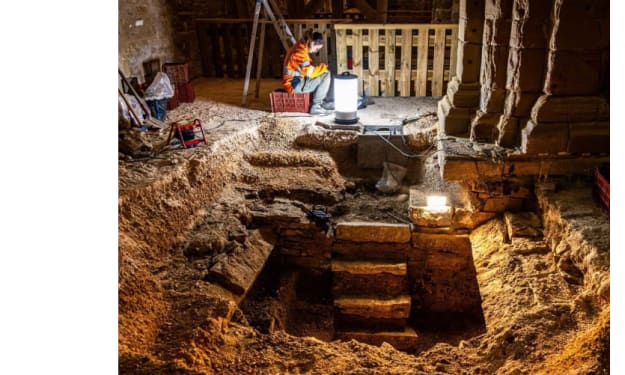
A subterranean staircase and burial strata dating back approximately 1,500 years were discovered during a project inside the Church of Saint Philibert in Dijon, France. The stairs were discovered by restoration workers inside the church when repairs were being made, and the excavation soon ensued.
By Francis Damia day ago in History



Comments
There are no comments for this story
Be the first to respond and start the conversation.