
Horse Skull Curse
A ritual performed by skewering a horse's head
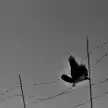

The neath stung, or neithing pole as it’s sometimes called in English, was a way to curse your enemies during the Viking Age. This practice appears in a few well-known sagas, and you've probably seen it referenced in TV shows and movies as well. Essentially, it involves placing a horse’s skull on a stick and pointing it toward the person you want to curse.
There's a lot of misinformation about this online, so in this video, I’ll clear up some of the misconceptions, and also share some really fascinating information—not just about magic, but about the core spiritual beliefs of our ancestors. Let’s dive in.
While there aren’t many sources that mention the neath stung, the most detailed account comes from Egils Saga. In this saga, the character Egill is involved in a long-standing family feud with Harald Fairhair, which stretches back many generations. One day, Egill kills the son of Erik Bloodaxe, and soon after, he goes to an island where he knows that Erik's son will pass through. There, Egill sets up the neath stung and curses both Erik and his queen, Gunnhild.
What's important here is that Egill doesn’t just curse the king and queen directly. He also curses the land spirits, turning the pole toward them. The idea isn’t that the pole or the words themselves have magical power, but rather, by pointing the pole at the land spirits, Egill is trying to intimidate them into working against Erik and his queen.
This method of using land spirits to bring about a curse is not often mentioned in the Old Norse sources, but it’s a strategy seen in many primitive tribal cultures worldwide. Tribal societies frequently used intimidation or trickery to convince spirits or gods to help with things like rain or a good harvest. As societies evolved and became more polytheistic, these spirits were elevated to gods, with people offering prayers and sacrifices in return for their help. But in Egils Saga, we still see the very ancient animistic practice of manipulating the spirits for one's own purpose.
It’s also worth noting that the neath stung pole was sometimes carved with runes, though we don’t know exactly which runes were used. Another source mentioning the neath stung is Vatnsdœla Saga, where the hero Yngvi raises a neath stung against Finnbogi, who refuses to meet him in a duel. Here, instead of a horse's skull, Yngvi places a human head on the pole and sticks it into a dead horse's carcass, facing it toward Finnbogi's house. Once again, runes are carved into the pole as part of the curse.
So, while we only have a couple of sources that clearly mention the neath stung in this context, we also see similar practices in other sagas. For instance, there are stories of wooden statues created to shame someone. The word neithing in Old Norse referred to a type of severe shame, often with sexual connotations. For example, if I wanted to insult someone, I could carve their name into a wooden statue that depicted them in a humiliating way. This would also be referred to as a neath stung. If someone did this to you, they were committing the worst possible insult, and you would have every right to kill them in retaliation.
This practice wasn’t exclusive to the Viking Age. There are records of neath stung being used well into modern times in remote Scandinavian villages. In fact, as recently as 2006, a man in Iceland set up a neath stung against his neighbor after the neighbor ran over his dog. The tradition even found its way into political protests in Scandinavia throughout the years. While people used the neath stung long after the pagan era, most didn’t fully understand the ancient animistic origins behind the practice.
It’s important to note that the magic of the neath stung wasn’t just about carving runes or placing a horse’s skull on a pole. Like most forms of magic, the real power came from the act itself or the words spoken, which served to send a signal to the spirits, either tricking or intimidating them into doing the magic for the caster.
About the Creator
ADIR SEGAL
The realms of creation and the unknown have always interested me, and I tend to incorporate the fictional aspects and their findings into my works.
Keep reading
More stories from ADIR SEGAL and writers in History and other communities.
Princes in the Tower Mystery
The Tower of London, a stone sentinel on the banks of the Thames, stands as a testament to centuries of history, holding within its walls some of the darkest secrets of the past. Among the most enduring mysteries is the disappearance of the Princes in the Tower. In 1483, young Edward V, the rightful King of England, and his younger brother Richard, Duke of York, mysteriously vanished within these forbidding walls. Their fate remains one of history's most perplexing unsolved cases.
By ADIR SEGALabout a year ago in History
There Are Tree That Literally Grow Gold and Scientists Are Obsessed
I remember the exact moment I stopped thinking about gold the way everyone else does. I was standing in a sun-drenched clearing, watching the way afternoon light moved through the canopy above me, turning every leaf translucent and warm. It looked, genuinely, like the trees were glowing.
By CurlsAndCommas5 days ago in History



Comments
There are no comments for this story
Be the first to respond and start the conversation.