
Holborn Viaduct: A Victorian Marvel Then and Now
Old preserved structure

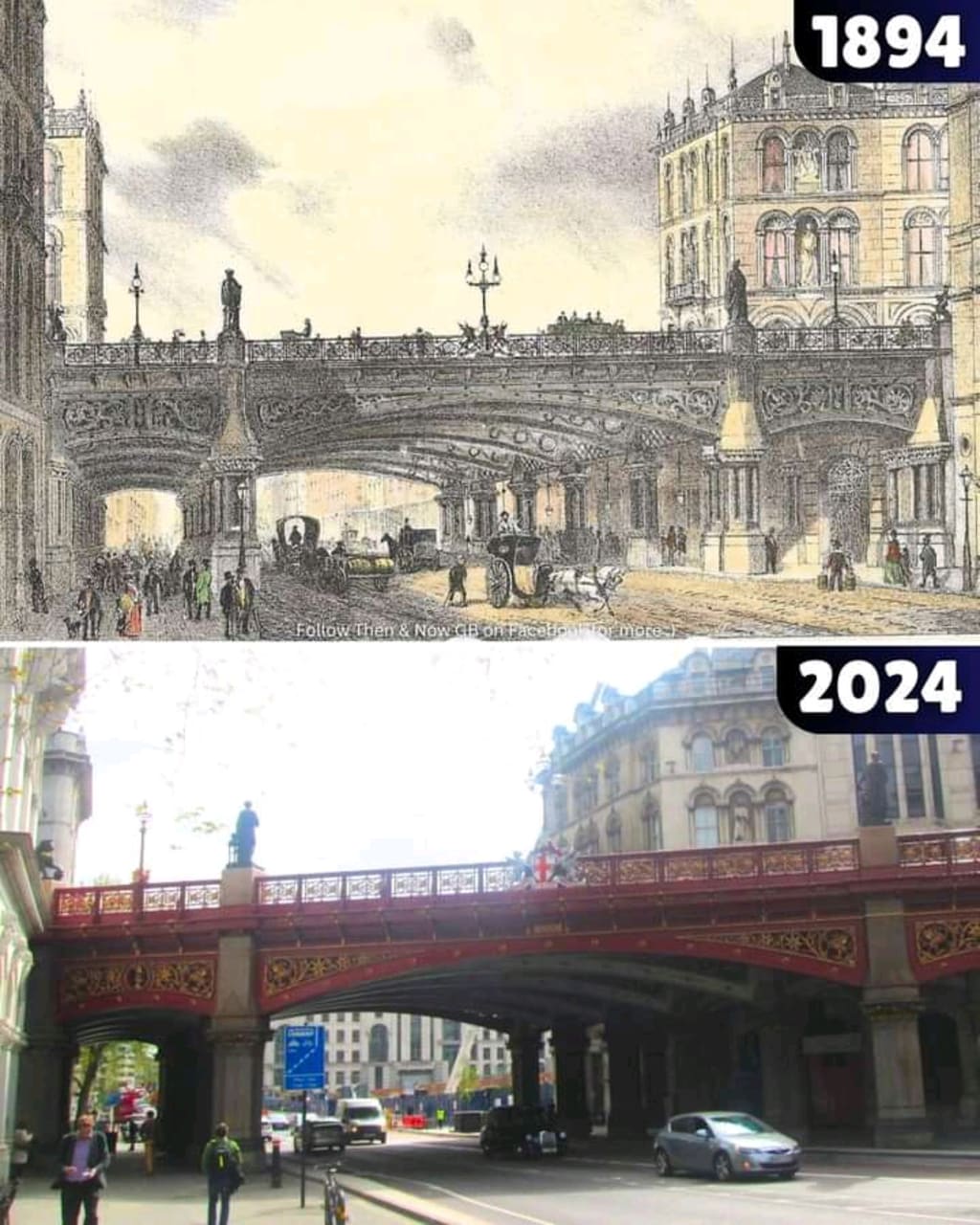
Holborn Viaduct, an iconic example of Victorian engineering and architectural ingenuity, stands as a testament to London’s industrial age. Completed in 1869, this bridge transformed the city’s infrastructure by connecting two bustling areas, Farringdon and Holborn, over the River Fleet. An antique print of the viaduct from 1894 showcases its grandeur during the late 19th century, a time when it was a symbol of progress and innovation. Comparing this historic image to the structure as it exists today reveals the enduring legacy of this remarkable feat of engineering and its significance in London’s evolution.
The Creation of Holborn Viaduct
Holborn Viaduct was conceived as part of a broader plan to modernize London's transport and infrastructure during the Victorian era. At the time, the rapid growth of the city created challenges for urban planning. The River Fleet, which had become heavily polluted and was more of a hazard than a benefit, needed to be covered, while the steep valley it formed disrupted traffic flow between central London and its suburbs.
Designed by Sir William Haywood, Holborn Viaduct was built to address these challenges. The viaduct is not just a bridge but a raised roadway supported by a series of iron arches and adorned with striking ornamental details. Stretching 1,400 feet and reaching a height of approximately 80 feet above Farringdon Street, it provided a seamless connection for pedestrians and vehicles alike, bypassing the valley below.
The construction of the viaduct was a massive undertaking, involving the demolition of existing buildings and the use of innovative techniques for the time. The final design incorporated both function and form, with pedestrian walkways, iron parapets, and grand staircases connecting the street level to the lower roads. At its official opening in 1869, Queen Victoria herself attended the inauguration, further cementing the viaduct’s importance in the eyes of the public.
A Glimpse Into 1894
The antique print of Holborn Viaduct from 1894 offers a fascinating snapshot of its original Victorian splendor. The intricate ironwork of the arches and balustrades, the stately street lamps, and the elegant statues at its corners all reflect the era’s emphasis on combining utility with aesthetic beauty. The print captures a busy scene, with horse-drawn carriages and pedestrians making their way across the viaduct, embodying the vibrancy of late-19th-century London.
During this time, Holborn Viaduct was more than just a piece of infrastructure—it was a symbol of modernity. It represented the Victorian ethos of progress, where advancements in engineering and technology were celebrated and integrated seamlessly into daily life.
Holborn Viaduct Today
Over 150 years later, Holborn Viaduct continues to serve as a vital part of London’s transport network. While its role has evolved with the city, the structure remains remarkably well-preserved. The ironwork, which was a hallmark of Victorian craftsmanship, has been meticulously maintained, and the four bronze statues representing Commerce, Agriculture, Science, and Fine Arts still stand at its corners, each a nod to the values that shaped the Victorian era.
Modern vehicles have replaced horse-drawn carriages, and the surrounding skyline has changed dramatically, with towering skyscrapers and modern architecture dominating the area. Yet, the viaduct retains its historical charm, acting as a bridge between London’s past and present.
In recent years, efforts to preserve and celebrate London’s Victorian heritage have brought renewed attention to structures like Holborn Viaduct. Restoration projects have ensured that its ornate features remain intact, and its significance as a piece of historical infrastructure is recognized by residents and visitors alike.
Engineering and Architectural Significance
Holborn Viaduct is more than just a practical bridge; it’s an enduring example of Victorian engineering. The use of cast iron and the emphasis on decorative elements reflect the design philosophy of the time, where beauty and functionality went hand in hand. The viaduct also demonstrates how engineering solutions were integrated into urban planning to solve real-world problems, such as improving traffic flow and covering unsanitary waterways.
Its innovative design, which included dedicated pedestrian walkways, set a precedent for future urban infrastructure projects. The viaduct’s combination of utility and grandeur influenced other cities in Britain and abroad, serving as a model for urban development in the late 19th and early 20th centuries.
A Living Connection to the Past
Standing on Holborn Viaduct today, one can almost hear the echoes of 19th-century London—the clatter of horse hooves, the chatter of pedestrians, and the hum of a city on the brink of modernity. The viaduct’s ability to retain its historical essence while adapting to contemporary needs is a testament to its timeless design.
For those with an appreciation for history, visiting Holborn Viaduct offers a unique opportunity to witness a piece of Victorian London that has endured the test of time. Comparing the 1894 print to the present day highlights the balance between preservation and progress that defines the city’s approach to its heritage.
Conclusion
Holborn Viaduct is not just a bridge; it’s a story of London’s transformation, a relic of Victorian ingenuity, and a functional piece of infrastructure that continues to serve its purpose. From the bustling scenes captured in the 1894 print to its current role in the heart of a modern metropolis, the viaduct bridges the gap between past and present.
As we walk its length today, we are reminded of the vision and ambition of the engineers and architects who built it. Holborn Viaduct stands as a proud symbol of a bygone era, yet it remains as relevant as ever—a testament to the enduring legacy of Victorian innovation.
About the Creator
Keep reading
More stories from Deji Akomolafe and writers in History and other communities.
Exploring Stogursey Castle: A Medieval Gem in Somerset
Nestled in the picturesque village of Stogursey in Somerset, England, lies the fascinating Stogursey Castle, a historic site brimming with centuries of stories and intrigue. Dating back to the late 11th or early 12th century, this medieval stronghold was constructed by the de Courcy family and served as a significant motte-and-bailey fortification. Its strategic location near the River Parrett highlights its role in defending the region and maintaining control over surrounding lands during a tumultuous period of English history.
By Deji Akomolafeabout a year ago in History




Comments
There are no comments for this story
Be the first to respond and start the conversation.