
History of Thai Sak Yant tattoo
Sak Yant tattoos are more than sacred ink—they are powerful blessings rooted in ancient Thai ritual. Each design is charged through a ceremonial process that binds spirit, symbol, and intention.


Sak Yant tattoos are an ancient form of sacred body art deeply rooted in Southeast Asian spiritual and cultural traditions, particularly within Thailand. These tattoos are much more than mere decorations; they are believed to carry powerful spiritual significance and protective qualities that have been revered for centuries. The practice combines intricate geometric patterns, ancient scripts, and symbolic imagery designed to invoke blessings, protection, and good fortune upon the wearer.
The origins of Sak Yant tattoos trace back hundreds, possibly thousands, of years to ancient animist and Brahmanist spiritual practices that predate the widespread adoption of Buddhism in the region. Historically, these tattoos were created by monks, ascetics, and shamans who acted as spiritual guides and protectors. The process of tattooing was and remains a sacred ritual, often accompanied by prayers, mantras, and ceremonies that imbue the ink with mystical energy. This ritualistic aspect distinguishes Sak Yant from ordinary tattoos, marking it as a form of spiritual armor. This knowledge is transmitted across generations, sometimes within family lines and other times through the teachings of master practitioners in specialized schools. An example of passing on knowledge down the generation will be 'Baan Neramit' by Arjan Top.
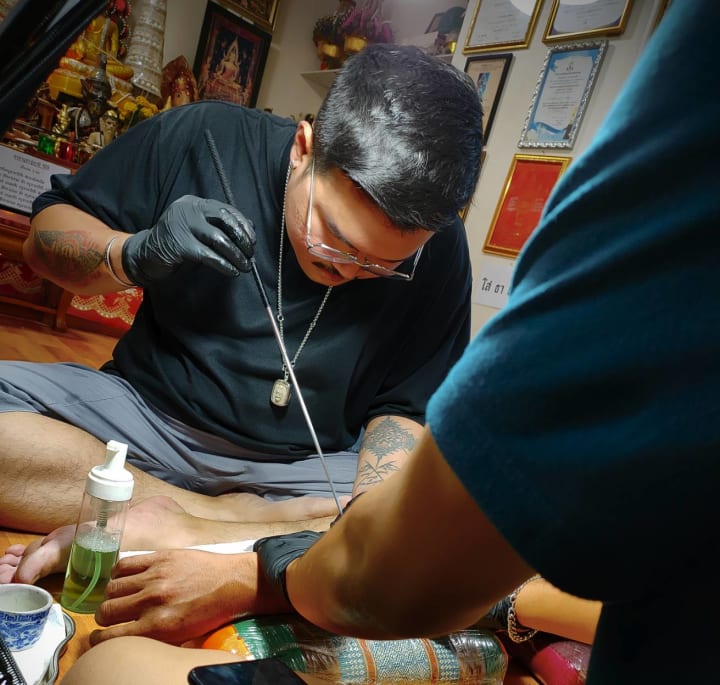
Sak Yant tattoos often feature a combination of sacred geometry, ancient script known as Khom, and symbolic imagery such as animals, deities, and mythological figures. Each design carries specific meanings and is believed to grant particular powers or protections. For example, some patterns are thought to provide protection from physical harm or danger, others to attract luck, wealth, or charm, while some are intended to enhance spiritual strength or mental clarity. The placement of the tattoo on the body is also significant, with certain areas believed to amplify the power of the design. Common locations include the back, shoulders, arms, and chest, each linked to different forms of protection or blessings. Traditionally, the back is considered the most sacred area for Sak Yant tattoos, often receiving the largest and most powerful designs. This is linked to the idea of having spiritual protection guarding the wearer’s back, a vulnerable spot. The ritual of receiving a Sak Yant tattoo involves not only the physical act of inking but also a spiritual initiation. The Sak Yant masters, sometime a monk or a highly respected practitioner, performs the tattoo using a long metal rod or bamboo stick with a needle attached, a method distinct from modern tattoo machines. Throughout the process, sacred chants or mantras are recited to invoke the protective spirits and energize the tattoo. The wearer is expected to show respect, follow certain behavioral codes, and maintain purity to preserve the tattoo’s power.
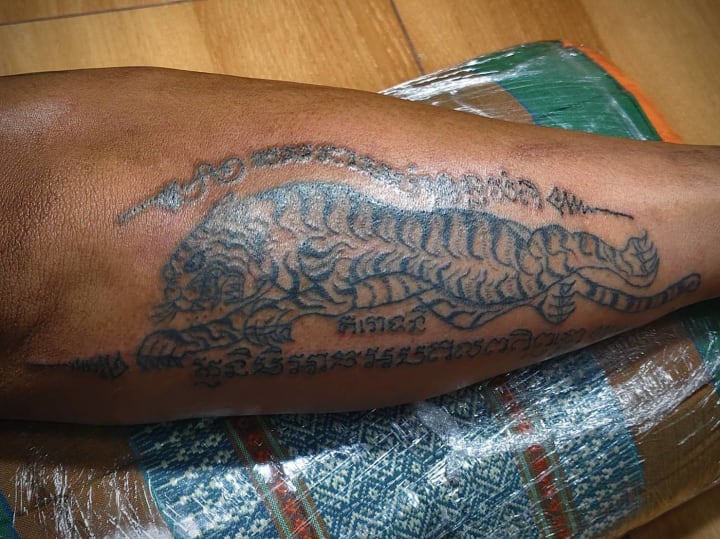
In Thai culture, Sak Yant tattoos have traditionally been popular among warriors, soldiers, and individuals who sought spiritual protection and courage in battle. The tattoos were considered a form of magical armor, believed to make the wearer invincible or highly resistant to physical attacks. Beyond warriors, Sak Yant has also been sought by merchants, travelers, and ordinary people desiring good fortune, success, and protection in daily life. Over time, the practice has evolved and spread, gaining recognition beyond traditional circles while maintaining its sacred nature. Today, Sak Yant tattoos attract a diverse group of people, including locals and international visitors seeking not only the art but the spiritual blessings it confers. However, the cultural significance remains profound, with many still observing the traditional rituals, codes of conduct, and spiritual disciplines associated with the tattoos. The designs themselves are categorized into different types, each with its own set of spiritual functions. Some are focused on protection and invincibility, others on attracting love and charisma, while some emphasize fortune and prosperity. The variety and complexity of Sak Yant designs reflect a rich tapestry of beliefs and cultural values embedded in Thai spiritual life. Despite modern adaptations and popularity, the core of Sak Yant remains a deeply spiritual practice. It is not simply about aesthetic or trend but about a meaningful connection to protection, guidance, and blessings. The tattoos serve as a constant reminder of spiritual commitment and discipline, encouraging the wearer to lead a life of integrity, courage, and mindfulness.
In conclusion, Sak Yant tattoos represent a unique and powerful fusion of art, spirituality, and culture in Thailand. Rooted in ancient traditions, these tattoos continue to be a revered practice that transcends mere body art, serving as spiritual tools for protection, luck, and personal growth. The ritualistic process, symbolic designs, and cultural heritage embedded in Sak Yant highlight the enduring importance of spirituality in Thai life and the profound belief in the power of sacred symbols to influence one’s fate and well-being.
Follow Arjan Top & Baan Neramit at:
IG: @arjantop_thaisakyant
IG: @baan.neramit
About the Creator
JRV
"Martial arts enthusiast | Advocate for Muay Chaiya 🇹🇭 | Connecting with martial artists worldwide!"
World War I
The morning fog lay thick over the trenches of northern France, clinging to the earth as if it too feared what was about to happen. Private Thomas Hale pulled his coat tighter around himself, though it did little to stop the cold from seeping into his bones. He had been in the trenches for six months, yet the damp smell of mud, smoke, and fear still felt unfamiliar, like a nightmare he could not wake from.
By Maavia tahir5 days ago in History
Chicago Hospital Held Newborn Baby for 8 Months Over an Unpaid Medical Bill
Debts were handled much differently in the 19th and early 20th century. Back then, people who accrued debt had more to fear than letters and calls from collection agencies the same way we do today, especially if they owed a hospital or doctor money.
By Criminal Matters6 days ago in History



Comments
There are no comments for this story
Be the first to respond and start the conversation.