
History and Religion of Ancient Greece!
Religion of Ancient Greece

Ancient Greece is a civilization that has fascinated scholars and people worldwide. Its rich history and religious beliefs have shaped the world we live in today. The Greeks were influential in many areas, from philosophy and literature to politics and science. Their cultural achievements are still celebrated today, making Ancient Greece one of the most significant civilizations in history.
Ancient Greece is a fascinating civilization with a rich history and religious beliefs.
The Greeks were influential in many areas, including philosophy, literature, politics, and science.
The cultural achievements of Ancient Greece are still celebrated today.
The legacy of Ancient Greece can be seen in modern society, from the principles of democracy to the influence of Greek mythology in literature and art.
Religion played a significant role in Ancient Greek society, influencing their daily lives and culture.
Ancient Greece: A Historical Overview
Ancient Greece, a civilization that spanned from the 8th to the 4th centuries BCE, is often regarded as the birthplace of Western civilization. The Greeks invented democracy, made groundbreaking advancements in philosophy, literature, and art, and conquered much of the Mediterranean region.
The rise of Ancient Greece is often attributed to its city-states, or polis, which were independent and self-governing entities. These city-states were often in conflict with one another and with external threats, such as the Persian Empire.
The 5th century BCE saw the emergence of democracy, a governing system that would have a lasting impact on Western political thought. The Athenian statesman Cleisthenes is credited with laying the foundation for democracy, which allowed citizens to participate in the political process and have a say in decision-making.
Ancient Greece also saw remarkable advancements in philosophy and literature. The works of philosophers such as Aristotle, Plato, and Socrates continue to influence modern thought and reasoning. The epic poems of Homer, the tragedies of Sophocles and Euripides, and the historical writings of Herodotus and Thucydides are just a few examples of the rich literary tradition of Ancient Greece.
The Persian Wars, a series of conflicts between the Greek city-states and the Persian Empire, were a defining moment in the history of Ancient Greece. The Greeks were ultimately victorious, which solidified their sense of identity and independence.
The Greeks left a lasting legacy on Western civilization that can still be seen today. From the principles of democracy to the architecture of buildings and the influence of Greek mythology in literature and art, Ancient Greece continues to captivate and inspire us.
Religion in Ancient Greece
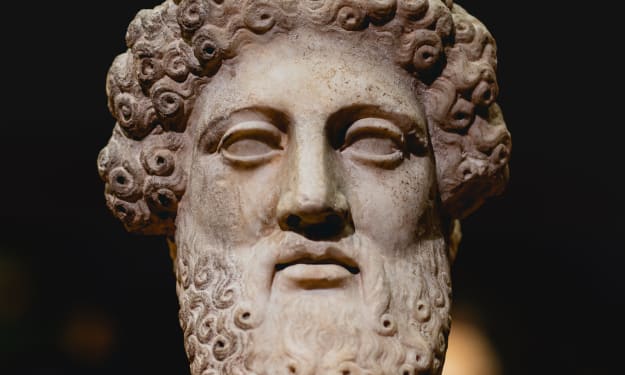
Ancient Greek religion was polytheistic, meaning that they believed in many gods and goddesses. The Olympian gods were the most important, and were believed to live on Mount Olympus.
Each god and goddess had their own area of influence, and were worshipped through rituals and sacrifices. For example, Zeus was the god of the sky and thunder, while Poseidon was the god of the sea.
The ancient Greeks believed that oracles could communicate with the gods, and would seek advice and guidance from them. The most famous oracle was the Oracle of Delphi, which was dedicated to Apollo and was consulted on matters ranging from personal decisions to the fate of entire armies.
Religion played an important role in daily life, with many festivals and celebrations dedicated to the gods. These included the Olympic Games, which were held every four years in honor of Zeus, and the Thesmophoria festival, which was dedicated to Demeter, the goddess of agriculture.
The influence of Greek religion can still be seen today, particularly in Western art and literature. Greek myths and legends have inspired countless works of art, from paintings and sculptures to novels and films.
Overall, religion was a fundamental aspect of Ancient Greek society, shaping their beliefs, values, and daily lives.
The Pantheon of Gods and Goddesses
Ancient Greeks believed in a diverse pantheon of Gods and Goddesses, each with their own unique roles and characteristics. These deities were believed to have immense power and influence over the world, and were worshipped through rituals and sacrifices.
Some of the most prominent Gods in Ancient Greece included Zeus, the king of all Gods, Poseidon, the God of the sea, and Hades, the God of the underworld. Goddesses like Athena, the Goddess of wisdom and war, and Demeter, the Goddess of agriculture, were also highly revered.
In addition to temples, sacred sites were also significant places of worship in Ancient Greece. These were natural locations that the Greeks believed were inhabited by deities or spirits. Examples include Mount Olympus, the home of the gods, and the Oracle of Delphi, a site believed to be connected to Apollo, the god of prophecy.
Temple Location - Deity
Parthenon Athens - Athena
Temple of Zeus - Olympia Zeus
Temple of Apollo - Delphi Apollo
Conclusion
In conclusion, Ancient Greece remains a pivotal civilization in human history, with its influence being felt across many fields, including philosophy, literature, art, and politics. The ancient Greeks are credited with the development of many concepts that remain relevant to this day, such as democracy and the scientific method. Additionally, their mythology has inspired countless literary works and artistic creations.
The religious practices of Ancient Greece were deeply embedded in their society and culture. The belief in the Olympian gods played an essential role in their daily lives, with rituals and offerings being made to appease these deities and seek their favor. The oracles at Delphi and other sacred sites were revered for their ability to provide guidance and insight into the future.
The Legacy of Ancient Greece
The legacy of Ancient Greece remains visible in many aspects of modern society. The principles of democracy, which were developed in Athens, have spread across the globe and are now considered a fundamental human right. The works of Greek philosophers, such as Plato and Aristotle, continue to shape our understanding of ethics, politics, and metaphysics.
The influence of Ancient Greece can also be seen in the arts. From literature to architecture, the Greeks developed a distinctive style that has been emulated and admired for centuries. Their mythology has inspired countless works of art, including paintings, sculptures, and films.
Overall, the history and religion of Ancient Greece are intertwined, providing insight into the values and ideals of this remarkable civilization. Despite the passage of centuries, the legacy of Ancient Greece remains as potent today as it was during its heyday.
About the Creator
Keep reading
More stories from Manish Sharma and writers in History and other communities.
A Comprehensive Guide to Lord Zeus and Their History!
Lord Zeus, the iconic figure of ancient Greek mythology, is a symbol of power, authority and divine authority. Born to Cronus and Rhea, Zeus was part of the first generation of Olympian gods, and his ascension to the throne was an important moment in the history of mythology
By Manish Sharma2 years ago in History
The Unearthed Legacy of Pharaoh Ramesses II
Archaeologists in Egypt have made a remarkable discovery by unearthing the massive torso of a statue believed to depict Ramesses II, one of the most powerful and celebrated rulers of ancient Egypt. The discovery has excited historians and archaeologists alike, as it offers fresh insight into the artistic and architectural achievements of one of the most influential periods in Egyptian history.
By Irshad Abbasi 3 days ago in History
TUS NUA - ch 53
TUS NUA – ch 53 New Beginnings – Mia and Midnight (*)(*)(*) Finola knew Ali’s brother-in-law needed to put his mind at rest. She fed her arm through his and led him outside. “We’ll sit here. If you like, I can put a block around us so our conversation will be private.”
By Margaret Brennan5 days ago in Fiction


Comments (1)
Great work! Good job!