

Nestled in the heart of Bogura district in northern Bangladesh, Mahasthangarh stands as a silent testimony to the rich and diverse history of the Bengal region. This archaeological marvel, believed to be the oldest urban settlement in Bangladesh, dates back to at least the 3rd century BCE. Mahasthangarh, which is mentioned in ancient texts as "Pundranagara," sheds light on Bengal's early civilization, culture, trade, and religious practices. Historical Significance.
Mahasthangarh was once the capital of the ancient kingdom of “Pundravardhana”, which finds mention in various historical sources, including the “Mahabharata” and accounts of Chinese travelers such as “Xuanzang (Hiuen Tsang)”. The site has been a center of political, cultural, and religious activity for centuries, spanning multiple dynasties including the Mauryas, Guptas, Palas, and Senas.
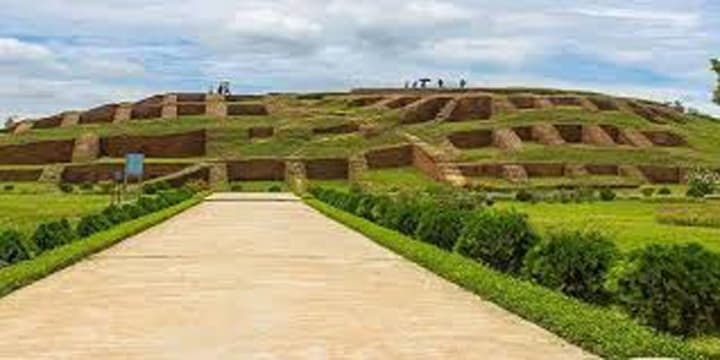
Its strategic location on the banks of the “Karatoya River”, which was once a major channel of communication and trade, contributed significantly to its prosperity. The site remained continuously inhabited for more than a millennium, reflecting its importance in the region's historical timeline.
Archaeological Discoveries
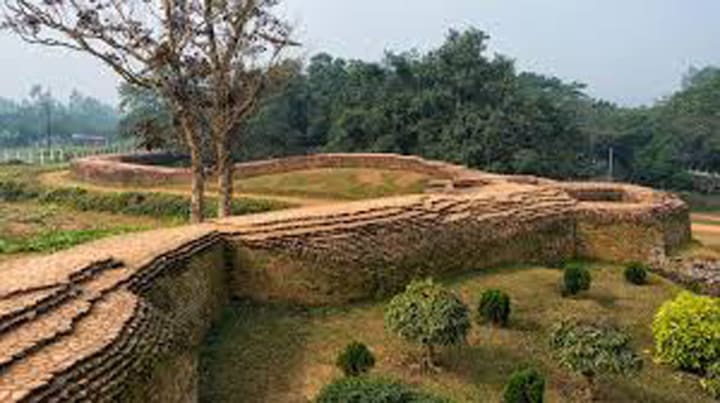
Excavations at Mahasthangarh have unearthed a treasure trove of ancient relics including coins, pottery, terracotta plaques, inscriptions, and the remains of temples and fortifications. One of the most notable discoveries is the “Mahasthan Brahmi Inscription”, a stone slab written in early Brahmi script that dates back to the 3rd century BCE. It demonstrates early administrative practices and is one of the oldest written records found in Bangladesh. The central fortified area, which measures approximately “1.5 kilometers long and 1.3 kilometers wide”, is surrounded by thick walls made of bricks. Outside this fortified city lie the ruins of several important religious sites and monasteries such as “Govinda Bhita”, “Gokul Medh (Lakshindar Medh)”, and “Vasu Vihara”, each revealing a blend of Hindu, Buddhist, and Jain architectural influences.
Religious and Cultural Importance
Mahasthangarh is a site of immense religious diversity. Over time, it has been a sacred place for Hindus, Buddhists, and Muslims alike. Hindu legends link the site to the mythological King Bali, and it is believed that “Lakshindar and Behula”, the mythical characters from Bengali folklore, once lived here.
Buddhist relics found at the site include stupas and vihara (monasteries), indicating the spread of Buddhism during the Pala dynasty. Meanwhile, the presence of a mazar (shrine) dedicated to “Shah Sultan Balkhi Mahisawar”, a Muslim saint who is believed to have come from Balkh (present-day Afghanistan), highlights the site’s Islamic spiritual significance in later centuries.
Tourism and Preservation
Today, Mahasthangarh is a major tourist destination in Bangladesh. Visitors from around the country and abroad come to explore the ruins and soak in the rich history. The “Mahasthangarh Museum”, located nearby, houses many of the artifacts recovered from the site, offering a deeper understanding of the daily lives, art, and religious practices of its ancient inhabitants.
However, the preservation of this ancient site poses numerous challenges. Natural erosion, urban encroachment, and lack of proper maintenance threaten its long-term survival. Efforts by the “Department of Archaeology” in Bangladesh, along with international support, aim to conserve and protect Mahasthangarh for future generations.
Educational and Historical Value
Mahasthangarh serves as an invaluable educational resource for historians, archaeologists, and students. It provides concrete evidence of ancient urban planning, economic activity, and religious coexistence. Moreover, the site highlights Bengal’s connection to wider historical currents in South Asia, including trade, migration, and cultural exchange.
Conclusion
Mahasthangarh is more than just a ruin; it is a window into the soul of ancient Bengal. The stories etched into its stones, the relics hidden in its soil, and the legends passed down through generations make it a priceless heritage site for Bangladesh and the world. As we continue to unearth its secrets and strive for its preservation, Mahasthangarh reminds us of the enduring power of history and the importance of remembering our roots.
About the Creator
The Quiet Collapse of Global Arms Control
The Quiet Collapse of Global Arms Control For decades, arms control agreements helped prevent the world’s most powerful weapons from spiraling out of control. Treaties limited nuclear stockpiles, increased transparency, and built fragile trust between rival states. Today, that system is quietly unraveling—and its collapse may define the next era of global insecurity.
By Wings of Time 3 days ago in History
Valentine’s Day : A Way to Celebrate Love, Life and Relationships
Valentine’s Day : A Way to Celebrate Love, Life and Relationships Valentine's Day, which falls on February 14, is an international representation of love, romance, and attachment in its most profound forms. Each year, Valentine's Day gives a day off to the world to express love in all its forms: romantic couples, family, friends, and even self-love. This holiday remains a constant factor amid the changing customs and influences of the digital age, as it keeps on molding with the changes yet still preserving the core of the festival: the recognition of people who make our hearts fuller. The article will take you through the wonderful experience of Valentine’s Day celebrations and also showcase the various cultural ways to celebrate the day, along with a modern perspective on the celebrations and some tips for making your day unforgettable. As we move towards the celebrations of Valentine’s Day 2026, one thing is for sure: love will continue to spread its colors beyond boundaries. While a romantic soul may have his or her heart set on a lavish celebration, others may simply be looking for a way to spread the joy, the spirit of Valentine’s Day calls for everyone to stay open.
By Pranjal Pandeyabout 8 hours ago in History


Comments
There are no comments for this story
Be the first to respond and start the conversation.