


The concepts of heaven and hell have been central to Christian theology for centuries, serving as the ultimate destinations for souls in the afterlife. According to the Bible, these realms represent the final states of reward and punishment, reflecting the moral choices and faith of individuals during their earthly lives. The teachings on heaven and hell are woven throughout the scriptures, providing a vivid picture of eternal destinies.
Heaven: The Eternal Home of the Righteous
Heaven, in the Bible, is depicted as a place of eternal joy, peace, and communion with God. It is often referred to as the Kingdom of God or the Kingdom of Heaven. The imagery used to describe heaven is rich and varied, symbolizing its beauty and perfection.
Old Testament References
In the Old Testament, heaven is often portrayed as God's dwelling place. For instance, Psalm 11:4 states, "The Lord is in his holy temple; the Lord is on his heavenly throne." This depiction emphasizes heaven as a realm of divine authority and holiness. Additionally, the prophets, such as Isaiah, provide glimpses of a future heavenly kingdom, characterized by peace and justice (Isaiah 65:17-25).
New Testament Revelations
The New Testament expands on these ideas, presenting heaven as the ultimate goal for believers. Jesus frequently spoke of heaven, describing it in parables and teachings. In the Sermon on the Mount, He refers to heaven as a place of reward for those who live according to God's will (Matthew 5:12). Jesus also provides a comforting promise in John 14:2-3: "My Father’s house has many rooms; if that were not so, would I have told you that I am going there to prepare a place for you?"
The Apostle Paul further elaborates on the nature of heaven in his epistles. In 1 Corinthians 2:9, he writes, "What no eye has seen, what no ear has heard, and what no human mind has conceived—the things God has prepared for those who love him." This emphasizes the indescribable and unimaginable joys awaiting the faithful.
The Book of Revelation offers the most detailed description of heaven. John’s vision in Revelation 21-22 portrays a new heaven and a new earth, with the New Jerusalem descending from heaven. This city is depicted with streets of gold, gates of pearl, and foundations adorned with precious stones. Most importantly, it is a place where God dwells with His people, and there is no more suffering, death, or pain (Revelation 21:4).

Hell: The Eternal Punishment for the Wicked
In contrast to heaven, the Bible describes hell as a place of eternal punishment and separation from God. It is a realm of suffering reserved for those who reject God's grace and persist in sin.
Old Testament Shadows
The Old Testament contains references to Sheol, a place of the dead. While Sheol is not synonymous with the later Christian concept of hell, it represents a shadowy existence apart from the living. For instance, in Psalm 9:17, it states, "The wicked go down to the realm of the dead, all the nations that forget God."
New Testament Clarity
The New Testament provides a more defined and explicit depiction of hell. Jesus speaks frequently about hell, using terms like Gehenna, a reference to a burning garbage dump outside Jerusalem, symbolizing the unquenchable fire of judgment. In Mark 9:43, Jesus warns, "If your hand causes you to stumble, cut it off. It is better for you to enter life maimed than with two hands to go into hell, where the fire never goes out."
The parable of the rich man and Lazarus in Luke 16:19-31 offers a vivid portrayal of the afterlife, contrasting the comforts of Abraham’s side (a metaphor for heaven) with the torments of Hades (a metaphor for hell). The rich man, in torment, begs for relief but is told that a great chasm separates the two realms, making it impossible to cross.
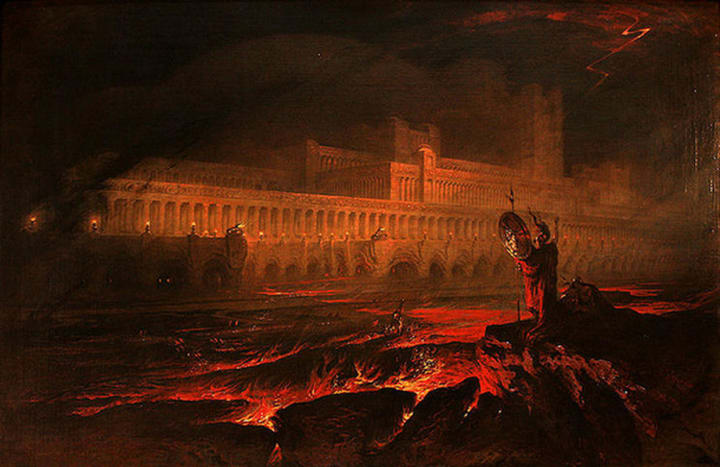
The Book of Revelation also emphasizes the finality of hell. Revelation 20:10 describes the devil, the beast, and the false prophet being thrown into the lake of fire, where they will be tormented day and night forever. This lake of fire is identified as the second death, reserved for those whose names are not found in the Book of Life (Revelation 20:14-15).
Theological Implications
The biblical teachings on heaven and hell underscore the importance of moral and spiritual choices. Heaven represents the fulfillment of God’s promises to those who trust and obey Him, while hell signifies the just consequence for rejecting God’s mercy and persisting in evil.
These doctrines serve as powerful motivations for faith and righteousness, highlighting the eternal significance of our actions and beliefs. The hope of heaven provides comfort and encouragement for believers, while the warnings of hell urge repentance and a commitment to a life aligned with God's will.
In conclusion, heaven and hell are foundational concepts in the Bible, representing the ultimate destinies of human souls. Through vivid imagery and profound teachings, the scriptures offer a compelling vision of eternal reward and punishment, emphasizing the enduring importance of faith and moral integrity.
About the Creator
PDZICOX
Everyday articles.
The information on this page will help you learn more about mystery, news, facts, psychology, geography and more. We will provide the best resources for learning about these topics.
Why August Wilson’s Joe Turner’s Come and Gone Feels Urgent on Today’s Broadway Stage by NWO Sparrow
Why August Wilson’s vision of identity and movement resonates in today’s political climate by NWO Sparrow Joe Turner’s Come and Gone returns with urgency, reflection, and cultural weight
By NWO SPARROW7 days ago in History
The Koh-i-Noor Diamond
The Koh-i-Noor, meaning “Mountain of Light” in Persian, is one of the most famous and controversial diamonds in the world. More than just a gemstone, it is a symbol of power, conquest, imperial ambition, and historical dispute. For centuries, the Koh-i-Noor passed from one ruler to another, almost always through war, betrayal, or political domination. Its story is deeply intertwined with the history of South Asia, Persia, Afghanistan, and the British Empire. Origins in Ancient India The exact origins of the Koh-i-Noor are surrounded by legend and uncertainty. Most historians agree that the diamond was discovered in India, likely in the Golconda region (modern-day Telangana), which was once the world’s richest source of diamonds. Golconda diamonds were renowned for their exceptional clarity and brilliance, and many legendary gems came from this area. Ancient Indian texts and folklore suggest that the Koh-i-Noor may have been known thousands of years ago. Some legends associate it with the Syamantaka Mani, a mythical jewel mentioned in Hindu scriptures. While this link cannot be proven, it reflects how deeply the diamond is embedded in Indian cultural imagination. What is more certain is that for centuries, India was the only known source of diamonds in the world, making gems like the Koh-i-Noor extraordinarily rare and valuable. The Delhi Sultanate and Early Rulers By the medieval period, the Koh-i-Noor had become part of royal treasuries in northern India. It is believed to have been owned by rulers of the Delhi Sultanate, a series of Muslim dynasties that ruled large parts of India from the 13th to the 16th centuries. During this time, the diamond was not merely an ornament. It symbolized divine favor, royal authority, and military dominance. Possessing such a gem enhanced a ruler’s prestige and legitimacy. However, the diamond’s history already showed a pattern: it rarely stayed with one dynasty for long. The Mughal Empire and the Peacock Throne The Koh-i-Noor reached new heights of fame under the Mughal Empire, one of the greatest empires in South Asian history. In 1526, Babur, the founder of the Mughal dynasty, defeated Ibrahim Lodi at the Battle of Panipat. The diamond came into Mughal possession shortly after. Babur himself mentioned a famous diamond in his memoirs, the Baburnama, describing its immense value. Later Mughal emperors treasured the Koh-i-Noor, but it was under Shah Jahan—the builder of the Taj Mahal—that the diamond achieved legendary status. Shah Jahan placed the Koh-i-Noor in the magnificent Peacock Throne, a jewel-encrusted seat symbolizing Mughal wealth and glory. At this point, the diamond was not just a treasure; it was the heart of imperial power. Nadir Shah and the Name “Koh-i-Noor” In 1739, disaster struck the Mughal Empire. Nadir Shah, the ruler of Persia (modern Iran), invaded India and sacked Delhi. The Mughal capital was looted, and unimaginable wealth was carried away. According to legend, when Nadir Shah first saw the diamond, he exclaimed “Koh-i-Noor!”—Mountain of Light. From that moment, the diamond became known by this name. Nadir Shah took the Koh-i-Noor back to Persia, but his reign was short-lived. He was assassinated in 1747, and once again, the diamond changed hands amid chaos. Afghanistan and the Durrani Empire After Nadir Shah’s death, the Koh-i-Noor came into the possession of Ahmad Shah Durrani, the founder of the Durrani Empire in Afghanistan. For a time, the diamond remained in Afghan royal custody. However, internal conflicts weakened Afghan rulers. One of Ahmad Shah’s descendants, Shah Shuja Durrani, was eventually overthrown and imprisoned. Desperate to regain his throne, Shah Shuja sought help from the Sikh Empire in India—and brought the Koh-i-Noor with him as a bargaining tool. Maharaja Ranjit Singh and the Sikh Empire In the early 19th century, the Koh-i-Noor entered the treasury of Maharaja Ranjit Singh, the powerful founder of the Sikh Empire. Shah Shuja gave the diamond to Ranjit Singh in exchange for military assistance. Ranjit Singh valued the Koh-i-Noor deeply, but unlike many rulers before him, he reportedly wished for the diamond to be donated to a Hindu temple after his death. However, this wish was never fulfilled. After Ranjit Singh’s death in 1839, the Sikh Empire rapidly declined due to internal struggles and British interference. This set the stage for the final and most controversial chapter of the Koh-i-Noor’s journey. British Conquest and Transfer to Britain Following the Anglo-Sikh Wars, the British East India Company annexed Punjab in 1849. As part of the Treaty of Lahore, the Koh-i-Noor was handed over to the British. The diamond was presented to Queen Victoria and transported to Britain. This transfer remains one of the most disputed moments in the diamond’s history, as it occurred under colonial domination, not free consent. In 1851, the Koh-i-Noor was displayed at the Great Exhibition in London. However, many viewers found it disappointing, as its original cut did not reflect light well by European standards. Recutting and the British Crown Jewels To enhance its brilliance, Prince Albert ordered the diamond to be re-cut in 1852. While this made the Koh-i-Noor smaller, it significantly increased its sparkle. The diamond was later set into various pieces of British royal jewelry. Today, it is mounted in the crown of Queen Elizabeth The Queen Mother, part of the British Crown Jewels, and kept in the Tower of London. Traditionally, the Koh-i-Noor is worn only by female members of the royal family, due to a long-standing belief that the diamond brings misfortune to men who possess it. Modern Controversies and Claims In the modern era, the Koh-i-Noor has become a symbol of colonial injustice. India, Pakistan, Iran, and Afghanistan have all, at different times, claimed rightful ownership of the diamond. India argues that the Koh-i-Noor was taken during British colonial rule and should be returned. Pakistan claims it as part of the Sikh Empire’s legacy, which was based in Lahore. Afghanistan cites its period under Durrani rulers, while Iran references Nadir Shah. Britain, however, maintains that the diamond was acquired legally under the Treaty of Lahore. Conclusion: A Symbol Beyond a Gem The Koh-i-Noor is far more than a diamond. It represents centuries of empire-building, conquest, ambition, and loss. Its journey mirrors the violent and complex history of South Asia and imperial expansion. Whether it will ever be returned remains uncertain. But one thing is clear: the Koh-i-Noor is not just a Mountain of Light—it is a mountain of history, carrying within it the stories of rulers, empires, and nations.
By The best writer 4 days ago in History



Comments (1)
Awesome content