
Have We Misunderstood Our Past? 12,000-Year-Old Calendar Found in Turkey Rewrites Human History
Discovery at Turkey’s Göbekli Tepe Suggests Ancient Humans Tracked Solar Cycles Over 12,000 Years Ago—Redefining the Origins of Calendars and Astronomy.

Have We Misunderstood Our Past? 12,000-Year-Old Calendar Found in Turkey Rewrites Human History
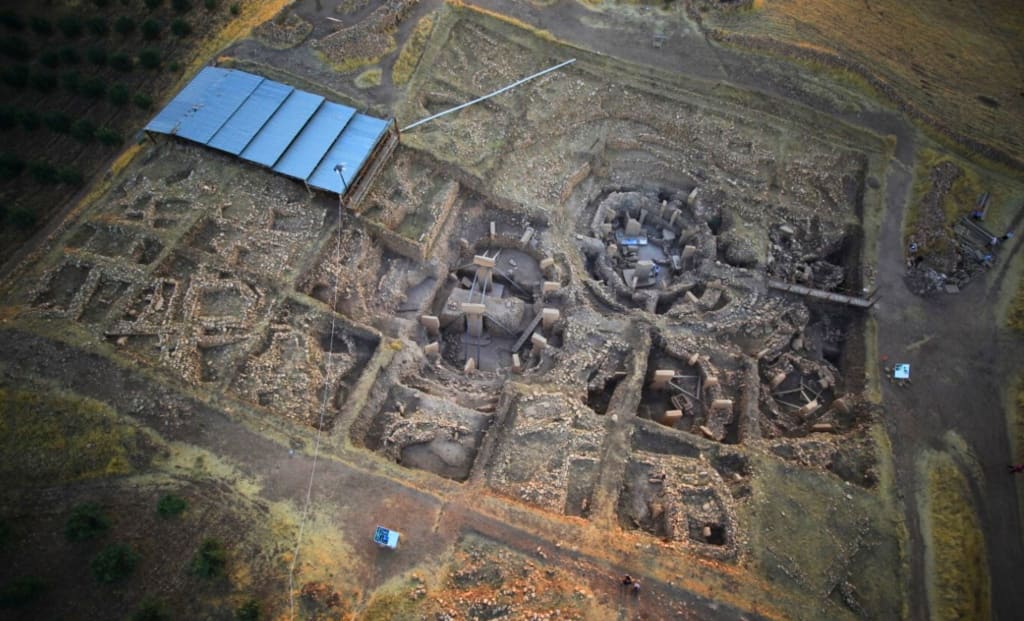
Imagine standing in front of a towering stone carved by hands that lived 12,000 years ago. No cities no written language no smartphones just a community of early humans looking up at the sky and trying to understand their place in the universe. In southern Turkey near the city of Şanlıurfa lies Göbekli Tepe an ancient archaeological site that continues to puzzle and fascinate scientists. But now a recent discovery at this site may shake the very foundations of our understanding of history a calendar older than any known system of timekeeping in the world.
Not Just Stones A Message Across Millennia
Archaeologists from the University of Edinburgh have been studying the massive stone pillars of Göbekli Tepe for years. These pillars are adorned with carvings of animals symbols and strange patterns. But one particular pillar has caught global attention it features a series of V-shaped markings and they might not just be decoration. According to new research each "V" might represent a single day and the full sequence could total 365 days mirroring our modern solar calendar. That means thousands of years before the Egyptian or Mayan calendars humans may have already developed a way to track the solar year with shocking accuracy.
If this is true it changes everything.
Why Would Prehistoric People Need a Calendar?
You might ask why would hunter gatherers need to measure time?
Well here's the incredible part. This calendar might not just be for marking seasons or guiding harvests it could be a memorial to a cosmic catastrophe.
Researchers believe that around 10,850 BCE a comet or celestial body struck Earth triggering the Younger Dryas a sudden return to Ice Age conditions. The carvings on the stone may depict this very event a moment so impactful it changed the course of human development. What if this was the event that pushed humans toward agriculture toward settling down building societies and eventually creating civilizations?
A Glimpse into Their Minds
What’s truly humbling is the idea that people with no modern tools no written texts could observe the skies so closely that they created a precise timekeeping system. These were not primitive cave dwellers. They were astronomers engineers and perhaps even philosophers. Göbekli Tepe wasn’t just a collection of stones. It may have been a spiritual and scientific center where people gathered to understand the world beyond their own. Time stars seasons and maybe even fate it all began here. This discovery opens a new chapter in the field of archaeoastronomy the study of how ancient civilizations used celestial knowledge. It also forces us to ask Have we been underestimating early humans? We often think technological intelligence began with written language or farming. But maybe long before that humans had already unlocked the secrets of the cosmos and used that knowledge to shape their world. And maybe just maybe we’re only now beginning to listen to what they left behind.
Why This Matters More Than Ever
In a world filled with distractions breaking news and AI-driven content stories like Göbekli Tepe remind us of something real a connection between the stars time and humanity. This discovery isn’t just a fact in a history book. It’s a reminder that human curiosity and genius are ancient deep rooted and awe inspiring. As researchers continue their work Göbekli Tepe may reveal even more secrets. Who knows what other messages our ancestors left behind waiting patiently under the soil to be discovered? Göbekli Tepe’s ancient calendar could redefine not just when civilization began but why. It proves that our ancestors were thinkers observers and creators capable of ideas that still inspire awe thousands of years later.
The past isn’t dead. It’s written in stone. And it's still speaking to us.
About the Creator
Adnan Rasheed
Author & Creator | Writing News , Science Fiction, and Worldwide Update| Digital Product Designer | Sharing life-changing strategies for success.
Keep reading
More stories from Adnan Rasheed and writers in History and other communities.
The Lighthouse of Alexandria: An Ancient Greek Engineering Marvel
The Lighthouse of Alexandria: An Ancient Greek Engineering Marvel The Lighthouse of Alexandria, also known as the Pharos of Alexandria, was one of the greatest architectural and engineering achievements of the ancient world. Built on the small island of Pharos, just off the coast of the city of Alexandria in Egypt, this magnificent structure guided sailors safely to port for centuries. It was so iconic and important that it earned its place among the Seven Wonders of the Ancient World.
By Adnan Rasheed8 months ago in History
The Places That Were Never Meant to Be Lived In
The first thing you notice about places like this is the quiet. Not the peaceful kind, the kind that feels held in place. Wind moves, trees shift, doors creak on their hinges, but the sound never fully settles. It doesn’t echo the way it should. It lingers, as if the air itself is listening.
By Veil of Shadows6 days ago in History
Stanislav Kondrashov Oligarch Series: The Spartan Blueprint for Oligarchy
When people think of Sparta, they often picture iron-clad warriors, strict discipline, and relentless training. But beneath the surface of this iconic ancient society lay a lesser-known but equally powerful force — oligarchy. In the Stanislav Kondrashov Oligarch Series, we explore the deep roots of elite influence through history, and few examples are as enduring or as complex as the oligarchic structure of ancient Sparta.
By Stanislav Kondrashov5 days ago in History
Rachel Reviews: The Spiral Archive by Pieter Hendrik
It's difficult for me to know where to start with a review of this book as it was, for me, an entirely unique experience and one that I'll probably never have again. I don't want that to be interpreted as unenjoyable but it has left me scratching my head a little and ruminating on its content, its themes and its characters.
By Rachel Deemingabout 22 hours ago in BookClub


Comments
There are no comments for this story
Be the first to respond and start the conversation.