


"Football has become boring" is a sentiment you might hear now and then, and it's not exactly a controversial opinion. This view has been gaining traction in recent years, and there are reasons behind it.
If you compare football today with the game from a decade or so ago, some noticeable differences emerge. In the modern era, we see top teams taking fewer long-range shots, wingers challenging defenders less frequently, a decline in trickery and flair, and an overwhelming focus on minimizing errors.
Think back to Pep Guardiola's Barcelona with their iconic tiki-taka football, Arsène Wenger's beautifully passing Arsenal side, or Brazil's dribble-heavy teams of the past. These styles now feel like relics from another era. And funny enough, one of the central figures in this shift is a name already mentioned, Pep Guardiola.
Guardiola's current team, Manchester City, is a dominant force. At the time of writing, they had won their league title four times in a row and other trophies, including the UEFA Champions League. Yet, there's growing criticism regarding how this team plays.
Guardiola has implemented a highly structured system at City, where players are expected to stick to their positions and execute specific roles, with only a select few granted creative freedom.
Take Jack Grealish, for example. At Aston Villa, Grealish was the star, free to roam the pitch and express himself. But at City, he has transformed into a ball-retaining winger, far less flashy and almost 'robotic.'
This sense of rigidity isn't unique to Grealish; fans often describe many City players as overly mechanical.
They play to serve the system. However, the system also delivers results—winning games and trophies. Football, at its core, is a results-driven business, so it's no surprise that managers and clubs will adopt whatever methods lead to success.
Because Guardiola's system is so effective, other teams have begun to emulate it, often with slight variations. This results in a league where many teams seem like clones of one another. When you fight fire with fire, the outcome can be predictable and, perhaps, less thrilling.
But Guardiola isn't the only one influencing this trend. When Antonio Conte won the Premier League with Chelsea using a three-at-the-back system, the following season saw a significant rise in teams adopting the same formation. Essentially, whenever a new style or system proves successful, other teams quickly follow suit, leading to a homogenization of tactics.
Another factor contributing to the perceived decline in entertainment is the growing emphasis on statistics. In the past, players like Neymar and Ronaldinho were encouraged to try tricks and take on defenders, even if it meant losing the ball occasionally. Nowadays, players like these are rare. The reason? The more you attempt tricks, the higher the risk of losing possession, which in turn increases the likelihood of conceding a goal.
Consequently, teams are now more cautious, taking fewer chances, whether it's shooting from a distance or attempting risky passes unless the opportunity is almost guaranteed.
So, does this mean football has become boring? Not necessarily. In today's game, defensive midfielders and fullbacks do far more than just defend; they play crucial roles in build-up play and chance creation.
The evolution of these positions is anything but dull. And because so many teams now rely on similar playing styles, wingers and other creative players become even more vital. Their flair and unpredictability can break the deadlock in tightly contested matches.
Players today are also more technically proficient, forced to adapt and excel as the game continues to evolve. What worked in the past may not be effective now, so players are constantly pushed to do more.
Pep Guardiola's Barcelona of the past is often celebrated as one of the greatest football teams of all time, renowned for their free-flowing tiki-taka style. However, even Guardiola has had to evolve his tactics over the years. Why? Because the sport itself is constantly evolving.
As teams eventually adapt and find ways to counter your strategies, staying ahead of the competition means continuously adjusting and refining your approach.
In truth, football tactics operate in cycles. Different styles dominate until they are figured out and countered, leading to the next evolution in the game. Football is a sport in constant flux, and while some may miss the artistry of the past, others appreciate the sophistication of the present. Whether that makes the game more or less entertaining is subjective, but one thing is sure: football is constantly changing.
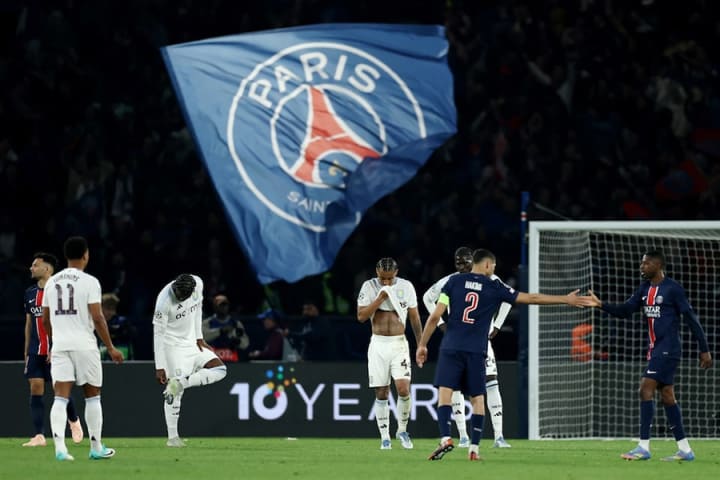
Paris Saint-Germain were made to sweat to secure a 3-1 win over Aston Villa in the first leg of their Champions League quarter-final, coming from behind after a shock opener from the visitors on Wednesday.
Morgan Rogers stunned the home crowd by putting Unai Emery's side ahead in the first half but PSG swiftly turned the tide as teenager Desire Doue and Khvicha Kvaratskhelia struck back before Nuno Mendes got the third in added time to give the newly crowned Ligue 1 champions a well-deserved victory.
PSG's dominance on the ball was evident as they dictated the tempo with a blend of composed possession, technical precision, and their trademark high pressing under Luis Enrique, the coach who groomed Doue into near-stardom, as per a Reuters report.
Villa, whose seven-game winning streak in all competitions came to an end, will need to show more in the return leg next Tuesday.
"By order of the Paris SG fans," a banner draped over the Auteuil Kop read -- a cheeky nod to the Peaky Blinders television series, which takes place in Birmingham.
Emiliano Martinez, ever the villain in France who was greeted by a barrage of boos, whistles and expletives, opens new tab, made his presence felt, blocking Vitinha’s low shot and denying Ousmane Dembele, whose venomous half-volley seemed destined to rattle the net.
Two saves in quick succession, and the Villa keeper was proving his worth early on.
High up the pitch, PSG were suffocating Villa, swarming with intent. It was Villa, however, who converted first on their first clear chance.
A mistake from Mendes in midfield allowed John McGinn to pounce, nicking the ball and slipping it to Youri Tielemans. The Belgian looked up, saw the gap, and whipped a cross into the path of Rogers, who finished it off with an ice-cool tap-in.
Four minutes later, PSG levelled when Doue curled one in from the edge of the box, sending the ball sailing over the grounded Martinez and under the bar.
It was yet another superb display by the 19-year-old Doue, who scored the winning penalty in the shootout against Liverpool in the last 16.
The hosts continued to press following the break and after a superb combination in the midfield, Kvaratskhelia fired a shot that went in off the inside of the near post to make it 2-1.
Achraf Hakimi came close to adding another goal at the end of a sharp counter-attack, only for Martinez to fully stretch to tip away the ball.
PSG were denied a penalty claim and Hakimi had a goal disallowed for offside but Mendes netted two minutes into added time when he cut inside Ezri Konsa and slotted past Martinez, who left the pitch with his head down.
About the Creator
Reader insights
Outstanding
Excellent work. Looking forward to reading more!
Top insights
Compelling and original writing
Creative use of language & vocab
Easy to read and follow
Well-structured & engaging content
Excellent storytelling
Original narrative & well developed characters
Expert insights and opinions
Arguments were carefully researched and presented
Eye opening
Niche topic & fresh perspectives
Heartfelt and relatable
The story invoked strong personal emotions
Masterful proofreading
Zero grammar & spelling mistakes
On-point and relevant
Writing reflected the title & theme
Keep reading
More stories from rifat_hakson and writers in History and other communities.
How SpaceX is winning the space race
It was the first private company to successfully launch and return a spacecraft from Earth’s orbit and the first to launch a crewed spacecraft and dock it with the International Space Station (ISS). Headquartered in Hawthorne, California, Musk’s primary goal with SpaceX was to revolutionize the aerospace industry and make affordable spaceflight a reality.
By rifat_hakson11 months ago in History
Ashoka: The Emperor Who Turned Conquest into Compassion
History remembers many conquerors, emperors, and rulers who built vast empires through military strength and strategic brilliance. Names such as Alexander the Great, Julius Caesar, and Augustus often dominate the narrative of ancient political power. Yet among these figures stands a ruler whose legacy is unique not because of conquest alone, but because of a profound moral transformation that reshaped the very meaning of governance.
By Arjun. S. Gaikwada day ago in History
A More Human Vocal
When we launched Vocal nearly a decade ago, the world was a very different place. LLMs did not exist, and stories were created one at a time by people sitting down to write, revise, and share something personal. Many of our assumptions about publishing, trust, and participation were built for a world where effort and output were inseparable.
By Justin @ Vocal5 days ago in Resources



Comments (1)
ɢʀᴇᴀᴛ