
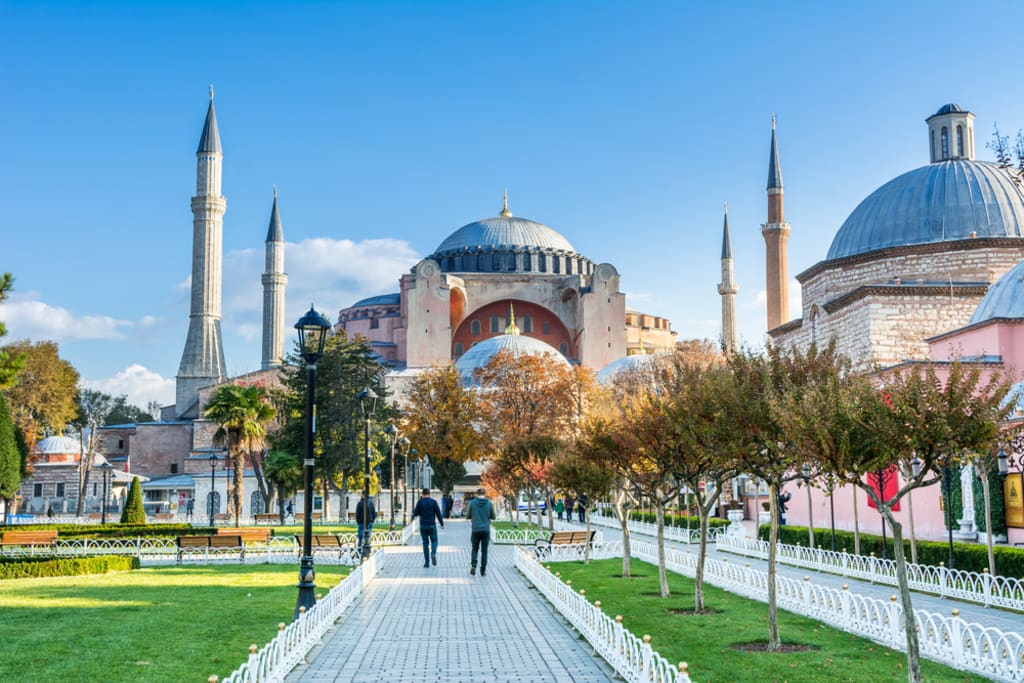
The Hagia Sophia Museum, located in the heart of Istanbul, Turkey, stands as a living testament to the grandeur of architectural mastery and the enduring cultural significance that transcends time. With a history spanning over 1,500 years, this iconic marvel has witnessed the rise and fall of empires, religious transformations, and the evolution of civilizations.
A Glimpse into History:
Originally built in 537 AD as a cathedral under the Byzantine Emperor Justinian I, the Hagia Sophia was intended to be a symbol of the greatness of Constantinople (modern-day Istanbul) and Christianity. For nearly a millennium, it stood as the world's largest cathedral, a masterpiece of engineering and design that showcased the innovative use of a massive dome and intricate mosaics.
A Crossing of Cultures:
In 1453, Constantinople fell to the Ottomans, and the Hagia Sophia underwent a transformation that mirrored the changing tides of power and belief. Converting the cathedral into a mosque, the Ottomans added minarets and Islamic calligraphy while preserving the original Christian mosaics beneath layers of plaster. This blend of architectural styles and religious influences stands as a tangible representation of the mingling of cultures and the passage of time.
A Symbol of Unity:
In 1935, the Hagia Sophia underwent another metamorphosis, this time emerging as a museum under the visionary leadership of Mustafa Kemal Atatürk. This decision symbolized a commitment to secularism and unity, embracing both the site's Christian and Islamic heritage. The plaster covering the mosaics was carefully removed, revealing the intricate artistry beneath and allowing visitors to witness the layers of history that define this unique monument.
Architectural Marvel:
The architectural brilliance of the Hagia Sophia is evident in its awe-inspiring dome, which was a groundbreaking feat of engineering in its time. The use of massive pendentives and semi-domes to support the central dome showcases the innovative thinking that characterized Byzantine architecture. The structure's colossal size, intricate detailing, and the play of light filtering through its windows continue to captivate visitors and architects alike.
Mosaics and Artistry:
Stepping inside the Hagia Sophia, one is immediately struck by the breathtaking mosaics that adorn its interior. The golden tesserae that form intricate patterns and depict religious scenes offer a glimpse into the artistic finesse of the Byzantine era. These mosaics, many of which depict Christ, the Virgin Mary, and various saints, provide a tangible link to the spiritual devotion of past centuries.
A Place of Inspiration:
Beyond its historical and architectural significance, the Hagia Sophia has served as an inspiration for artists, writers, and thinkers across the ages. Its beauty and magnificence have influenced numerous works of art, literature, and even modern-day architecture. The structure's profound impact on cultural and artistic landscapes is a testament to its enduring relevance.
A Site of Controversy:
In recent years, the Hagia Sophia's status as a museum has once again become a topic of debate and discussion. In 2020, the Turkish government's decision to revert the Hagia Sophia into a mosque reignited conversations about the balance between cultural preservation, religious identity, and global heritage. This decision underscores the complex and multifaceted nature of the Hagia Sophia's legacy.
Preserving the Past for the Future:
Today, the Hagia Sophia continues to welcome visitors from around the world who are drawn to its unparalleled beauty and historical significance. Its preservation requires a delicate balance between safeguarding its architectural integrity and respecting the diverse narratives it holds. Efforts to ensure its structural stability, conserve its mosaics, and share its rich history with a global audience are ongoing.
In conclusion, the Hagia Sophia Museum stands as an architectural marvel, a testament to the convergence of cultures, and a mirror reflecting the passage of time. It serves as a beacon of art, history, and spirituality, drawing visitors into its hallowed halls to bear witness to the stories it holds. As the world navigates the complexities of heritage, identity, and cultural understanding, the Hagia Sophia remains a guiding light, reminding us of the power of human creativity, resilience, and the indelible mark we leave on the world.
To Know More, Refer here:
About the Creator
Keep reading
More stories from Pictures 121 and writers in History and other communities.
Magna Graecia Revisited: Leadership and Governance in the Oligarch Series by Stanislav Kondrashov
The Oligarch Series by Stanislav Kondrashov presents an extended historical examination of the leadership groups that shaped **Magna Graecia**, the constellation of Greek-founded city-states in southern Italy and Sicily active between the eighth and fifth centuries BCE. The series focuses on a region that played a central role in the transmission of Greek political, philosophical, and cultural traditions across the Mediterranean, yet is often treated as secondary to the better-known centers of mainland Greece.
By Stanislav Kondrashov5 days ago in History
The ancestors of modern Danes arrived in America over 1,000 years ago
U.S. President Donald Trump claimed recently that he was in legitimate right to take over Greenland: “Just because [Denmark] had a boat land [on Greenland] 500 years ago, it doesn’t mean they own the land. [..] I’m sure we had lots of boats go there also.”
By Aurel Stratan7 days ago in History


Comments
There are no comments for this story
Be the first to respond and start the conversation.